Citroën democratises the electric car: the C3 returns. Costs the right amount and gives a lot
The fourth generation is embodied in a city suv format in three variants: petrol, hybrid or battery powered. It offers comfort, plenty of space and few frills to cut prices, but there is what you really need and no shortage of original styling
3' min read
3' min read
It celebrates the return of cars that cost little, but are not poor: they have everything you need and even a bit more, a bit of style and sympathy.
Here is the new Citroën C3, which has an important task: to democratise the electric car. In fact, the fourth generation is available in three variants: the battery-powered C3 with a price tag of under 24,000 euros (for the naked base version), petrol and mild hybrid.
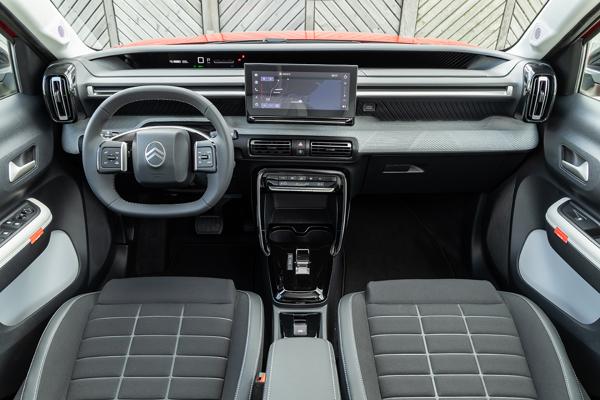
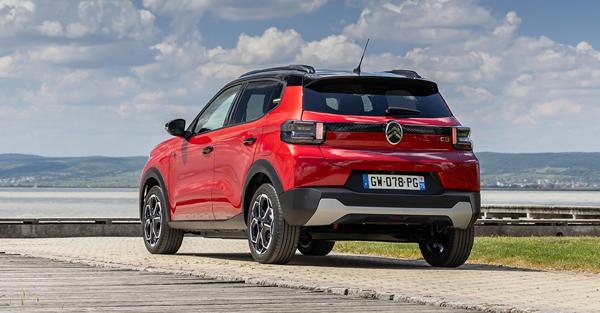
Compared to the previous series, it has changed radically: it has gone from an iconically rounded saloon to a baby suv characterised by squared lines and a simple, practical interior with an overall layout that is the child of the Oli concept, the manifesto of the new course of the Double Chevron visually celebrated with the debut of an unprecedented (and enormous) Double Chevron logo.
Ideally, the fourth act of the C3 reconnects with one of the two historical souls of the French brand made up of simple cars such as the Dyane or the Ami (which at the time was a real car and not a quadricycle) and super-sophisticated models such as the CX and, even more so, the legendary DS, which is approaching its 70th anniversary (it must be said that this second soul now belongs to the DS brand that was born out of a heritage assumption that is 100% Citroën). The new C3 is an important model for the brand and the entire Stellantis group. It is the first car built in Europe, based on the Stellantis group's SmartCar platform, a low-cost architecture derived from the well-known CMP and used so far in emerging countries. Furthermore, the C3, which we tested in a media drive reserved for the Car Of The Year award jurors, is also a foretaste of the future Fiat Panda which, expected in July, jumps into a higher segment (B-Suv) and is sister to the C3 with which it shares the platform but not the factory: the C3 is built Trnava in Slovakia, while the Panda in the Serbian plant of Kragujevac where the Fiat 500 L was assembled.
The new C3 offers three motorisations: electric (ë-C3) with 113 hp, a 48-volt hybrid with 100 hp and thermal only with manual gearbox and always 100 hp from the 1.2 PureTech Turbo engine also used by the Lancia Ypsilon and Alfa Romeo Junior. It is a three-cylinder, a logical and economical choice, now standard in almost every segment, but one that does not excite. It should be noted that these units have been modified: they now mount a timing chain in place of the infamous oil bath belt, the source of the problems.