
Citroën Ds, the goddess of the automobile turns 70
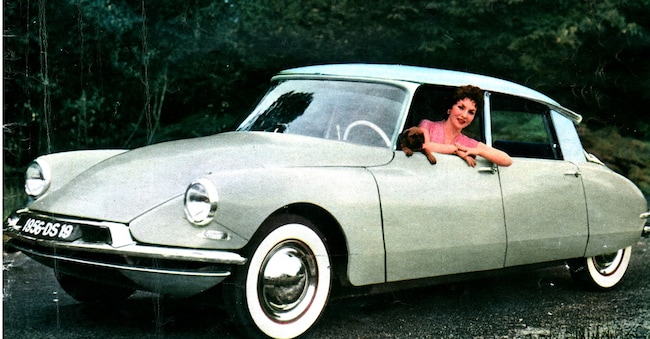
In October 1955 years ago, one of the most revolutionary cars in automotive history was born. It was the Citroën Ds

.
One can count on the tips of one hand, the cars that have made history, the truly iconic ones that have marked an era and, above all, introduced radical technological change. Certainly the VW Beetle, but above all the Citroën Ds, a car considered among the most beautiful and fascinating of all time.
It was 6 October 1955, when at the Paris motor show, the French marque unveiled what in Italy was christened the Squalo and had a name, Ds, pronounced déesse in French, meaning goddess. And a goddess it was in name and in fact because it introduced technologies that Italian, German and other French cars, not to mention American ones, could only dream of at the time: four disc brakes, headlights that turned on bends to illuminate dark spots and, above all, hydropneumatic suspensions, which allowed the car to travel not only on three wheels in the event of a puncture, but above all exceptional comfort, unparalleled road holding and stability as well as the incredible possibility of changing a wheel without a jack, raising the car for rough terrain. All thanks to fluid dynamics, no electronics and a green liquid, the famous LHM that was the real life fluid of the extraordinary DS with the brakes, also hydraulic, in the same circuit as the suspension, which were controlled not with a pedal but with a button on the floor. Created as a replacement for the avant-garde Traction Avant, it represented the French gradeur of the automobile. It was, not surprisingly, the car of President Charles de Gaulle.
And then, the still breathtaking styling with its aerodynamic lines, defined by Flaminio Bertoni, the daring solutions such as the bodywork with bolt-on panels, the amazing covered rear wheels, the one-piece safety steering wheel (no airbag) set in a dashboard that looked like a spaceship.
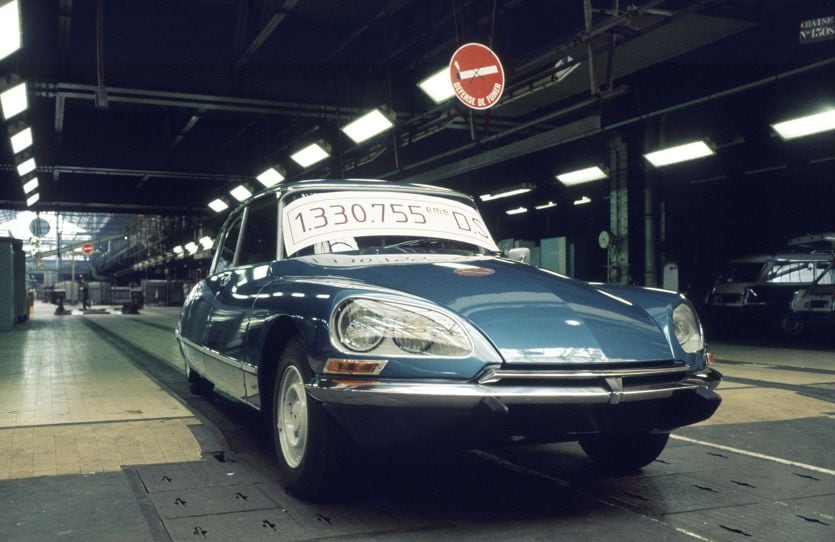
Ds was produced in two generations: the first with round headlights, and the second in 1967 with ellipsoidal headlights. It ended its career when in 1975 car number 1,330,755 rolled off the assembly line in Rennes-La Janais, making way for the CX, a car that made aerodynamics its alpha and omega with a name that echoed the air penetration coefficient. There were more economical versions christened ID, with a corrugated sheet metal rear pillar, the top Pallas versions, a spectacular cabriolet variant and the station wagon Break, famous for carrying newspapers.


