Car stories

Citroën ready to celebrate 70 years of the legendary (and beautiful) DS

The French manufacturer in 1955 launched one of the most sophisticated cars in history, a design icon and masterpiece of cutting-edge engineering

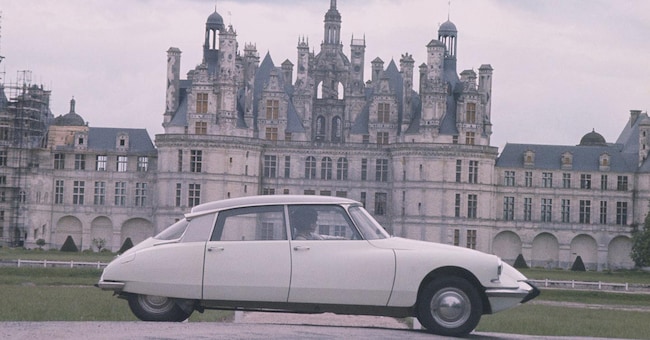
Una DS19 davanti ala Castello di Chambord (copyright Delpire e A. Martin)

6' min read

6' min read

Citroën began the celebrations for the 70th anniversary of an iconic, legendary and technically advanced car: the DS (Deesse, goddess in French to symbolise the unique qualities of a car born in 1955 and remaining in production until 25 April 1975. 49 years ago, in fact, it ended its life cycle to make way for its heir: the CX. A career that ended with almost 1.4 million units produced. Indeed, unit number 1,330,755 rolled off the Citroën assembly line in Rennes-La Janais after a four-year career, two generations (with round headlights or those that became ellipsoidal), more eccomical baptised ID versions, with their corrugated sheet metal rear uprights, versions too called Pallas (a name also used on the Citroën GS and CX), a spectacular cabriolet variant and even the station wagon Break, famous for carrying newspapers. And even a nickname: Shark. Amongst its

The 70th anniversary of the DS Goddess falls next year. The déesse, 'goddess' in French, was not only one of the most representative models of the Citroën brand, but also a car that introduced substantial technical innovations to the international automotive scene and therefore deserves a proper historical examination. So let's start with the idea of designing and building a car like the DS, also nicknamed the 'shark', which according to the well-informed dates back to the late 1930s, when people were beginning to speculate on a possible replacement for the Traction Avant, but of course at that time the Traction Avant was still at the height of its motoring career. Perhaps this is why the model's debut came a little late and only in 1955 at the Paris Motor Show.

Loading...

Citroën Ds, hydraulic revolution

.

Among its distinctive and incredible features for the time: hydropneumatic suspension that allowed it to travel on three wheels, headlights that followed curves, four disc brakes, power steering and hydraulic 'button' brakes. A masterpiece by Citroën made of superlative fluid mechanics with a breathtakingly styled bodywork 8 even today) and ultra-careful aerodynamics.
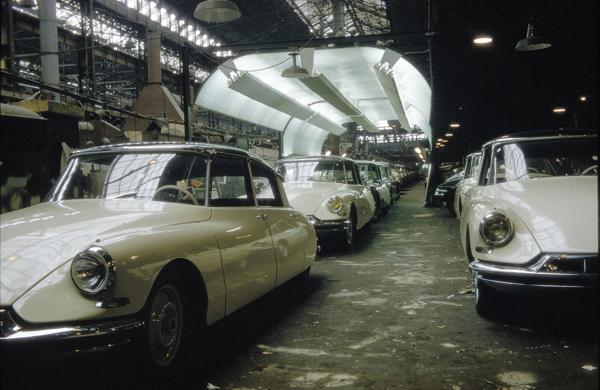
Citroën Ds, the genesis

From the outset, the DS won unanimous acclaim. Credit must go to Citroën's technical director at the time, André Lefebvre and his team. Part of that team was Paul Mages, who designed the suspension, Flaminio Bertoni who designed the car and Walter Becchia who took care of the engines. The model shown for the first time at the Paris Motor Show in 1955 was called exactly DS 19 and was equipped with a 1900 cc engine capable of developing 75 horsepower and reaching a top speed of 140 kmh. The car aroused great interest because it employed revolutionary choices in both design and mechanics. First of all the aesthetic originality: the distinctive aerodynamic bodywork had a front track that was much wider than the rear track and a fibreglass roof.

Citroën Ds, innovations still at the cutting edge

Another innovation was the materials used for the dashboard and seats, completely new for the time. But the most important innovation adopted on the DS was mechanical and concerned the hydropneumatic suspension that provided comfort that only a few other cars could offer. The system was based on a pump that sent pressurised oil to balls containing nitrogen and a membrane that separated it from the hydraulic circuit. The gas, which was compressible, acted as a spring, while the fluid, which was incompressible, controlled the reactions.
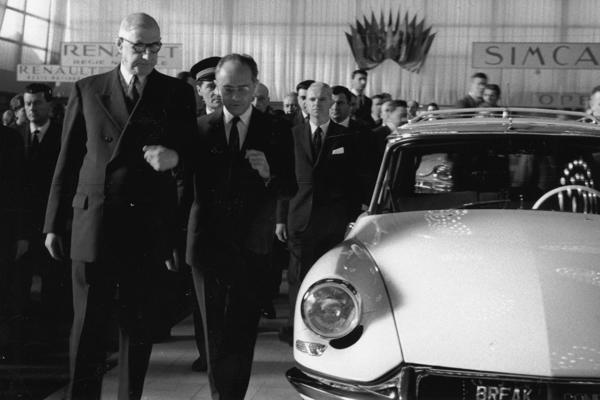
The pressurised oil also operated the power steering, power brakes, gearbox, clutch and brakes. A simplified version of the system called ID, which stood for Ideas or Idea, was presented the following year and became available in Normal, Luxury and Comfort variants.

Specific to these variants was that they had neither power steering nor power brakes and that the gearbox was manual, while the engine was depowered, not to mention that the trim was cheaper. Also at the Paris Salon three years later, the DS range was extended with the debut of the Prestige, a model equipped with luxurious features including, among other things, a partition between the driver and rear passenger compartments, leather front seats and a velvet and carpeted rear compartment.

In the 'lower' range meanwhile, the 'giardinette' Break, Familiare and Commerciale made their debut. In 1961, however, the Cabriolet was added to the list, which was coachbuilt by Chapron on DS or ID mechanicals and had a 1900 cc engine with an output of 83 hp.

Salon de Paris 1962

Citroën Ds, the evolution

A slight restyling was made to the car in 1962 that coincided with updates to the engine, which featured an improved cylinder head and spark plug housing. It also debuted a new dashboard, wipers with automatic return and a new direct air intake on the radiator that brought coolant temperatures down. Two years later in 1964, the Pallas was launched, taking the DS into the higher end of the market. With mechanics unchanged from the models already on sale, the Pallas featured additional iodine headlamps, polished side profiles, satin-finished aluminium-clad pillars, new wheel covers and a triplex safety windscreen. Inside, on the other hand, the upholstery and covers were completely redesigned.

The following year saw the arrival of the DS 21, equipped with a 2175 cc engine that delivered 109 hp and a top speed of 175 kmh. This model joined the DS 19, which abandoned the classic 1900 cc to mount a new 2000 cc with 90 hp and additionally adopted new air intakes to cool the brake discs. The entire range, at the same time, adopted updates to the suspension and transmission. In 1968 the DS 19 was then replaced by the DS 20, equipped with the same 2000 cc engine, but with power increased to 103 hp.

Also in '68, the power output of the DS 21 increased to 115 hp. 1969 saw the birth of the DS 21 I.E., which brought electronic injection power produced by Bosch to its debut. Thus equipped, the engine developed 139 hp and allowed the car to reach a top speed of 188 kmh. At the end of the same year, the DS 20 became available only with a semi-automatic gearbox, while the manual gearbox, provided as an alternative, disappeared permanently from the list of options.

1972 saw the launch of the DS 23, with a 2300 cc carburettor engine capable of delivering 124 hp and propelling the car to a top speed of 179 km/h. At the same time, the DS 23 I.E. was also born. It had the same engine as the DS 23, but thanks to the use of electronic injection was able to deliver an impressive 141 hp and reach a top speed of 191 kmh. These two cars respectively replaced both the DS 21 and DS 12 I.E. in Citroën's line-up. The legendary DS was first joined and then finally replaced by the Citroën CX. An important chapter in the history of the DS is its use in racing.

Citroën Ds, the adventure in sport

Although the DS and ID did not have very powerful engines, many people decided on their racing use. This prompted Citroën to officially prepare its cars for racing. Together with the Paris Ile de France stable, headed by René Cotton, the company decided for which races the cars could compete. The debut came in 1956 at the Monte Carlo Rally, where the crew of Courtes, Court and Payen won first place in their category. Soon after, the DS won the Criterium Neige et Glace while the ID won the Tulip Rally, the Tour de Belgique, the Cup des Alpes and the Rally des Cevennes. In 1961 came the important victory in the Liège-Rome-Liège with drivers Bianchi and Harris, while the following year, Toivonen and Kallio in the DS 19 won the 1000 Lakes Rally. More victories came in the following years (Lebanon Rally and Routes du Nord) until 1964, when Citroën won the Manufacturers' title with an official team. From 1969, the DS, predominantly engaged in African competition, achieved remarkable sporting results, as it won the Morocco Rally three years in a row. In 1973 the DS 23 won first place in its class in the Acropolis Rally, but the following year Citroën decided to discontinue the sporting activity of the legendary DS once and for all.

Copyright reserved ©
Loading...

Brand connect

Loading...

Newsletter

Notizie e approfondimenti sugli avvenimenti politici, economici e finanziari.

Iscriviti