First Floor

Civil cases, mini-reinforcements for the most troubled offices

Decree Law 117/2025 focuses on a more intensive and targeted use of existing forces: incentives for the transfer of magistrates and remote deployment. It is also counting on new recruits and honorary officers

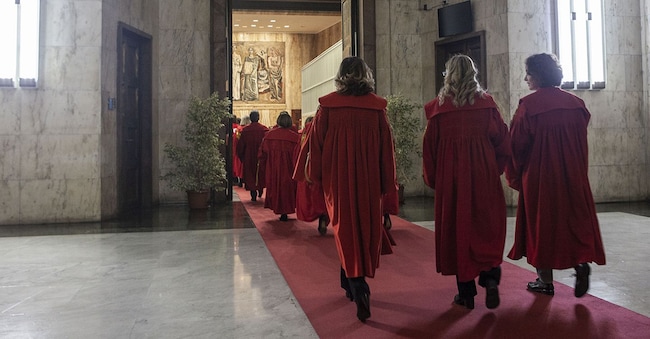
Incentivi ai trasferimenti. Indennità per i magistrati che si spostano nelle corti d’appello più in ritardo sul raggiungimento degli obiettivi Pnrr. (Imagoeconomica)

3' min read

3' min read

With less than a year to go before the deadline, set for 30 June 2026, to reach the targets set in the NRP, the government is trying to make up for the delays on the civil justice targets with reinforcements aimed at the most difficult judicial offices. And it does so mainly by concentrating existing resources on the Pnrr targets: it is counting on a more intensive and precise use of in-service magistrates (incentivised with allowances) and honorary judges, as well as on the contribution of trainee magistrates.

These are the key points of the Justice Decree Law (117 of 2025), in force since 9 August and submitted to the Chamber of Deputies for conversion into law. Meanwhile, the path to its implementation is about to start, with the identification by the Superior Council of the Judiciary of the judicial offices that will be recipients of the 'aid'.

Loading...

L’EVOLUZIONE

Loading...

The situation

These measures are necessary, given the distance still to be covered in order to achieve the targets set by the NRP for civil justice: the 40% cut, compared to 2019, of the time in the three levels of justice (calculated using the disposition time formula, which estimates the foreseeable duration); and the 90% reduction of pending trials at the end of 2022 registered between 2017 and 2022 in the courts and from 2018 to 2022 in the courts of appeal (while the intermediate disposal target set for the end of 2024 has been achieved).

According to analyses by the Ministry of Justice, 200,000 proceedings in the courts and 35,000 in the courts of appeal still needed to be settled at the beginning of the year in order to reach the final goal of eliminating the backlog.

But the most critical front is that of durations: at the end of 2024, disposition time had been reduced by 20.1 per cent compared to 2019; however, in the courts, the decline had stopped, marking 488 days compared to 486 in 2023 (see Il Sole 24 Ore of Monday, 12 May).

Figures for the first quarter of 2025 show an improvement in the situation: disposition time on 31 March was 467 days in the courts, 492 days in the courts of appeal and 940 days in the Supreme Court. In total, this is 1,899 days, 24.4 per cent less than in 2019.

Further clarifying the picture will be the data as at 30 June 2025, which the SCM must now use to draw up the list of the most overdue judicial offices.

The measurements

.

The first support put in place now concerns the courts of appeal. The decree allocates 2.7 million euros to incentivise magistrates who have had at least the first professionalism evaluation to move to the most lagging courts identified by the SCC. Time is running out and the transfers must be decided by the Csm by 23 September.

Instead, remote support is envisaged for courts in difficulty. Up to 5oo magistrates will be able to remotely handle at least 50 files each. The decree stipulates that these are proceedings ripe for decision, because they do not normally require presence. Also in this case, the application is voluntary and an incentive is provided (the allocation for 2026 is 15 million).

On the other hand, no additional allowance for honorary justices of the peace who will be able to deputise for professional judges.

In the lagging offices, the heads of offices will also have to develop an extraordinary plan that can deviate from workloads and ordinary file allocation criteria. The aim is to concentrate efforts on proceedings that are relevant for the NRP (even at the expense of others).

Finally, the decree changes the structure of the traineeship of ordinary magistrates who have passed the 2023 competition. The overall duration remains 18 months but the introduction into the judicial system becomes faster and a six-month period in the courts of appeal is also provided for.

These measures take up some of the proposals made by the Csm in its mid-July resolution, precisely to reduce disposition time.

Other suggestions have not been taken up in the decree: from interventions to deflate litigation concerning applications for recognition of citizenship and in immigration matters, to the use of retired magistrates.

Copyright reserved ©
Loading...

Brand connect

Loading...

Newsletter

Notizie e approfondimenti sugli avvenimenti politici, economici e finanziari.

Iscriviti