
Video games in the classroom? They don't destroy the school, they transform it
From consoles to classrooms: almost 200 students and 35 high school teachers in the experimental project coordinated by the University of Bologna and IVIPRO.
3' min read
Key points
3' min read
There are 14 million Italians who play video games, 33% of the population aged between 6 and 64. Why, then, not introduce video games at school and turn them into an educational resource, instead of leaving them outside, at the mercy of prejudice and stereotypes?
L’iniziativa
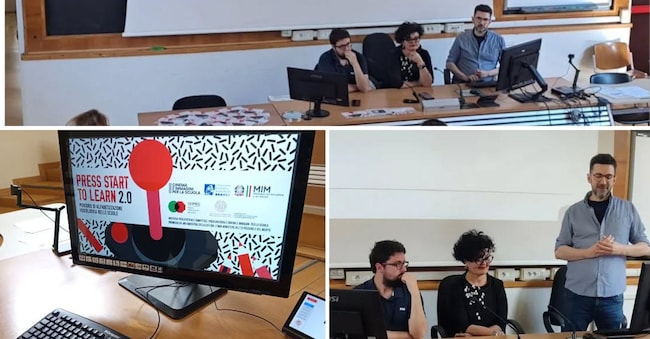
Press Start to Learn 2.0!, an experimental video game literacy project, was created to change perspectives, transforming video games into tools for learning, reflection and expression. Coordinated by the Association IVIPRO - Italian Videogame Program in partnership with the Department of Educational Sciences "Giovanni Maria Bertin" of the University of Bologna and realised within the framework of the National Plan Cinema and Images for Schools (promoted by MiC and MIM), the project involved almost two hundred students and thirty-five teachers from four high schools in Emilia-Romagna, Tuscany and Lombardy.
Wise use of video games
.Now in its second edition, the initiative faced a double challenge: on the one hand, to bring young people closer to a conscious and critical use of video games; on the other hand, to offer teachers concrete tools to integrate them into their teaching and to combine traditional languages with the new languages of digital, with a view to media education.
The questionnaires
.In the questionnaires administered at the end of the course, 58% of the students said they had changed their minds about video games, recognising their educational potential, while 79% of the teachers said they intended to use them at school in the future.
The Game Workshops
.During the in-class gaming workshops, several titles with different connotations were analysed such as Papers, Please, a simulation set in a totalitarian state, Italy. Land of Wonders, a video game created by MAECI to promote Italian culture, Florence, a video game with an aesthetic similar to a graphic novel, characterised by intense emotionality and social expectations on gender identities. The games offered an extraordinary opportunity for discussion and debate.
Brand connect


Newsletter Scuola+
La newsletter premium dedicata al mondo della scuola con approfondimenti normativi, analisi e guide operative
Abbonati