
Classese effect on Oltrepò wines: Pinot Nero overtakes Croatina and Barbera
98% of the Oltrepadano vineyard is dedicated to DOC and DOCG. Possibility of growth (also in height) for areas dedicated to sparkling wines

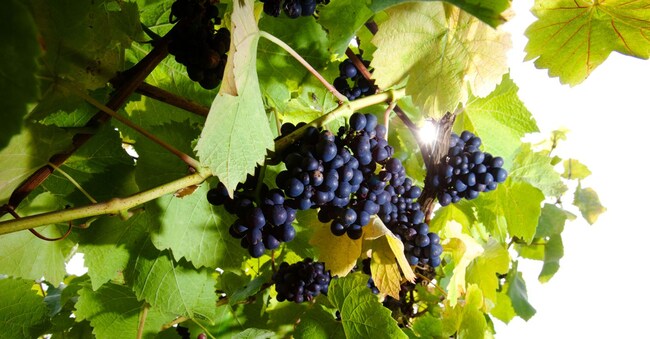
Pinot Noir becomes the first grape variety cultivated in the Oltrepò pavese. For many, this might seem obvious, but in reality it is not. Or rather, it wasn't, since until recently, despite the significant production of sparkling wines from Pinot Noir grapes and the production of red wines from the same grapes in the Oltrepò pavese, the most widely cultivated variety was the autochthonous Croatina, which was also used with a dual purpose and thus to create red wines but also sparkling wines.
The 'overtaking' was announced by the Consortium of Classese dell'Oltrepò pavese. Of the total 11,539 hectares cultivated in the area, 2,869 are now cultivated with Pinot Noir, which thus represents a percentage of the total of 24.9% and has overtaken Croatina, which is still at 24.7% of the hectares under vine.
Following, albeit at a distance, another black berry grape B Barbera with a share of 13.6% of the total area. Basically, black grapes account for more than 67% of the area under vines.
The other 33% is the prerogative of white grapes, among which Pinot Grigio (11.7%), Riesling italico (7.4%) and Moscato bianco (6.9%) prevail.
"The average altitude of the vineyards in Oltrepò," the Consortium adds, "is 231 metres above sea level, but 631 metres can easily be reached for vineyards claimed as DOCG and 770 for those claimed as IGT. The maximum altitudes highlight the great altimetrical excursion allowed by the territory, which also thanks to the ample spaces can exploit the heights to better cope with the rise in average temperatures that accompanies climate change'.
98% of the Oltrepadano vineyard is also DOC and DOCG. The controlled and guaranteed denomination area alone covers 38% of the total, with average vine age around 25 years and a clear preference for Guyot training (76.7%).
"The possibilities of developing the number of bottles claimed as DOCG are therefore remarkable," the Classese Consortium continues, "also thanks to the recent re-launch of Classese, the blanc de noirs (and rosé de noirs) that collects the great sparkling wine heritage of the Oltrepò Pavese and narrates a quality with over 160 years of history.

