
Classic furniture sees the light again thanks to contract and the Middle East
Italy still in the pole. Russian buyers are back on the stands (despite the embargo). Colombo: in 2025, the segment could return to positive territory

3' min read
Key points
- Molon: the climate is not ideal, but we can catch up with Europe
- Capelletti: large projects grow, but margins are slim
- Villari: we are expanding our sales outlets abroad
3' min read
One only has to look around, in Halls 13 and 14 of the Salone del Mobile, to understand where the signs of a revival in style furniture, the classic, as the operators call it in jargon, are coming from. Buyers, architects and clients from the Middle East, Arabs, many Caucasian. A few Chinese and Koreans. Unknown, but not so unknown, are the Russians. Officially embargoed, they peep quietly among the stands. The last time the Russians and the Classics had been in the limelight was when, at both ends of the enormous six-metre-long table at the Brianza Oak, Putin and Macron began a dialogue that later turned out to be improbable on the war in Ukraine.
It was precisely the war in Ukraine, which followed the post-Covid, that was the turning point for the sector. "We suffered the backlash," says Luciano Colombo, managing director of Ercole Colombo, a historical company in the segment, and FederlegnoArredo's style furniture referent. "Over the next three years," he explains, "we lost about 30 per cent of the segment's turnover. The costs of raw materials, precious materials and the accessories we use went through the roof. Repositioning was not easy, Russia is worth half of the segment. Now we see the first signs of recovery'.
The visits during the first days of the exhibition are encouraging. "We are seeing, especially from the Middle East, individual buyers. We had an important order for a noble palace in Baghdad, Iraq'. Italy did not come. "Spending capacity, even at the top end, has decreased," says Colombo, "but the domestic market is not decisive. From the movements I see at the Show, I believe that in 2025 the positive sign will return'.
Thanks to the Middle East, which already struck a blow in 2024. The United Arab Emirates, reached seventh place in the Italian export ranking with 402 million in turnover (+22%); Saudi Arabia, thirteenth in the ranking, reached 288 million in turnover (+14.6%). There, the classic is at home. Major projects, contract, were decisive. Residential developments and hotels, above all.
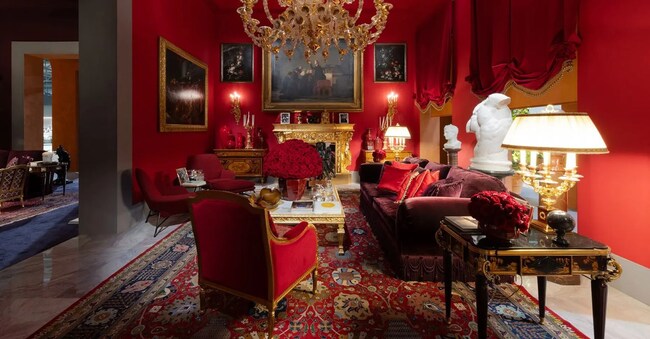
The Villa Héritage installation by Pierre-Yves Rochon, the French archistar of grand hotels, is a manifesto of the style and potential of stylish Italian furniture companies. Forty made-in-Italy companies have provided the architect with pieces for an ideal environment. A mirror of what can be done with classic furniture. "Contract," says Roberto Molon, managing director of the family business, "is giving good signals. Trump's duties are weighing us down in the United States and with the big chains. But we can work well in Europe, with the same big US hotellerie groups. Unfortunately the climate in the markets does not bode well. The uncertainty, especially on large orders, is a very penalising factor'.


