
Winter, standard and all-season tyres: how they’re made and who they’re for
They should be chosen taking into account the area where you live, the climate you have to contend with and your annual mileage

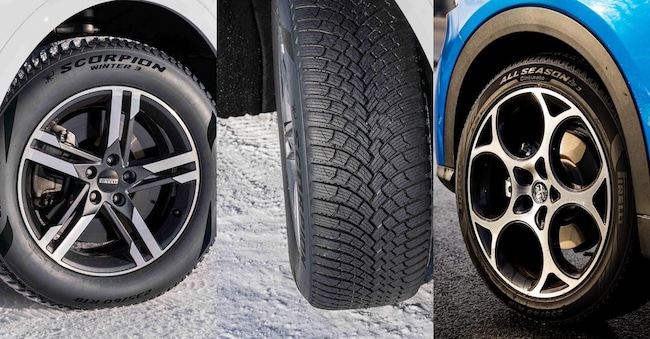
Winter tyres – often referred to as ‘thermal’ tyres – and all-season tyres differ mainly in terms of their compound composition, tread pattern and ideal use depending on temperature. In any case, it is always advisable to choose tyres with 3PMSF certification, as they have passed specific tests on snow; these can be recognised by the logo featuring a snowflake enclosed within the outline of a three-peaked mountain.
Thermal flights are specialised
Winter tyres are ideal for those who cover many kilometres in challenging conditions. In fact, they feature a specially designed tread pattern characterised by sipes that form numerous edges which grip the snow to optimise both traction and braking performance, ensuring braking distances up to 50 per cent shorter than those of summer tyres, thanks to wide, deep grooves that effectively drain water to minimise aquaplaning on wet surfaces, and are made from a relatively soft compound. Consequently, they remain flexible and maintain contact with the road surface even at very low temperatures, ensuring traction, steering response and grip when the temperature drops below 7°. In these conditions, they also enhance safety on asphalt that appears dry but may harbour black ice.
All-season tyres combine the best of winter and summer tyres
Also known as ‘low-performance winter tyres’, all-season tyres are recommended for those who do not live in alpine regions, where snowfall is infrequent and temperatures may drop to just below 0° and do not exceed 25°. This is a factor that should not be underestimated, particularly given the scorching highs reached in recent summers, as these tyres tend to wear out more quickly in high temperatures than summer tyres, given that their relatively soft compound is modelled on that of winter tyres. All-season tyres also inherit the sipes from all-weather tyres, which complement the tread pattern to ensure good performance on low-grip surfaces. However, it must be made clear that they do not offer the same performance as winter tyres in cold weather and demanding conditions, nor that of summer tyres in hot weather, as they combine only some of the technologies of the two types, whilst still ensuring sound safety standards in every situation.

