
Claudia Cardinale, immortal icon of Italian cinema
The famous actress of such masterpieces as 'The Leopard', '8 ½' and 'Once Upon a Time in the West' was 87 years old
by Stefano Biolchini and Andrea Chimento
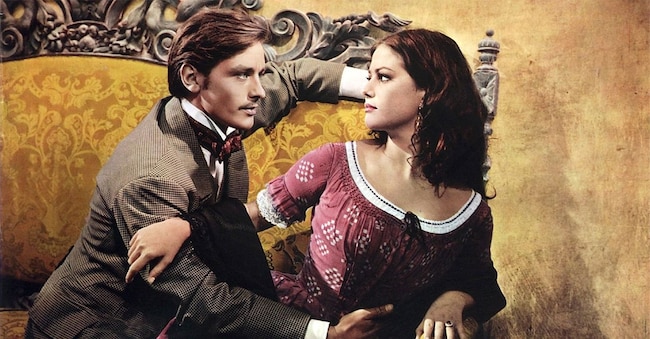
5' min read
Key points
5' min read
Her black eyes, set in a face of Mediterranean, elegant, proud and sublime beauty, remain and will remain forever: because the Angelica Sedara of The Leopard is and will be the timeless face of the refinements of great Italian cinema. And so not just an actress has left us, but one of the most important icons in the history of our cinema.
Claudia Cardinale, the immortal face of so many masterpieces that marked the 20th century on the silver screen, has passed away at the age of 87.
From genre films to art-house cinema, his career has been marked by collaborations with the most significant directors at home, but also overseas he has had considerable success acting alongside the likes of Orson Welles, John Wayne or Sean Connery.
Claudia Cardinale, Angelica per sempre
Photogallery44 foto
Tunisi
Born in Tunis on 15 April 1938, to parents from Sicilian emigrant families, Claudia Cardinale revealed from an early age a tenacious and determined character, which would later serve her well in the world of cinema.
Her first contact with a production came in 1956 when she and her schoolmates participated in a short film called 'Les anneaux d'or' by the controversial French director René Vautier, while her first feature film was Jacques Baratier's 'The Days of Love', presented at the Cannes Film Festival in 1958 and starring Omar Sharif.
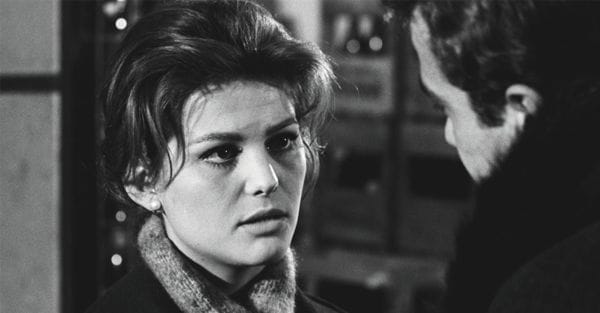
Claudia Cardinale ne Rocco e i suoi fratelli
A decisive turning point in her life came in 1957 when, during the Italian Film Week in Tunis, she won a beauty contest that earned her a prize trip to the Venice Film Festival: here her charm did not go unnoticed by directors and producers who immediately chose her to participate in several films.
In 1958 he starred in Mario Monicelli's wonderful 'I soliti ignoti', while the following year he got his first important role in Pietro Germi's 'Un maledetto imbroglio', the first author to really enhance his acting skills.
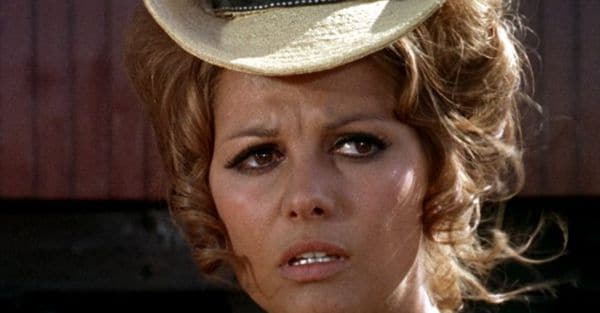
C’era ujna volta il West
The 1960s
The following decade opened with her first work with two authors who would contribute to making her even greater in the future: Luchino Visconti with "Rocco e i suoi fratelli", in which she played alongside a cast of big names, and Mauro Bolognini with "Il bell Antonio", in which she starred alongside Marcello Mastroianni: particularly struck by the actress's charm, Mastroianni ended up falling in love with her but was rejected because it seems that Cardinale did not take his feelings too seriously.
However, the actress had started a relationship with Franco Cristaldi, one of the most important producers of the time, with whom she married in 1966. It should also be mentioned that Claudia Cardinale gave birth to her first child, Patrick, in her early twenties in 1958. Patrick was born as a result of a rape suffered by the actress and her maternity remained secret for several years, so that the child was raised in the family as if he were a younger brother.
Returning to film, in the first half of the 1960s, her work multiplied and she was offered more and more leading roles (in 1961, an important example is Valerio Zurlini's 'The Girl with the Suitcase').
"The Leopard" by Luchino Visconti and "8 ½" by Federico Fellini
If there is a truly decisive moment in her career, however, it is 1963, the year in which two masterpieces such as Luchino Visconti's 'Il gattopardo' and Federico Fellini's '8 ½' were released: in the former she plays Angelica and her dance with Alain Delon is one of those moments etched in the memory of every fan; wrapped in a white dress and clasped in a corset that enhances her figure, with her black hair parted in the middle and framed by a crown of flowers, her waltz steps fill the screen with sensual malice: simply unmatched for the perturbing passion that characterises her when she bites her lips or hides her face behind a fan; in the second she is an angelic woman, a pure and elegant feminine ideal that seems to come straight from the mind of the character of Guido, played by a masterful Mastroianni. Once again she is in part, beautiful, fluttering in black and magnetic, even managing, she so seductive, to be incredibly ethereal.
Claudia Cardinale, una carriera per immagini
Photogallery46 foto
1963 was also the year of her international debut in Blake Edwards' 'The Pink Panther' and from then on, many foreign productions would call upon her (just to name a couple in the following years, Henry Hathaway's 'The Circus and Its Great Adventure' and Richard Brooks' 'The Professionals').
In the meantime, however, his Italian career continued apace with titles such as Luigi Comencini's 'La ragazza di Bube', Antonio Pietrangeli's 'Il magnifico cornuto' or Luchino Visconti's 'Vaghe stelle dell'Orsa'.
Another decisive year was 1968, the season in which she starred in Damiano Damiani's 'Il giorno della civetta' and, even more importantly, in Sergio Leone's masterpiece 'C'era una volta il West': her arrival at the station, dressed in black and accompanied by the notes of Ennio Morricone, is another of those chilling moments that the actress helped make immortal.
The 1970s
However, the professional and sentimental understanding with Franco Cristaldi was gradually fading (the two would leave each other for good in 1975) and this led the actress to see her participation in major Italian productions diminish.
At the beginning of the 1970s, he acted for various French authors such as Christian-Jacque in 'Le pistolere', in which he starred alongside Brigitte Bardot, or José Giovanni in 'The Clan of the Marseillais', in which he starred with Jean-Paul Belmondo.
In 1974 she was hired to play the female lead in the film 'I guappi' by Pasquale Squitieri, an up-and-coming director and the protagonist of her professional and private life from then on. Also from 1974 is 'Gruppo di famiglia in un interno', Luchino Visconti's penultimate feature film.
After a period in which her career seemed to have slowed down considerably, she was called by Franco Zeffirelli for the role of the adulteress in the television script 'Jesus of Nazareth' (1977), a huge worldwide success, thanks to which she seemed to come out of a sort of convalescence.
From the 1980s to the New Millennium
The 1980s opened for Claudia Cardinale with two important films: Lilliana Cavani's 'La pelle' (1981) and Werner Herzog's 'Fitzcarraldo' (1982), whose respective roles were among the most intense in the second half of her career.
In 1984 she starred for Marco Bellocchio in 'Enrico IV', but in that year she was above all the protagonist of Pasquale Squitieri's 'Claretta': in this film she played the controversial character of Claretta Petacci, Benito Mussolini's lover, which won her the Silver Ribbon for Best Actress and the Pasinetti Prize at the Venice Film Festival. Her credits also include five David di Donatello and several lifetime achievement awards, including a Golden Lion at the Venice Film Festival and a Golden Bear at the Berlinale.
From the end of the 1980s, she moved to France, while her acting trials continued to decline. In addition to film and television (to which a strong social and political commitment should also be added among her main activities), Cardinale discovered her talent on stage at the beginning of the 2000s, making her debut in 2000 in the play 'La Venexiana', directed by Maurizio Scaparro.
However, there was no shortage of film appearances even in the last decades of her life: she worked, for example, with Claude Lelouch in 'And Now... Ladies & Gentlemen' (2002) or with Fernando Trueba in 'El artista y la modelo' (2012), although the film in which we remember her most is Manoel de Oliveira's 'Gebo and the Shadow' (2012). It was the last feature film directed by the master of Portuguese cinema and Claudia Cardinale's extraordinary acting was instrumental in making this work so moving.
Yet another piece in the marvellous mosaic that was, is and always will be the cinema of Claudia Cardinale: actress by chance, never diva, and unique interpreter of a timeless cinematic universe.
Stefano Biolchiniredattore
Luogo: Milano
Lingue parlate: Inglese, Francese
Argomenti: critica letteraria, narrativa, reportage, viaggi, mostre d’arte, videorecensioni
Brand connect

