
‘Clear and transparent rules for the development of the branded goods industry’
President Mutti: ‘Brands are a driving force behind “Made in Italy”; we must invest in exports’
by Enrico Netti
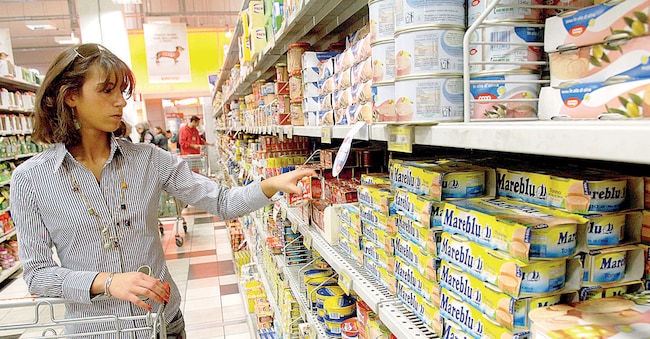
It is time to take stock for the branded goods industry, which is seeing a positive sales trend. “The first few months of 2026 have reinforced the growth trajectory, with a 1.6% increase recorded in April,” said Francesco Mutti, president of Centromarca, yesterday in Milan during his opening address at the conference entitled “The role of the brand in the national economy. Generating value, promoting values, inspiring the future”.
This represents significant growth given the difficult international economic climate. Furthermore, producers are burdened by rising costs triggered by geopolitical instability, whilst they struggle to cope with the decline in household purchasing power. Mutti thus speaks of the ‘fragility of the economic landscape’. For 2026, Italian GDP is expected to grow by just 0.4%, below the estimates made before international tensions escalated, whilst inflation is expected to stand at 2.9%. The main factors weighing on the economy are the slowdown in domestic demand and investment: household consumption is forecast to grow by 0.5%, compared with 1.1% the previous year; investment is slowing from 3.8% to 1.7%; exports are set to shift from growth of 1.4% to a slight decline of 0.1%. The outlook for 2027 also remains subdued, with GDP growth estimated at 0.5%’.
One approach is to focus on exports by capitalising on the strength of the ‘Made in Italy’ brand. ‘The brand is the key element that enables the Italian economy to find an increasingly significant outlet in foreign markets,’ remarked the president of Centromarca. “Today, Italia is fast becoming the world’s fifth-largest exporter. We must always remember that, all things considered, we are not a large country; we account for fewer than 60 million people out of 8.5 billion.”
The branded goods industry in Italia is facing numerous challenges, starting with excessive regulation and hyper-regulatory fragmentation. Hence the call for simplification and legal certainty. “As an industry, we are calling for a regulatory framework comprising a small number of rules that are certain, clear and transparent,” emphasises Mutti. “We need a legislative ecosystem that helps identify critical issues and crack down hard on illegal activities and unfair competition practices.” Hence the call for fewer rules, but ones that are clear and stable over time. These are essential requirements for developing a long-term industrial vision to support competitiveness and consumption.
In his video address, Raffaele Fitto, Executive Vice-President of the European Commission and EU Commissioner for Regional and Cohesion Policy, said: ‘The need for a Europe that is truly capable of tackling certain key issues is becoming increasingly urgent and pressing. The first of these relates to flexibility and the second to simplification. These are the two objectives we are seeking to put into practice, particularly with a view to the future budget.’

