Green and Municipalities

Climate crisis, what three Italian cities (Florence, Rome, Milan) are doing to counter it

From Florence's 3-30-300 plan, to Rome's 100 parks to be realised in 10 years, to the Lombard capital's depaving projects

by Niccolò Gramigni

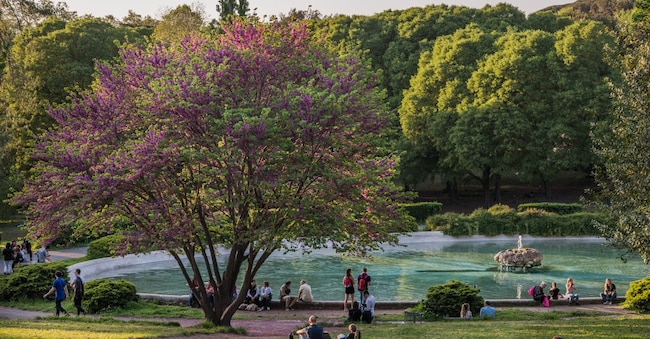
Roma, Parco Villa Borghese

3' min read

3' min read

Countering climate change is one of the priorities of Italian cities. The municipalities are working with great care: Florence is a pioneer in this sense because it is among the first large cities to have approved the Green Plan (called Iris), but other large urban centres - from Milan to Rome to Turin - are also making concrete efforts.

Florence's numbers

.

Iris in Florence was approved in the city council and is inspired by the 3-30-300 model. With this declination: 3 trees, so every inhabitant should be able to see at least three trees from their home, school or workplace window; 30% tree coverage, every neighbourhood should have an adequate density of trees to improve the urban environment; 300 metres from a green area, every citizen should be able to reach a park or green space in a few minutes.

Loading...

Mayor Sara Funaro, on the day of Iris' presentation, said she was proud "to be among the leading cities in the fight against climate change". Among the novelties, announced by the deputy mayor (with proxy for the environment) Paola Galgani, is the online inclusion of all 200 intervention tables so that anyone can check the state of health of the city from an environmental point of view. "We have already allocated 10 million euro in the budget with the aim of reaching 20 million in the term of office, but I recall that in the investment plan we had already doubled the resources from 18 to 36 million on green areas," Galgani recalled.

Florence is not the only city in Tuscany that is active on this front: Prato, for example, has been chosen as one of the 100 European cities for the transition to climate neutrality, an ambitious commitment for the mayor Ilaria Bugetti and the councillor for ecological transition Marco Biagioni.

The Four Points of the Rome Plan

.

Rome presented its climate adaptation strategy with four priorities to be addressed:

1) Heavy rains and floods that put neighbourhoods and infrastructure at risk;

2) security of water supplies;

3) the adaptation of neighbourhoods to rising temperatures with consequences for people's health;

4) the impacts on the coastal shoreline of erosion processes and rain and whirlwind phenomena.

For each aspect, the strategy includes certain measures. For example, there is the plan to strengthen resilience against heavy rain and flooding by implementing river flood management measures; another objective is to ensure the security of water supplies.

"If we do not act now," explained Sabrina Alfonsi, Rome City Council's councillor for the environment, "estimates tell us that Rome's climate in 2050 will be comparable to that of Tunis today. Among the projects, she added, "we plan to realise over ten years 100 parks for Rome, designed through a strategic master plan, presented last year, with an investment of almost EUR 63 million for the realisation of the first 19 interventions, already in the planning or execution phase. In parallel, we are working intensively on the enhancement of the Tiber within the city ecosystem'.

Milan strategies

.

In Milan, the councillor for the environment and greenery Elena Grandi draws the picture. "We have a draft document on the subject,' she said. 'I count on arriving at the end of the year with this document in draft form: then a participatory process will be launched, also with the third sector. And then the process will go to the commissions and finally to the City Council. I would like this document to be adopted by the City Council by mid-2026'.

In terms of climate, Grandi said, 'I don't think Milan will suffer less than Rome because the process of approaching southern Mediterranean climates is very fast'. Among the priorities is 'de-paving. Let's remove pieces of asphalt. Thinking, as Professor Mancuso says, of removing 20 per cent of the roads is a plan, but the problem is that this requires an investment of hundreds of millions of euro so, to be concrete, I see it difficult to complete this operation in two years, for example'.

Copyright reserved ©
Loading...

Brand connect

Loading...

Newsletter

Notizie e approfondimenti sugli avvenimenti politici, economici e finanziari.

Iscriviti