
Climate: if temperatures rise by 2 °C, Italia could lose 74 billion and 960,000 jobs
The study by CMCC and POLIMI: the 2015–2018 drought resulted in a loss of 24 billion, whilst the 2022 drought resulted in a loss of 43

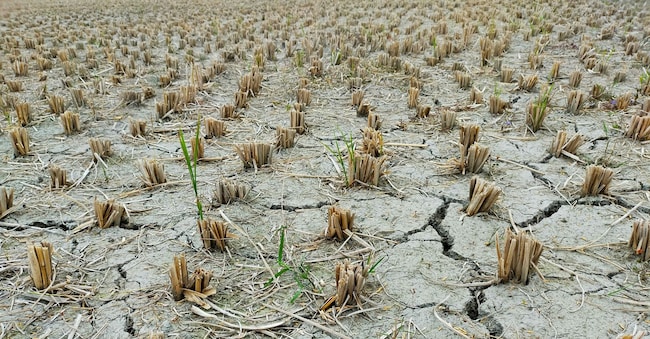
In Italia, the drought of 2015–2018 resulted in a reduction of 1.45 percentage points in per capita GDP growth (approximately 24.3 billion euros) and the loss of 330,000 jobs. The 2022 drought was even worse, resulting in a €43 billion reduction in GDP. In a scenario where temperatures are 2 °C higher than in the pre-industrial period, losses in Italy could rise to 3.99 percentage points (around €74 billion) and 960,000 jobs. These are the figures and estimates contained in the study *Multi-Year Droughts and Their Compounding Economic Impacts in Europe*, conducted by researchers from the CMCC Foundation (Euro-Mediterranean Centre on Climate Change) and the Politecnico di Milano, with the aim of quantifying the economic effects of drought events, even after they have ended. Prolonged exposure to water crises has, in fact, characterised recent years, and Italy, along with the rest of Europe, is facing another summer of extreme heat.
The study indicates that agriculture, manufacturing and construction are among the sectors that pay the highest price. Whilst the former suffers the most severe immediate impact, it recovers within two or three years thanks to insurance, price adjustments and a switch to alternative crops. The other two sectors, however, continue to suffer losses for years after the onset of the drought, due to the concomitant freeze on investment.
According to the study, official European estimates of damage caused by extreme events (738 billion euros for the period 1980–2023, with 208 billion in the four-year period 2021–24 alone) underestimate the true economic cost of drought, as they do not take into account the years following the climatic event. The 2015–2018 drought (which was prolonged and severely affected Northern Europe) has already cost Europe around €439 billion, reducing per capita GDP growth by 2.72 percentage points in the EU and the UK. It has also led to a fall in investment of over 12 per cent, resulting in 5.8 million fewer jobs.
“This research highlights the persistent social and economic impacts of European droughts and the vulnerability of the entire continent in an increasingly warmer climate. Europe is called upon to design institutions and markets capable of coping with extreme weather conditions: an opportunity to be seized in its next adaptation plan,” commented Massimo Tavoni, a professor at CMCC and the Politecnico di Milano, and one of the study’s authors.


