Climbing mountains and prejudices
Linda Cottino recounts the lives of seven summit pioneers, from Meta Brevoort to the Pigeon sisters and Micheline Morin
4' min read
4' min read
Climbing peaks to gain rights and freedom. This is recounted in her Una parete tutta per sé. Le prime alpiniste: sette storie vere Linda Cottino, a mountaineer herself, a journalist and a keen scholar of the history of ascents and the social implications of certain exploits.
The book, something between an adventure novel and a diary (large excerpts from the writings of the women narrated are offered), is a portrait of seven female mountaineers who have marked the history of the mountains and women's emancipation. Cottino explains his work as follows: "I worked from first-hand documents, always in the original language, and I used this rich and varied material in different ways: in some cases incorporating it into fictional frameworks, in others reproducing it as it is, and in others still modulating it according to need. To give voice, on a historical basis, to a part of the mountaineering world that has remained in the shadows, almost ignored, and which, behind its external invisibility, hides vivacity, interests, drives for freedom, tension for challenge and adventure, a desire for knowledge, as well as an unusual ability to come out of the microcosm of the heights to establish a relationship with the 'world below'.
The seven protagonists
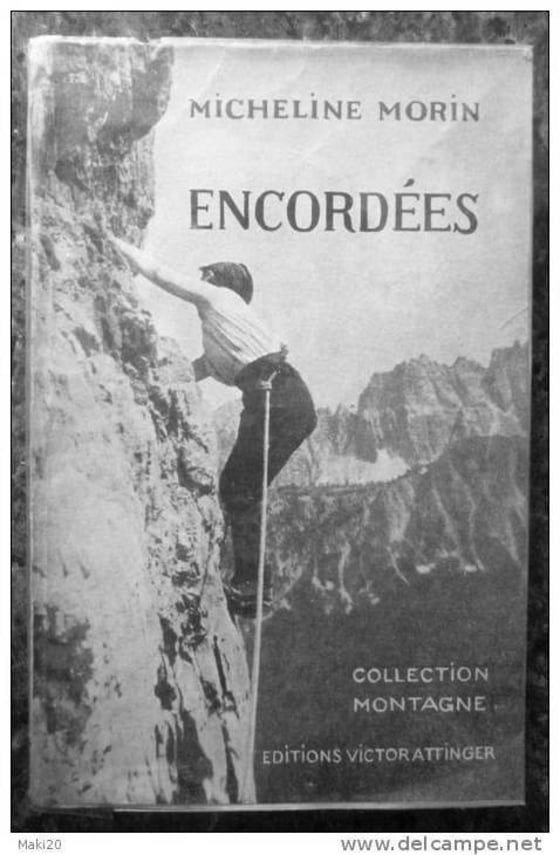
.There is the New Yorker Meta Brevoort, 'Aunt Meta', who took her nephew William, that Coolidge famous for his exploits in the Alps and his mountaineering writings, into the mountains. Then there is Mary Paillon, from Lyon, the first mountaineering intellectual, and the Englishwoman Kate Richardson, consecrated 'mountaineer of the year' by the 'Times' in 1888, who boasts many first ascents, and who from a certain point in her career shared mountains and life with Paillon. Also worthy of mention are two intrepid sisters, the London-based Anna and Ellen Pigeon, who, to be believed, had to show evidence and witness their incredible traverse of Monte Rosa. Also opening up new routes to women were the Irishwoman Elizabeth Main Aubrey Le Blond, known to her friends as Lizzie Le Blond, one of the founders of the Ladies' Alpine Club, as well as its first president, a leading mountaineer from the early 1880s to the early 20th century, and the Frenchwoman Micheline Morin.
From Marie Paradis to the Ladies' Alpine Club
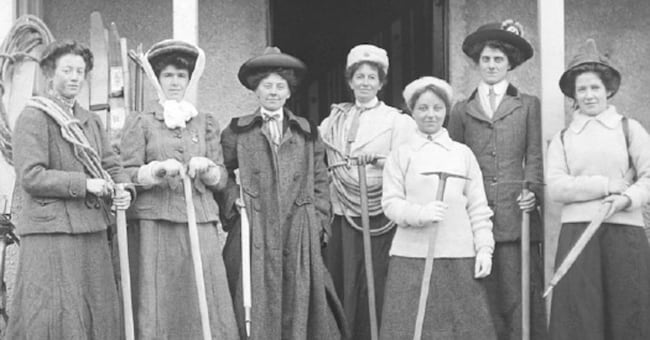
In some ways, the forerunner can be considered Marie Paradis, a waitress in an inn in Chamonix, who set foot on the ice cap of the highest peak in the Alps on 14 July 1808. Just a century later, in 1907, the Ladies' Alpine Club was founded in London (50 years after the men's). The founder and first president of the LAC, Elizabeth Main Aubrey Le Blond sets the rules of membership: 'A club like ours must grow and expand in a healthy and natural way. It cannot be revived from time to time by artificial methods. It must be nourished by the dogged and constant work of its members and, above all, it must keep its level high so that, knowing that good and constant performance is necessary to join, one can feel honoured to be part of it.
Women dare to reach unprecedented heights, and Mrs Mary Petherick Mummery points out that 'whenever a woman tackles a more demanding type of mountaineering, strong prejudices crop up. Instead, I believe that women's abilities are better suited to really difficult climbs than to long, tedious treks in the snow, which are generally considered more appropriate'.