Economy of beauty

Clothes produce culture: unfashionable fashion

At the conclusion of the Milan and Paris fashion weeks, a reflection on the fashion system as a privileged laboratory of the economy of curiosity.

by Franco Broccardi

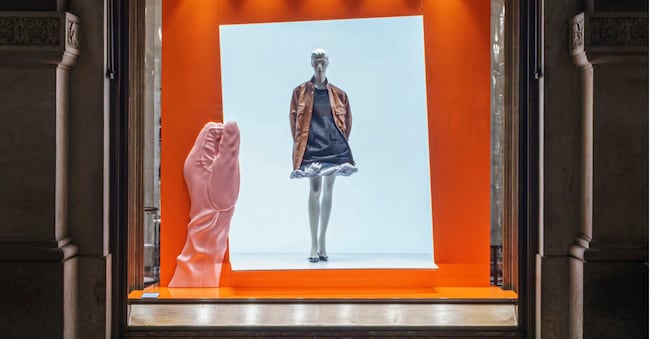
La vetrina con un look della P/E 26 di Prada nel negozio di Galleria Vittorio Emanuele a Milano, parte del progetto “Image of an Image”, la campagna del brand firmata dall’artista Anne Collier. (Courtesy Prada)

6' min read

Translated by AI
Versione italiana

6' min read

Translated by AI
Versione italiana

Culture is something to do with one's time. Our time, now. Something to do with the present, but looking a little further ahead. In this sense, the contemporary is always, as the philosopher Giorgio Agamben called it, untimely. It does not coincide with actuality.

Culture produces value. Above all, it produces coordinates. Not a separate, decorative sphere, but an economic and symbolic infrastructure that runs through society. Otherwise it is just entertainment, decoration. It is something else.
Loading...

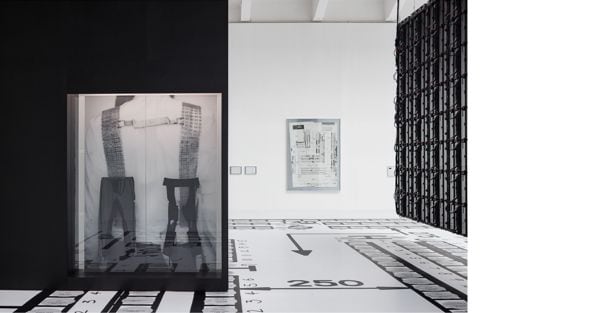
La mostra “Helmut Lang. Séance de Travail 1986–2005 /Excerpts from the MAK Helmut Lang Archive” al MAK – Museum of Applied Arts di Vienna. (© kunst-dokumentation.com/MAK)

Even museums, from this perspective, are not cultural agents, unless they aspire to be the channelling stream of time machines, like Doc Brown's in Back to the Future. Are they all? Not always. On the contrary, I would not easily dismiss comix, manga and anime from the cultural world (after all, Umberto Eco already said that to distract himself he read Engels, but to engage himself he switched to Corto Maltese). And I would not underestimate certain music that many of my co-Boomers do not consider, such as trap or k-pop.
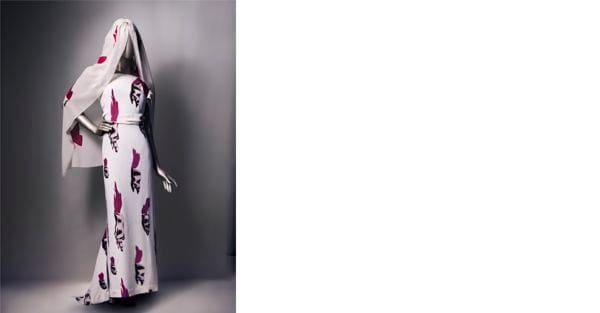
Abito Tears disegnato da Elsa Schiaparelli e Salvador Dalí, estate 1938, fotografato da Emil Larsson e in mostra “Schiaparelli: Fashion Becomes Art” al Victoria and Albert Museum. (© Emil Larsson)

And then there is fashion, undoubtedly one of the most powerful cultural devices of our time. Not only because it visually translates desires, identities, conflicts, but because it embodies, in an almost paradigmatic way, the contradictions of the contemporary economy: acceleration, spectacularization, consumption, but also creativity, relationship and construction of meaning. Fashion is at the same time an aesthetic object, a commercial product, a political narrative. Nothing, in this system, is neutral. That is why talking about fashion today means, or at least should mean, questioning the present. Let us think of that great social-cultural kermis that is the Met Gala, which transforms the act of dressing into performance and narrative art. On 4 May next, the Costume Art exhibition will open, addressing precisely the centrality of the clothed body, and its curator Andrew Bolton explains that "the idea is to bring the body back into discussions about art and fashion and to embrace it, rather than remove it in order to elevate fashion to an art form".

In recent years, clothes exhibitions have multiplied, as have dedicated museums, foundations and permanent exhibition spaces. Maisons are investing more and more in their archives, exhibiting them, narrating them, musealising them. The first months of 2026 alone will see the opening of Schiaparelli: Fashion Becomes Art at the Victoria and Albert Museum (from 28 March), The Antwerp Six at MoMu, the Antwerp Fashion Museum (from 28 March) and the biggest exhibition ever dedicated to the Queen's dresses, Queen Elizabeth II: Her Life in Style at Buckingham Palace, with over two hundred pieces from the royal wardrobe (from 10 April). But does this really have anything to do with culture?
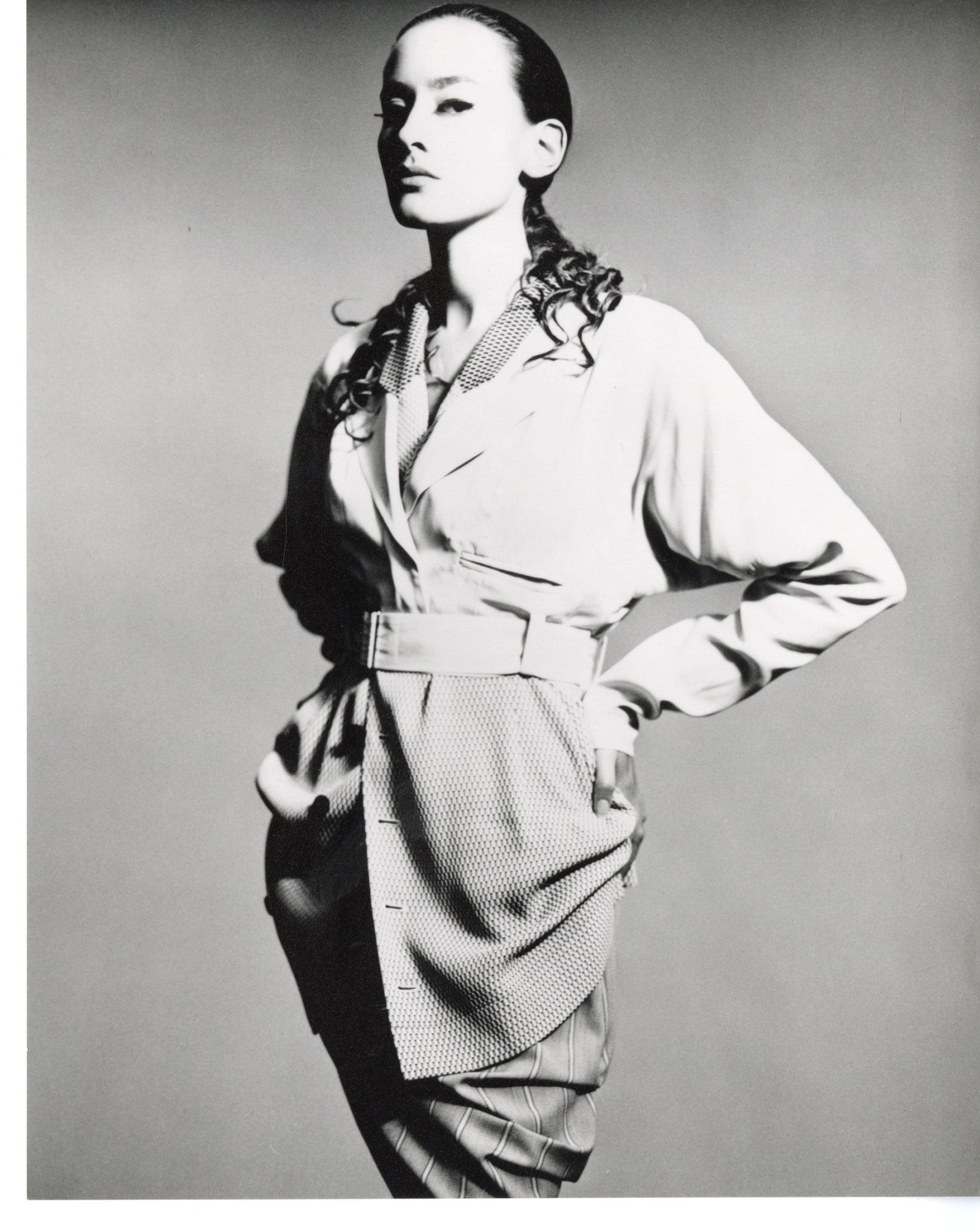
The musealisation of fashion is often read as a form of cultural accreditation. As if the passage through the museum were a symbolic threshold, capable of transforming an industrial system into a shared heritage. The risk is that the museum plays the part of certifying body to issue a credibility licence, abdicating what it should instead be: a critical space and not a place where the past is stabilised, neutralised, rendered harmless.

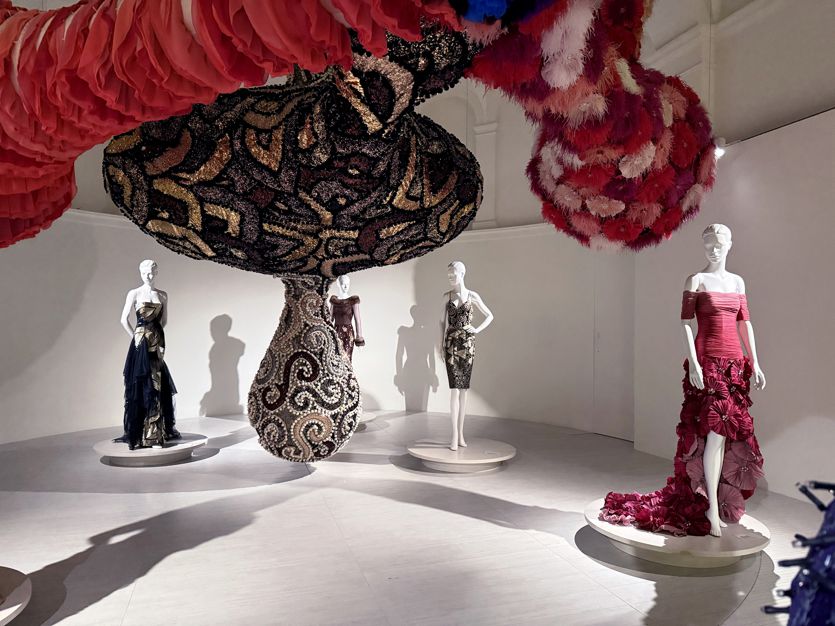
La mostra “Venus - Valentino Garavani attraverso gli occhi di Joana Vasconcelos”, nello spazio PM23 di Roma: l’opera emblema della mostra è la monumentale Valchiria Venus, pensata dall’artista partendo dallo studio dei codici dello stilista e arricchita da un grande progetto sociale: 756 ore di workshop, più di 200 partecipanti, 200 kg di moduli all’uncinetto, realizzati da studenti, pazienti e detenute. (© 2026 FVG Services © 2026 Soqquadro)

The museum is a living device, which must be able to hold together economy, politics, collective imagination, ideas of the future. The question is not to exhibit clothes, but to question the systems that produced them: labour, desire, the body, social distinction, consumption. It is not enough to show the object. It is necessary to make visible the relationships that have made it possible and those that will make it possible. Perhaps this is why experiments such as the one made by Alessandro Sartori at the last Milan Fashion Week, set in a real and ideal wardrobe full of objects from the real family and home wardrobe of three generations of Zegna, are more interesting. Or the new Prada campaign where American artist Anne Collier plays with fashion photography as a cultural, commercial and psychological object, creating a series of still lives in which the photos are actually subjects in their own right: they count for what they represent, but also as images held in the hands. A metacommunication just like the film that marked Demna's debut at Gucci or the New York subway where Matthieu Blazy set his first Métiers d'art fashion show. Today an underground - as everyone's place and a place of passage - yesterday (twelve years ago) Karl Lagerfeld's supermarket.

At the same time, we cannot simply say that 'fashion is culture'. It depends. As with music, the arts, entertainment, we have to ask ourselves what fashion does to culture, society, people and vice versa. Fashion has always been one of the privileged places where time accelerates, stratifies, implodes. It is a system that lives in the present, but works with the past and anticipates the future. A system that produces symbolic value long before it produces economic value. And it is this value that must be shown, otherwise fashion risks being captured by a museum-like temporality that renders it inoffensive. The archive becomes pure aesthetics, memory a branding strategy, history, instead of opening up questions, consolidates identity. It is a form of culture that reassures rather than destabilises. It is not culture, in essence.

In recent years, the fashion system has begun to openly confront its limits. The environmental crisis, the exploitation of labour, and aesthetic standardisation have made the unsustainability of the traditional model evident. But alongside the façade responses, more subtle and radical practices have emerged. Reuse, remixing, the hybridisation of different cultural codes are not just stylistic choices, but acts of economic and symbolic repositioning. These practices embody a form of intemperance: they reject the idea that value resides exclusively in novelty and speed. Recovering forgotten archives, working on error, imperfection, excess or subtraction means questioning the dominant temporality of the market. It means affirming that meaning is not immediately monetisable, but arises from relationship, from duration, from shared experience.

Immagine di “The Antwerp Six” al MoMu di Anversa. (© Andrew MacPherson)

Fashion thus becomes a privileged laboratory of the economy of curiosity, the figure of the contemporary. The value is no longer only in the finished product, but in the process, in the narrative, in the ability to activate communities. The public is not a mere consumer, but an integral part of the cultural device: it interprets, comments, raises, transforms. Digital platforms amplify this dynamic, making the relational character visible. Making it familiar, seductive, persuasive. Making it a global soft power that works on the imagination in the same way as music, cinema or sport. Pietro Beccari, chairman and ceo of Lvmh Fashion Group, as well as chairman and ceo of Louis Vuitton, explicitly theorises this: 'We want to be a cultural brand and a lifestyle, not just selling products'.

A brand like Golden Goose has made co-creation the cornerstone of its customisation services and the basis of its success. Its volcanic CEO Silvio Campara claims that the era of shopping is over: no one wants to buy a product anymore, everyone wants to create their own product.

Every opening brings with it new ambiguities. Fashion has always been familiar with the absorption mechanism of countercultures: what starts out as a language of rupture is quickly neutralised, transformed into style, made marketable. Punk, streetwear, queer or post-colonial aesthetics become visual repertoires ready for the global market. This process is not an accident, but a structural dynamic of the contemporary cultural economy. The question, then, is not to avoid commodification, which is probably impossible and perhaps even incoherent, but to make it visible, to use it as a space for critical awareness. The untimely contemporary is not a pure refuge outside the system, but an internal posture, a practice of misalignment. It is the ability to inhabit contradictions without resolving them, to use the dominant language to crack it from within.

This dynamic runs through cinema, music, visual arts and publishing, which experience the same tension between market and meaning, between standardisation and experimentation. Pop culture, often dismissed as superficial, becomes instead a crucial space of symbolic negotiation in which questions of identity, power, belonging are played out. It is here that shared imaginaries are formed, that narratives capable of orienting the future are constructed. It is here that fashion finds the meaning of its economy.

In an era marked by social polarisation and fragmentation, culture does not offer immediate solutions, but tools to think differently about the present. With its ability to make change visible on bodies and in everyday spaces, fashion develops this function. Every aesthetic choice becomes a political decision, every garment a fragment of collective narrative.

Value arises not only from growth, but from the possibility of imagining alternatives. Like any true culture, when it really works, fashion does exactly that. Not because it becomes art, but because it remains language. Untimeliness is a necessity: the ability to stop, to look at one's own time with a sideways glance in order to reactivate the transformative potential of culture. Also, and perhaps above all, through what we wear every day.

“Cultura adesso. Un’economia contemporanea”, Franco Broccardi, Nomos (24,90 €).

An alternative picture

Franco Broccardi is an expert in the economics of culture and sustainability, arts management, and the management and organisation of cultural operators. He has just published a book exploring the close link between economy and culture, starting from an idea of culture that is not decorative, not dusty, not elitist, but accessible, capable of imagining and building alternatives. This is where fashion plays a crucial role, working on the imaginary like music, cinema or sport. 'Culture Now. A contemporary economy', Franco Broccardi, Nomos (€24.90).

Copyright reserved ©
Loading...
Loading...

Newsletter

Notizie e approfondimenti sugli avvenimenti politici, economici e finanziari.

Iscriviti