
Sensors, data, cloud: how Cefriel takes companies into the future
The Mission. In the new business plan to 2030 leap in revenues and employees Venturi: 'Accelerating technology transfer is the key for the country'

4' min read
4' min read
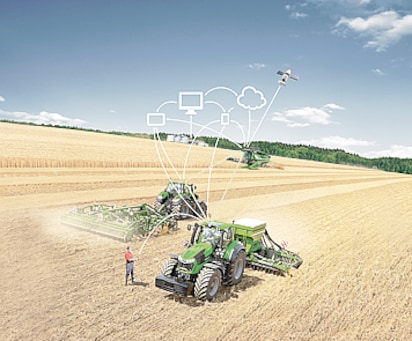
A motorbike airbag, which deploys in 45 milliseconds. The hi-tech visor, which communicates remotely with the control room for critical maintenance. Or the smart bin, which alerts the operator when it is full, avoiding unnecessary trips. Or the advanced sensor that tracks every environmental and physical parameter of a shipment, to assess the risks and criticality of the export route analysed. Between ovens and control units, miniature beverage fridges and water softeners (all strictly smart), platforms for connecting tractors in the cloud, the objects visible in Cefriel's technology room range from different sectors, just as the clients are of dissimilar sizes: large companies and giants such as Sdf, Coca Cola and Stellantis, to which numerous SMEs are added.
The common denominator is the drive for change, which the Milan-based not-for-profit digital innovation centre fulfils with its applications.
An original model, that of Cefriel, (Consortium for Training and Research in Electronic Engineering), a structure set up in 1988 on the initiative of the Politecnico di Milano to build a bridge between universities, research centres and industry. And which sees among its partners, in addition to the Lombardy Region, four universities and numerous private players.
'Our mission,' explains president Stefano Venturi, recently confirmed for a second term, 'is to help transform Italian industry, looking for the best possible solutions: our job is to work towards technology transfer and it is this mandate that we want to pursue in the future in an even more focused and determined manner.
The results signal the goodness of the path taken so far, for a consortium that does not live on public funds but only on market projects, a business that has led Cefriel to frame a 2024 target of 17 million revenues, the highest ever, almost double the pre-Covid period.


