
CNEL and ENEA step in to support renewable energy communities
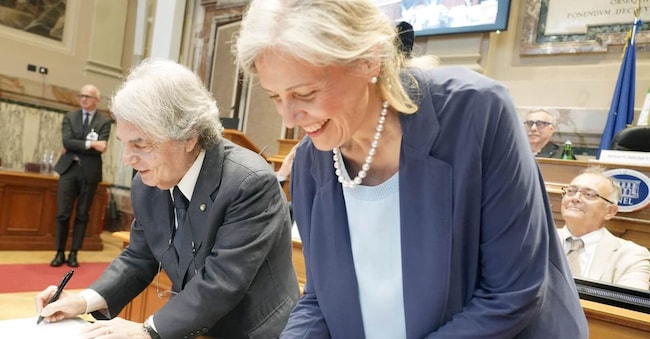
The agreement signed by the chairpersons Renato Brunetta and Francesca Mariotti also provides for the promotion of WEEE (Waste Electrical and Electronic Equipment) recycling activities

Key points
CNEL (National Council for Economics and Labour) and ENEA (National Agency for New Technologies, Energy and Sustainable Economic Development) have joined forces under an agreement to promote Renewable Energy Communities (REC) as a development model based on a transparent energy transition and designed to meet the needs of local communities.
Promoting WEEE recycling
The agreement also provides for the promotion of WEEE (Waste Electrical and Electronic Equipment) recycling activities associated with the CERs, given their strategic importance for the circular economy. Furthermore, the collaboration includes joint initiatives to promote a culture centred on environmental sustainability and the production of green energy. A contribution from ENEA to the CNEL report on public services is also planned.
Brunetta (CNEL): a strategic step towards the energy transition
“The agreement with ENEA,” emphasises CNEL President Renato Brunetta, “represents a strategic step towards supporting the energy transition, thanks to an approach that puts people and local communities at the centre. Renewable Energy Communities are not merely a means of producing clean energy: they are a new model of development capable of combining environmental sustainability, technological innovation, participation, cost savings, the circular economy and social cohesion. As the CNEL, we are seeking smart networks, local networks, and networks linking institutions, businesses, social partners and citizens. And Renewable Energy Communities represent precisely this: an extraordinary network that generates economic, environmental and social value. Together with ENEA, we are launching a highly valuable partnership, offering the country an authoritative point of reference for an energy transition based on knowledge, participation and shared responsibility.”
Mariotti (Enea): An example of active participation by citizens, businesses and local authorities
“Today, the CERs,” explains Enea’s president, Francesca Mariotti, “are a key tool for the roll-out of renewable energy and a shining example of active participation by citizens, businesses and local authorities. The agreement signed today, which stems from the collaboration between our CER Observatory and the working group set up by the CNEL, aims to strengthen CERs as a central element of the energy transition, which, to be successfully implemented, requires a solid technical and scientific foundation and policies that are firmly rooted in society and the economy. ‘At ENEA, we make our expertise available to the CNEL and the country as a whole; we provide services to local communities, supporting them in implementing best practices and innovative solutions, in the firm belief that the energy transition must be understood, embraced and accessible.’

