
CNH is investing 50 million in Italia; the range of tractors is being expanded in Jesi
EMEA President Mueller at EMEA, the Bologna International Agricultural Show: ‘Precision farming represents the future of the sector’

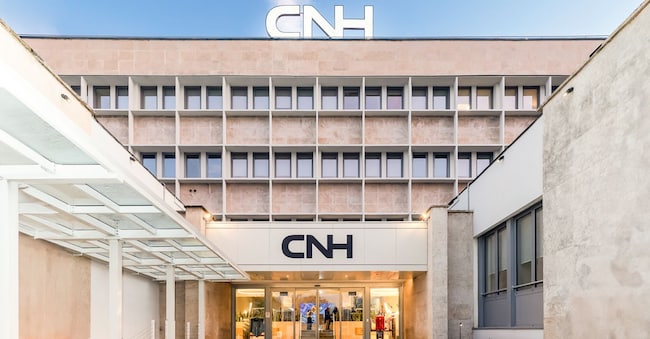
Investments totalling 50 million euros are currently being implemented across the Jesi and Modena plants and the San Matteo research and development centre, with a view to expanding the range of ‘Made in Italy’ tractors within the CNH Group. “The agricultural sector is facing a very difficult market situation,” says Markus Mueller, the Group’s EMEA President, who just a few days ago announced the creation of a joint venture with the Japanese firm Kobelco (70 per cent stake) for the construction machinery business – in which cyclical fluctuations in demand are compounded by a series of external factors such as rising fuel and fertiliser costs and the impact of climate change.”
All these factors are having an impact on an industry that is being called upon to respond swiftly to these demands, moving towards higher-powered and larger tractor models in order to speed up harvesting operations and adapt to the tighter timeframes brought about by climate change. At the Jesi plant, the range of tractors produced is being expanded thanks to the introduction of a new tractor model transferred from the Saint Valentine factory in Austria. The estimated investment amounts to 15 million euros: these funds are in addition to the 35 million that the Group, controlled by Exor, is investing in the San Matteo Research and Development Centre – a global hub for innovation – and in the Modena site.
The trade unions, in particular, estimate that the Group’s plant in the Marche region will see a production increase of around 350 machines this year, with work on the production lines likely to be completed by next summer. “The Jesi site is vital for CNH,” emphasises Mueller, “and we want to expand our product portfolio; we have the capacity to do so and we want to seize this opportunity to shift production towards more powerful and larger machines.” The message, reiterates CNH’s European head, is that there is no question about the Jesi site, which has been struggling for months and where a further agreement on exceptional redundancy payments for the 750 employees is on the cards.
The investment aims to increase production volumes and ensure the site’s safety. In a complex context characterised not only by economic uncertainties but also by profound climate change and the impact of European regulations, precision farming, Mueller emphasises, “is essential for supporting farmers’ work, enabling them to reduce their consumption of water, fertilisers and fuel, and to keep operating costs down”.
At EIMA, the International Agricultural Exhibition currently taking place in Bologna, CNH is showcasing its latest technological applications, developed in collaboration with the US-based company Raven – which was acquired by the Group in 2021 – and is relaunching its digital retrofit system for its existing fleet of machinery. “Developing innovations that help maintain soil quality is fundamental for us. To achieve this, our specialists study the impact of machinery on the soil and develop precision farming solutions to reduce fertiliser use, thereby putting more sustainable agriculture into practice. This is a necessary step to make a positive contribution to the yield and quality of agricultural produce,” adds CNH’s head of EMEA.


