Cnh: 'The market restarts in Italy and Germany. The future? Precision agriculture'
CEO Marx: 'We are integrating the technologies developed after the acquisition of Raven into our machines' - Exor-controlled Group will open a new factory in India

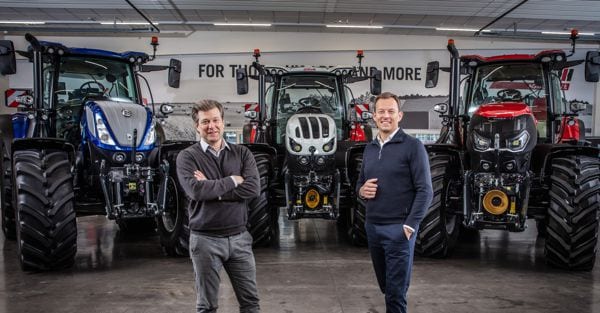
Two years ago he moved from the helm of Iveco to Cnh, in a negative market phase that saw the two reference sectors, Agriculture and Construction, contract cyclically. Ceo Gerrit Marx, who was in Turin last week to take part in one of the Italian Tech Week talks, together with the Group's number one for the Emea area, Markus Müller, analysed the macro trends that are characterising above all the agricultural sector, core for the Group controlled by Exor, with the Case and New Holland brands. On the one hand there is technology, "the real key to a sustainable farming model," stresses Marx, and on the other there is the drive to consolidate and increase market presence, in Europe and in expanding areas such as India.
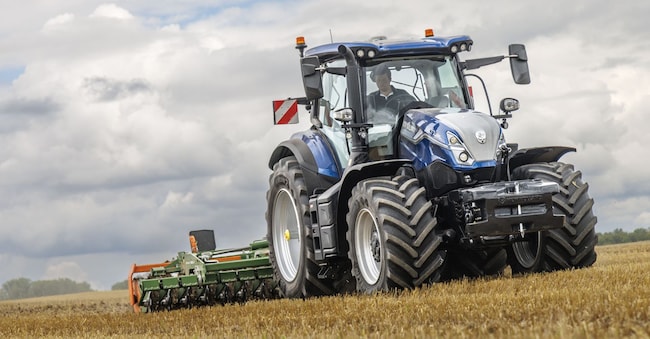
'We have reached the lowest market level,' explains Marx, 'and we are facing a very difficult situation. We do not expect major changes during 2026, but we do see some glimmer, the light at the end of the tunnel, particularly in the tractor segment, where we have achieved more on the retail side in recent months." In the first half of the year, the Group reported a 17% drop in revenues after 2024 contracted by 20 percentage points, to 19.8 billion, on 2023. Italy, Poland and even Germany, Marx says, are improving, while Uk and France remain challenging markets. "Next year we expect a recovery of around 5 per cent in the sector," he says. And it will be the T7 tractor family that will be the protagonist of the next Agritechnica, in November, the most important event in Europe for the agricultural sector, where Cnh will present the new range, equipped with CVT (Conuinuous variable transmission) technology for improved efficiency.
France and Germany - 'a country where Cnh is underperforming,' stresses Marx - alone account for between 40 and 50 per cent of the tractor division's profits. "But on Germany, for example, we have never really focused, and it is no coincidence that Markus Müller is now head of the Emea region for the Group," adds the ceo. Improving market share in this segment in Europe, then, is at least as important a driver as growing in very promising markets such as India, where Cnh has three factories and is opening a fourth, for small tractors.

The investment has not yet been quantified but India, Marx confirms, is a key market, not so much for 'margins' as for volume. "Every year 1.8 million tractors are produced worldwide, half of them in India. India is a strategic market for us because gaining market share in India against the Indian manufacturers gives us the recipe to beat them in areas like South America, where they are growing."
Profitability is synonymous with sustainability in agriculture, reiterates Marx, who lines up the structural nodes for the agricultural sector, starting with the decline in cultivated area against a trend of increasing world population, alongside the issue of the need to maintain healthy soils and ensure increasing crop quality, with less use of chemicals. 'We need to produce with higher yields and lower costs,' Marx emphasises, and technology, he reiterates, is the tool to meet these new demands. So electrification, emissions and autonomous driving remain in the background, the real focus is on the networking of machines, harvesting and data processing of soil and weather conditions and control of irrigation and fertiliser use.