
CNH to invest €21 million in logistics and a simulation facility in Modena
At the San Matteo Centre, a simulator that cuts design times by a third – EMEA President Mueller: “The crisis will not lead to a revision of the 2030 targets”
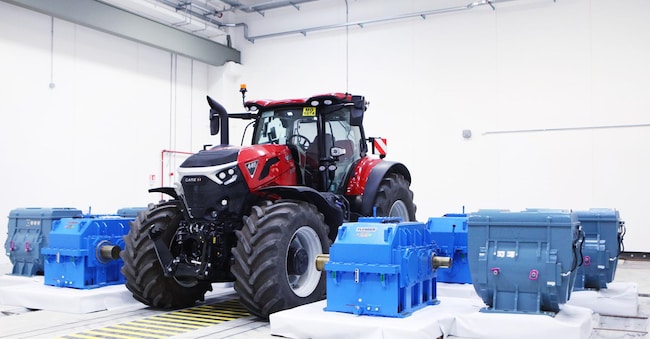
This is a two-pronged investment: on the one hand, to enhance the combined simulation process in order to speed up product design and development; and on the other, to implement a spare parts storage and delivery system that makes Modena one of the Group’s most innovative hubs globally. CNH is investing €21 million in the Research and Development Centre in San Matteo, in the heart of Motor Valley. This is one of the Group’s facilities in Italia, a country where the Exor-controlled Group employs just under 5,000 people.
The new virtual simulation ecosystem has been implemented to reduce product development times by a third, preventing design issues and improving testing processes as well as the overall industrial design of the solutions. As for the AutoStore™ automated warehouse – a technology developed by a Norwegian company specialising in automated cubic storage systems – it enables the Group to guarantee the availability of spare parts within 24 hours to its 1,200 dealerships in Italia and worldwide.
The
The backdrop is that of an agricultural market which has seen significant declines across all regions; these declines have led to a fall in production volumes, particularly at the Jesi plant over the last two years, and are likely to result in the cessation of production at Cesena, a site that will be converted into a logistics hub.
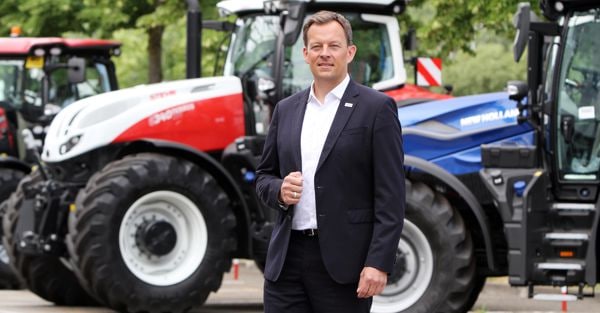
The market recovery hoped for in the EMEA region is under threat from the war in Iran and the crisis triggered by the closure of the Strait of Hormuz, with particular difficulties arising from the shortage of fertilisers. For Markus Mueller, CNH’s EMEA President, however, the current crisis will not lead to a revision of the 2030 targets set during last year’s Capital Markets Day – leadership in all key markets, an adjusted EBIT margin of between 16% and 17% by 2030, and a 25% increase in cash generation over the entire cycle.


