
Coop Report: Geopolitical turmoil leads households to cut back on spending
Dalle Rive: ‘We are calling on the government to breathe new life into and ensure the continuity of the dialogue between the large-scale retail sector and the government’

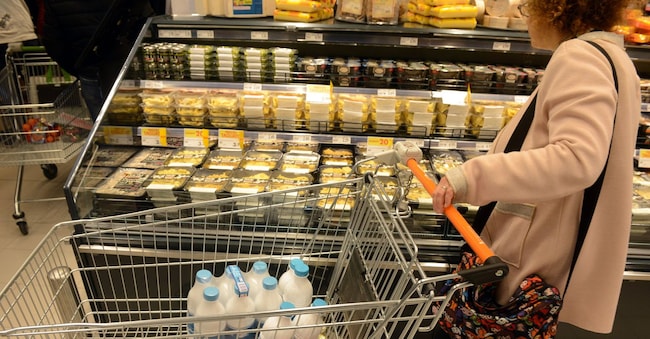
Geopolitical crises are holding consumer spending in check, and Italian households are discovering the value of ‘non-consumption’, which will characterise the coming months. This is a theme that emerges from the digital preview of the ‘Coop Report 2026 – Consumption and Lifestyles of Italians Today and Tomorrow’, presented yesterday morning, ahead of the ECB’s announcement that it would raise interest rates by 25 basis points. “I think the rise was a foregone conclusion and I do not expect a significant impact on the prices of packaged consumer goods,” explains Albino Russo, general manager of Ancc Coop. “There could be a minor impact on durable goods linked to purchases made on consumer credit.”
The report paints a stark picture. “By 2026, we will have a country turned in on itself, stagnant for twenty years, incapable of growth, as the key economic indicators show. The Coop Research Department estimates that GDP growth this year will not exceed 0.8 per cent, and 0.9 per cent in 2027,” continues Russo, who points out that in Italia, all the factors contributing to economic growth are either stagnant or in decline: productivity, demographics, business size and education. In Italia, consumption remains at a standstill, and we must not resign ourselves to stagnation, but Spain and Germany are managing to do better, whilst in France, following the ECB’s interest rate decision, INSEE has significantly revised its growth forecasts downwards to 0.4 per cent in 2026.
‘Non-consumption’ is gaining ground, with consuming less and combating waste becoming increasingly valued, as reported by 65 per cent of respondents. Many are choosing to reduce their consumption, with over 25 per cent doing so by personal choice, whilst the reuse of items and the elimination of the superfluous are on the rise. Furthermore, Italians earn less than they did 20 years ago and less than other Europeans, the Report notes. This is why Italia holds the far from enviable record of being one of the most unequal countries in Europe, where the Gini coefficient – which quantifies the level of inequality in the distribution of income or wealth – has risen by 2.5 percentage points over the last five years and where 67 per cent of people have experienced at least one form of hardship.
In an attempt to counter this trend, the workload has increased, with an average of 35 additional hours worked per year between 2019 and 2025, and many Italians are also working on public holidays
“The Report paints a picture of a country at a standstill, characterised by increasingly sharp social polarisation and a middle class facing serious difficulties,” comments Domenico Brisigotti, president of Coop Italia. “Those of us operating in the market must pay particular attention to demand, which remains weak. A possible – though undesirable – resurgence of inflation, perhaps fuelled by energy price pressures, could trigger a downward spiral in purchasing, both in terms of quantity and quality, which we would no longer be able to absorb.” People are working harder, but end up earning less, and it is becoming impossible to recoup the loss of purchasing power caused by inflation over the last five years. Spending outside the home is falling, according to 62 per cent of Italians, whilst 66 per cent cite the burden of economic hardship that is forcing these difficult sacrifices, with a substantial 38 per cent going so far as to say that ready-made meals from supermarkets are, in fact, a viable alternative to eating out.

