
Carriage driver who worked his horse to death faces prison
The judges have upheld the conviction for the offence of killing the animal. The defendant is said to have been motivated by significant financial interests

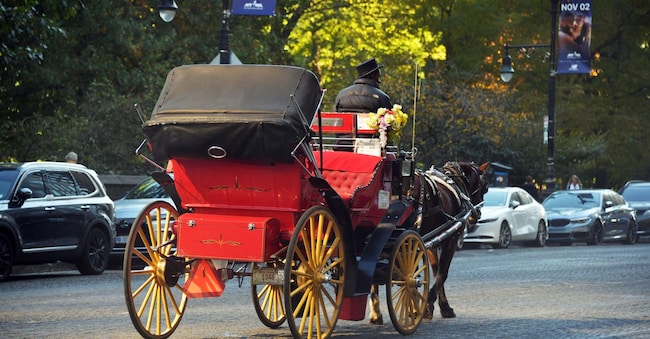
The coachman faces a prison sentence for exploiting her horse to the point of causing its death from heatstroke. The Court of Cassation has thus rejected the appeal of a carriage driver, employed at the Royal Palace of Caserta, who was convicted of killing her horse, Found Goal Pag, which had been forced, under the August sun, to take tourists for a ride. The animal pulling the carriage had collapsed to the ground, where it died. It had been given just 29 seconds to drink: not enough time to take in the right amount of water flowing from the tube placed in front of its muzzle.
Just 29 seconds to drink
None of the supposed “kind gestures” that the owner of Found Goal Pag claimed to have shown him hold water. These included placing him in a shelter near the Royal Palace. An argument put forward by the defence that has backfired. In the judges’ view, in fact, accommodating him near his ‘place of work’ was merely a way of bringing forward the start time of the hire service. And, speaking of shifts, the defendant, accused of failing to allow the horse to rest, had claimed that the Reggia’s regulations establishing shifts applied only to coachmen, without taking into account the inevitable impact on the animals. In the Supreme Court’s view, the fact that the shifts ran from 1 pm to 4 pm and that the horse had died at 12 noon did not rule out a breach. The horse had been pulling the carriage in ‘hellish’ heat, with only a few seconds to drink and without having been fed sufficiently: between 9.13 am and 12 noon, the time at which the horse collapsed, it had drunk only once.
Animals’ right to respect and dignity
In the view of the judges of the Court of Cassation, ‘the defence’s argument that fresh grass consists of more than 80 per cent water and that, given the circumstances that have come to light, a horse at the Royal Palace of Caserta may ingest liquids whilst grazing on the grass , which is present in large quantities, borders on the paradoxical’. And the Court of Cassation wonders what these ‘circumstances that have come to light’ are.
It is also completely beside the point to point out that other horses were on the track whilst Found Goal Pag was dying. These situations are not comparable because it had not been proven that the other drivers had allowed their horses very little time to drink, eat and rest.
The lust for profit
Hence the conviction for the offence of killing an animal out of cruelty or without necessity, punishable by a prison sentence ranging from six months to three years and a fine of between 5,000 and 30,000 euros. These penalties are increased if the act involves torture. In the case under consideration, even if one were to rule out cruelty – which was established at the lower courts – explains the Court of Cassation – the element of unnecessary killing remains, as the desire for profit that had driven the defendant to exploit the animal to the point of death cannot be classified within this context. This overlooks the fact that, by law, Found Goal Pag was entitled to be treated with respect and dignity to ensure his welfare.

