
Cocktails and stories to enjoy whilst sitting at the bar, just like the artists
The mythology of the bar. From Art Nouveau venues to designer spaces, from Milan to Palermo: the best places for unique experiences that blend taste and imagination

Key points
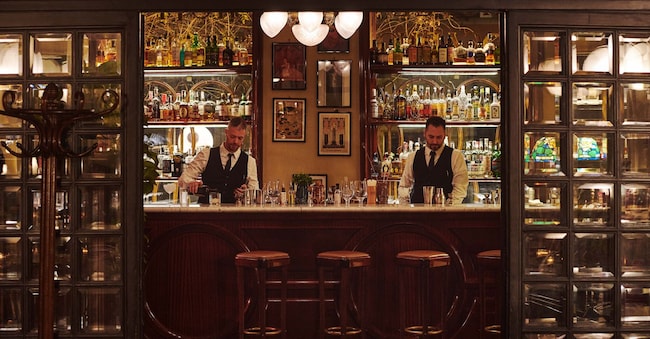
Made of cool marble or warm mahogany; of bent sheet metal or raw concrete. As long as a runway or short; mirror-polished or matt, marked by the rings left by the glasses of those who came before us. A bar counter is never merely a surface to rest things on: it is a psychological threshold, the boundary separating those who sit from those on the other side – standing, always on the move, with the calm of a surgeon or a lay confessor – ready to transform a vague request into a perfect balance of ice and spirits. Sitting at the bar means accepting a precise ritual: you find yourself side by side with strangers, looking in the same direction, as if at the theatre, united by the silent complicity of those waiting for something memorable to emerge from a measured gesture. It is no surprise that so much twentieth-century literature was conceived right there.
From the Ritz in Paris to the Raffles in Singapore
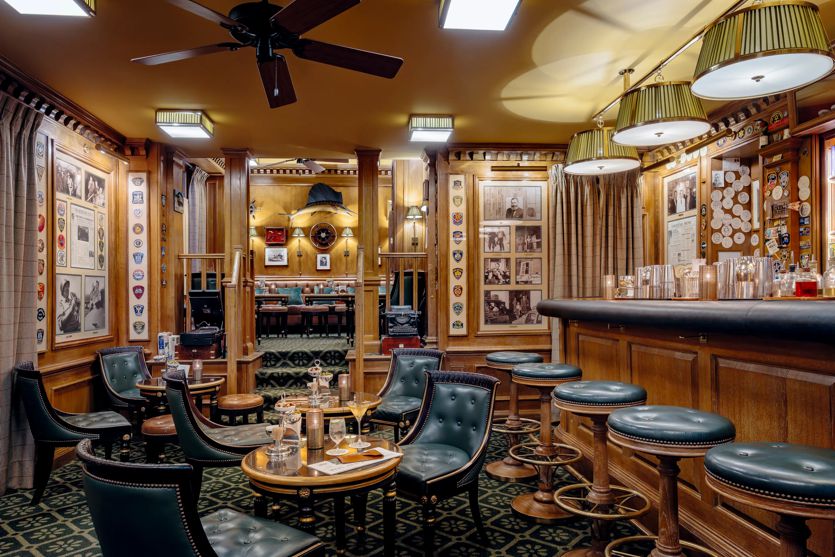
No one embodied this loyalty to the bar more than Ernest Hemingway: for the writer, the hotel bar was not merely a place to stop off, but a chosen home. The historic bar at the Ritz in Paris is named after him: the light-coloured wooden bar with its dark leather-upholstered edge – designed to rest one’s elbows on – is flanked along the walls by the writer’s memorabilia, almost as if to extend the intimacy of a private lounge where one might sip an impeccable Dry Martini. An atmosphere that resonates from afar with the luminous geometry of the American Bar at the Savoy in London (which opened in 1893), a historic temple where Ada Coleman and Harry Craddock codified modern mixed drinks behind a bar that demanded poise and elegance (even today, a strict dress code must be observed). At the opposite end of the spectrum, the long mahogany bar at the Long Bar in Raffles, Singapore – where Ngiam Tong Boon invented the Singapore Sling in 1915 – became, instead, an extension of the colonial veranda, designed to dispel the heat and formalities.
Whether it’s at Camparino or Moebius, to each their own drink
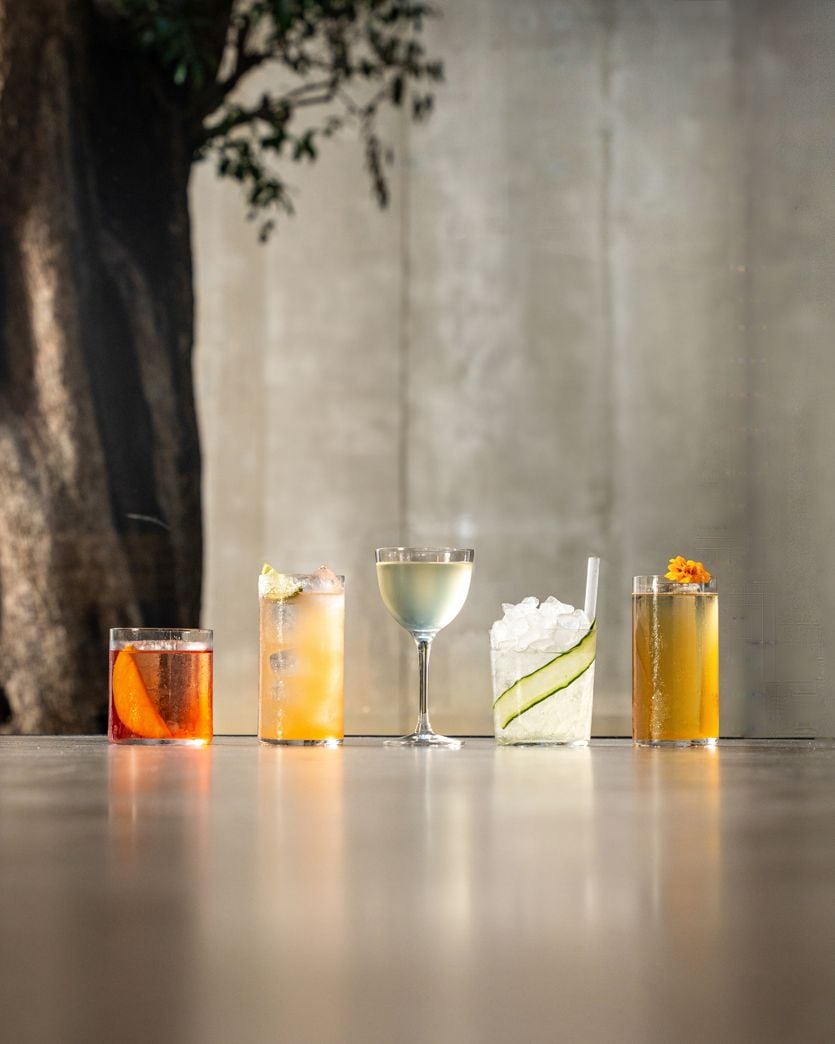
Italia, too, boasts its own sanctuaries of intimate, literary drinking. In Rome, a stone’s throw from Piazza del Popolo, the bar at the Hotel Locarno preserves the Art Deco atmosphere of the 1920s intact: a small, cosy wooden and brass bar counter that has become a private haven for artists, writers and film-makers – from Elsa Morante to Wes Anderson – where the boundary between barman and guest dissolves in the intimacy of a whispered conversation over a Bloody Mary. Further south, overlooking the Gulf of Palermo, the Igiea Terrazza Bar at Villa Igiea frames its historic bar (dating back to 1908) amidst the Art Nouveau spaces designed by Ernesto Basile for the Florio family, harmonising with the Belle Époque frescoes and the Mediterranean light. It is here that great contemporary mixology takes shape thanks to a synaesthetic menu devised by ‘The Maestro’ Salvatore Calabrese together with bar manager Luca Tramontana. At the opposite end of the spectrum lies Milan, which in 1915 codified the elegant speed of the standing aperitif at the Art Nouveau bar of the Camparino in Galleria, designed by Eugenio Quarti with wrought ironwork by Alessandro Mazzucotelli: here, one does not sit down to write a novel, but leans against the bar for the duration of a perfectly crafted Campari with seltzer, in a ritual that has set the rhythm of the city. It is this same, quintessentially Italian ease that, four years later, in Florence, at the bar of Caffè Casoni (later Giacosa) in Via de’ Tornabuoni, prompted Count Camillo Negroni to ask the barman Fosco Scarselli to ‘fortify’ his usual Americano by replacing the seltzer with gin. Since that legendary era, the baton has been passed to a new generation. Back in Milan, on the Navigli, the wooden bar at Rita has become a favourite haunt for those seeking perfectly crafted drinks (and a natter): here, Edoardo Nono created the Gin Zen, proving that new classics are born from listening directly to the customer. But also from excellent insights: the Design Collection menu is a liquid tribute to Italian creativity – from Achille Castiglioni to Vico Magistretti and Ettore Sottsass – with drinks such as Arco, Eclisse and Ultrafragola. And then there’s Moebius, on Via Cappellini, ranked the second-best bar in the world in the 2026 edition of The World’s 50 Best Bars: a long monolith of wood and concrete at the heart of a former textile warehouse, topped by a suspended steel bottle rack, transforms cocktail-making into an open-to-view theatrical performance.
Soft lighting inside Casa J.K. Place Rome
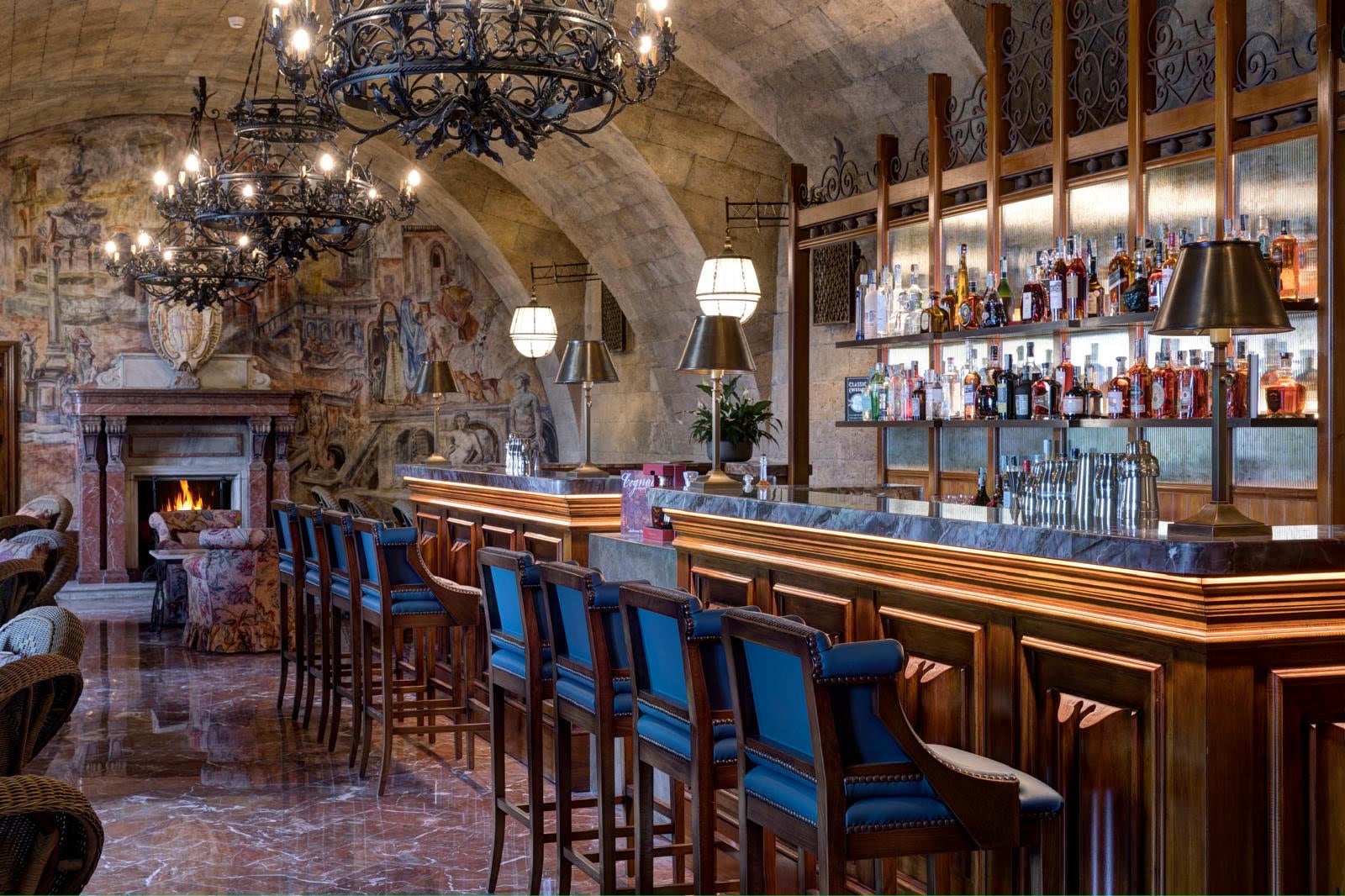
In the capital, Patrick Pistolesi’s Drink Kong Campo Marzio, located within Casa J.K. Place Roma, is rewriting the rules of the hotel bar, doing away with any sense of nostalgia and opting instead for a sensory immersion: crystal bottle racks, soft lighting and metallic reflections, cinematic references (there’s even a poster for *Lost in Translation*) but, above all, a gleaming black eight-metre bar where you can take a seat to order a Canova or a Gibson. Ultimately, the bar puts everyone on an equal footing: it’s never measured in metres, but by the length of time spent there. It holds stories — and it’s the best place to round off the day.

