
Fuel, Codacons: 150 million sting per week
According to the consumers' association, despite the price step backwards, the increase in list prices costs Italian motorists EUR 150 million per week, while oil companies and the supply chain collect EUR 88 million compared to two months ago and the State EUR 61 million thanks to VAT and excise duties

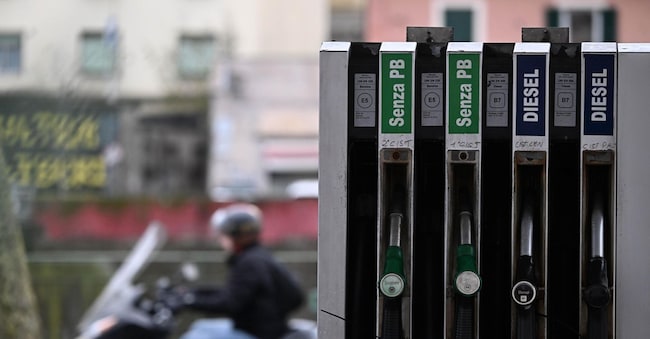
Generalised drop in fuel prices throughout Italy. On the ordinary network, the average price of diesel fell today to 2.166 euro/litre, down 1.4 cents per litre compared to yesterday's prices, while petrol fell to 1.790 euro/litre (-0.3 cents on yesterday). On the motorway, diesel costs 2.193 euro/litre (-0.8 cents), green 1.817 euro/litre (-0.6 cents). This was stated by Codacons, on the basis of regional Mimit data. The most marked reductions in price lists are recorded for diesel in Sicily (-2.3 cents per litre), Valle d'Aosta (-2.1 cents), Calabria (-2 cents), while in Molise the price of diesel remains unchanged. Price levels at the pump, however, are still very high, and compared to the pre-conflict period cost Italians the beauty of almost 150 million euros more per week just by way of higher refuelling costs, the association calculates.
Prices drop but it's a 150 mln a week sting
According to the Consumers' Association, despite the step backwards in fuel prices, the increase in list prices costs Italian motorists 150 million euros per week, while oil companies and the supply chain, compared to two months ago, collect 88 million and the State 61 million thanks to VAT and excise duties. Price levels at the pump, however, are still very high, and compared to the pre-conflict period are costing Italians the beauty of almost 150 million euros more per week just by way of higher refuelling costs," the association calculates.
In comparison with the average prices charged on the Italian network at the end of February, before the outbreak of the conflict in Iran, and despite the cut in excise duty ordered by the government, diesel fuel costs more than a quarter more in the last period, with an increase at the pump of +26%, while petrol has risen by about 7%, notes Codacons. "Translated into big numbers, a full tank of diesel costs about 23 euros more than in February, a full tank of petrol about 5.8 euros more - underlines the association - Considering the average daily consumption of fuels only on the ordinary network, i.e. on roads and motorways, Italians find themselves paying over 148 million euros more per week for their supplies: 128.7 million euros more for diesel, 19.5 million more for petrol".
Confesercenti-Cer: energy shock postpones growth until 2027
The energy shock triggered by the conflict with Iran, which is weighing heavily on Italians, also risks de facto postponing the recovery of the Italian economy until 2027. "Even assuming a lasting truce and a gradual return to energy prices, it would still take at least seven to eight months to return to full normalisation". Enough time to "significantly compromise the 2026 trend". According to Confesercenti-Cer estimates, the impact of the energy crisis 'halves, in just two months of conflict, the growth expectations of the Italian economy for 2026'. Despite the fact that the intervention on excise duties has made it possible to contain the direct impact of the fuel shock, the association calculates, GDP would still lose 0.3 points of growth, equal to EUR 9.7 billion less than in the previous scenario, while consumption would slow down by EUR 3.9 billion, with part of the shock being absorbed by households through a reduction in household savings (EUR -3.9 billion). The hardest hit would be investments, down by EUR 7.7 billion compared to the pre-conflict forecasts. To weigh, the increase in costs and uncertainty: "the rise in energy prices erodes margins and confidence, and companies postpone investment decisions".
How much have prices risen in Europe, from Bucharest to Rome
Since the outbreak of war in Iran on 28 February, diesel and petrol prices have risen in all EU countries and each state has taken decisions to curb the accelerated growth according to the specifics of their domestic markets: some have reduced taxes, others have intervened directly in the price formation mechanism. Outlining this scenario is a report published on hotnews.ro as part of the international PULSE project.

