
Coface, the air force pays the bill for the war in the Middle East
The closure of the Strait of Hormuz has drastically reduced the global supply of aviation paraffin of which around 20% is dependent on Gulf countries, triggering a price spike. In Asia and Europe jet fuel more than doubled compared to pre-war levels

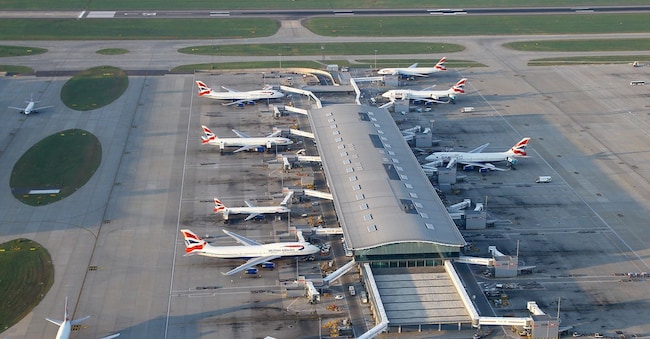
Tensions in the Middle East are having "significant repercussions" on the air transport sector with fuel increases "skyrocketing". An analysis by Coface, one of the world leaders in credit insurance and commercial risk management, highlights that the conflict in the Middle East is hitting the global air transport industry hard. The de facto closure of the Strait of Hormuz has drastically reduced the global supply of aviation paraffin (jet fuel) - of which around 20% depends on Gulf countries - triggering a price spike: iin Asia and Europe, paraffin has more than doubled compared to pre-war levels, surpassing the 2022 peak. In the US, the increase stopped at +70%, thanks to domestic refining capacity. A key role in the crisis is played by Kuwait, the world's second largest seaborne paraffin exporter with around 15% of global exports (Vortexa data), whose weight has grown rapidly since the start-up of the Al-Zour refinery in late 2022.Air ticket prices rose by around 18% already in the first two weeks of March on a year-on-year basis, and since mid-month airlines around the world have started to cut flights, focusing reductions on short-haul and domestic routes.
Complicating the picture are the export restrictions imposed by China and Thailand and the ongoing discussions in South Korea (the world's leading exporter of paraffin) to divert supplies to the domestic market. Routes are also affected: with Iranian and Gulf airspace closed, and Russian airspace already precluded since 2022, Europe-Asia connections are diverted to a congested corridor via Armenia and Azerbaijan, further adding to fuel costs. The two-week ceasefire announced on 7 April and the reopening of Hormuz offer relief that appears fragile:Kerosene stocks will take months to normalise and Middle Eastern refining capacities remain compromised.
Asian and low-cost airlines most exposed
According to the Coface report, the most exposed carriers are those in Asia, whichdepend on the Gulf for about 60% of their crude oil needs and operate almost without fuel price hedges. Vietnam has already cut flights as of 1 April 2026 due to the risk of shortages; the Philippines, with paraffin reserves estimated at 38 days as of 20 March, risks depletion by the end of April.In Europe, where over 40% of paraffin supplies transit Hormuz, possible shortages are already looming in May, although European airlines have covered an average of 80% of 2026 fuel needs. The alternatives are limited: Nigeria's Dangote refinery, at full capacity, can export around 100,000 barrels/day compared to the 300,000 that Europe normally imports from the Gulf.
On an industrial level, fuel normally accounts for 25-35% of airline operating costs (a much higher share today) and low-cost carriers are the most vulnerable: 38% of listed low-cost carriers have an average negative operating margin in 2025, compared to 27% for traditional airlines. Company size does not offer significant protection. If energy prices remain high for a long time, the margin squeeze will spread throughout the industry, with the risk that inflation will erode demand for travel and prevent airlines from continuing to pass on higher costs to passengers.


