
Coface: Trade negotiations between the US, Canada and Mexico are proving difficult, but a breakdown is unlikely
The review of the USMCA is expected to be ‘long and complex’, but the economic ties between the three countries are too deep to be severed. The value of trade between the United States and each of its two neighbouring countries has reached $800 billion since the agreement came into force

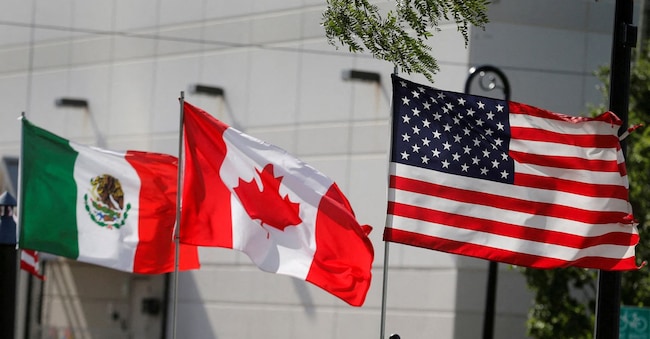
(Il Sole 24 Ore Radiocor) - A ‘delicate phase’ is beginning for trade relations between the United States, Canada and Mexico. The review of the USMCA (United States-Mexico-Canada Agreement) is expected to be ‘long and complex’, given the differences between the three countries on the key issues at the heart of the negotiations. However, ‘a breakdown of the agreement seems unlikely’, given that ‘over more than thirty years, the North American economies have forged industrial and commercial ties that are too deep to be severed without significant consequences’. This is the finding of the latest analysis by Coface, one of the world’s leading providers of credit insurance and commercial risk management. “Negotiations on the USMCA are beginning against a backdrop of high tension, but the United States, Canada and Mexico have, over time, built a deeply interconnected production system. Severing these ties would have major consequences for businesses in all three countries, particularly in strategic sectors such as the automotive and energy industries,” comments Ernesto De Martinis, CEO of Coface’s Mediterranean & Africa Region and board member. “For companies operating in North America, the main challenge will be managing the uncertainty surrounding trade rules, tariffs and the organisation of supply chains. In this context, gaining a thorough understanding of the markets, assessing the financial strength of counterparties and diversifying supply sources becomes essential to protect the business.”
Half of the vehicles imported from the United States come from Canada and Mexico
Following the entry into force of the USMCA (in 2020), the value of US trade with each of its two neighbouring countries rose from around $615 billion in 2019 to nearly $800 billion in 2022. Canada and Mexico have thus overtaken China as Washington’s main trading partners. The automotive sector is one of the most striking examples. Canada and Mexico account for 51 per cent of vehicles imported by the United States and 58 per cent of components purchased abroad. Before being fitted to a car, a single part may cross the US-Mexico border as many as five or seven times. The same applies to energy: Canada accounts for 60 per cent of US crude oil imports, confirming its status as an essential supplier to the American market. ‘Dismantling this trade network,’ the report highlights, ‘would therefore entail very high costs for businesses and risk causing difficulties for entire manufacturing sectors in all three countries’.
The dispute could drag on for a long time
On 1 July 2026, the first official review of the USMCA – the trade agreement that came into force in 2020 to replace NAFTA – began. The original intention was for this review to serve primarily as an opportunity to assess how the agreement was functioning. However, the deterioration in trade relations has turned the review into a full-scale round of negotiations. The United States is seeking to amend some of the most significant aspects of the agreement, including rules on the origin of products in the automotive sector, Canada’s and Mexico’s trade relations with China, access to the Canadian dairy market, and certain energy policy decisions by the Mexican government. Ottawa and Mexico City, for their part, do not appear willing to accept all of Washington’s demands. The scope for a swift agreement therefore appears limited, and the negotiations could drag on for some time.


