
Steel from Cogne heats Aosta and the steel industry is more sustainable
Made with Telcha, it will transfer heat from the furnace to district heating. Cogne Acciai Speciali General Manager Pirovano: 'It testifies to our desire to innovate'. Telcha president Moioli: "A virtuous example of circular economy".
3' min read
3' min read
Five million euro investment to complete a project that avoids the emission of over 11 thousand tonnes of CO2. These are, in a nutshell, the figures relating to the heat recovery plant that has seen the virtuous collaboration between Cogne Acciai Speciali and Telcha, a company of the Engie group that deals with district heating in Aosta. The plant was inaugurated a few days ago and represents a further important step in the path that the Valle d'Aosta steel company has been following for some time on the road to sustainability.
"We are proud of this heat recovery plant, the result of a project that represents a concrete step towards sustainability and the reduction of emissions in Valle d'Aosta," confirms Monica Pirovano, general manager of Cogne Acciai Speciali.
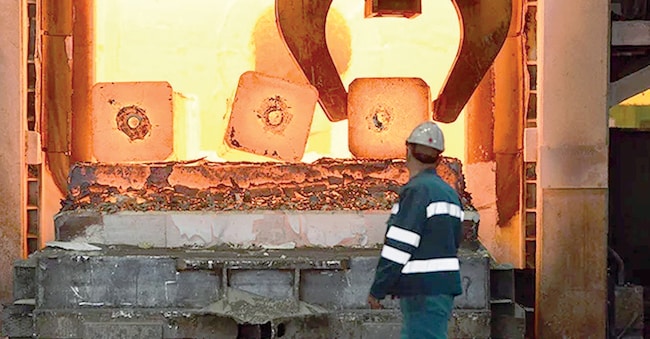
It all started about a year ago, when the steel company and Thelca signed an operating agreement. The aim was to exploit the excess heat from industrial activities to feed the district heating networks in a more sustainable and efficient way; to achieve this, it was essential to recover the heat from the steelworks' melting furnace and transfer it to the Aosta district heating network.
The plant, scheduled to come into operation in 2023, is the first to be built in the region, which is also why its presentation was attended not only by the top management of the two companies - in addition to Monica Pirovano, CEO of Cogne Acciai Speciali, Telcha CEO and president Fabrizio Moioli - but also by institutional representatives Luigi Bertschy, vice-president of the region and councillor for economic development, training and employment, transport and sustainable mobility, and Gianni Nuti, mayor of Aosta.
This is, says Fabrizio Moioli, 'a virtuous example of circular economy where unused thermal energy is transformed into a valuable resource for the city's district heating network. This approach,' the manager continues, 'not only reduces CO2 emissions but also contributes to improving energy efficiency and urban sustainability, offering tangible benefits for the environment and the local community and representing a concrete lever for the country's ecological transition.


