Crisis in the Middle East

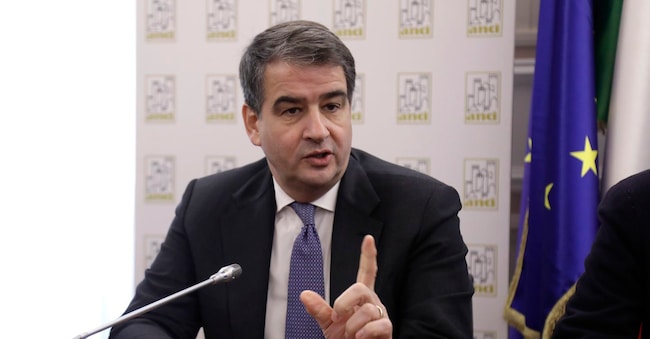
Cohesion funds against high energy prices, clash between EU Commissioner Fitto and the regions

"The energy crisis is real. The proposed solution is not," wrote the President of the European Committee of the Regions, Kata Tutto, on X, accusing Brussels of turning cohesion policy into an 'emergency cash machine' at the expense of long-term structural investments

by Rome Editorial Staff

 7146

3' min read

Translated by AI
Versione italiana

3' min read

Translated by AI
Versione italiana

In the end, it was the European Commissioner for Cohesion, Raffaele Fitto, who found a way out for the member states that were asking for more financial flexibility to deal with the new energy emergency. After weeks of talks without concrete results between Brussels and the European capitals, the Commission has opened up the possibility of using already available cohesion funds to support households, businesses and energy investments.

The Italia government's request

The move came in response to pressure from several governments, including Italia. Only a few weeks ago, Prime Minister Giorgia Meloni had formally asked Brussels to extend to the energy sector the exemptions to the Stability Pact envisaged for defence, in light of geopolitical tensions in the Middle East and the repercussions on international energy markets, aggravated by the closure of the Strait of Hormuz.

Loading...

Fitto's intervention

Political agreement, however, proved difficult. Hence the intervention of Fitto, an exponent of Fratelli d'Italia and Vice-President of the Commission with responsibility for Cohesion, who, in a letter addressed to the 27 member states, indicated an alternative solution: speeding up and reshaping the use of cohesion policy resources and the Just Transition Fund (JTF).

The starting point is a voluntary review of European programmes that has already freed up some EUR 35 billion at EU level, of which EUR 7 billion is earmarked for Italia. Resources that could now be directed towards interventions against the high energy price without opening a new negotiating front on the Stability Pact.

The request to accelerate

In his communication to European ministers, Fitto emphasised the need to make "full and timely" use of the European funds already available, especially in a phase characterised by rising energy prices and increasing pressure on households and the production system. This call is part of the new 'AccelerateEU - Energy Union' strategy, with which Brussels aims to accelerate investment in clean energy, industrial resilience and social equity.

Particular attention is given to the Just Transition Fund, also financed through NextGenerationEU. The programme's resources must in fact be committed by 31 December 2026, otherwise they will be defunded. For this reason, the Commission has called on the Member States to accelerate the implementation of the programmes, including through financial advances, procedural simplifications and possible revisions of national plans.

According to Fitto, the Jtf regulation already offers sufficient margins to support investments in energy efficiency, sustainable mobility, infrastructure and the spread of clean energy. Among the measures indicated are the energy improvement of public buildings - schools, museums, sports facilities - and the strengthening of support measures for energy-intensive households and businesses.

The strategy aims to reduce Europe's dependence on fossil fuels and limit exposure to international market turbulence, turning the emergency into an opportunity to strengthen the Union's energy security in the long term. Brussels also does not rule out a revision of the geographical perimeter of the Territorial Plans for the Just Transition, recognising that the impact of the energy transition is extending to more territories than originally expected.

EU Regions' accusation: "Cohesion Funds are not an ATM"

However, there is no shortage of criticism. The President of the European Committee of the Regions, Kata Tutto, openly contested the idea of using cohesion funds as an emergency instrument. 'The energy crisis is real. The proposed solution is not,' she wrote on X, accusing Brussels of turning cohesion policy into an 'emergency cash machine' at the expense of long-term structural investments.

According to Tutto, Europe's energy resilience has been built thanks to two decades of continuous and planned territorial investments, while the systematic recourse to cohesion funds to manage crises risks weakening the very objectives of the just transition. A criticism that reflects the growing internal confrontation within the Union between emergency needs and the protection of long-term industrial and territorial policies.

Copyright reserved ©

Brand connect

Loading...

Newsletter

Notizie e approfondimenti sugli avvenimenti politici, economici e finanziari.

Iscriviti