
Coldiretti: 9 billion sting for farmers in 2024
No to the EU-Mercosur agreement: 'Besides damaging European companies, it will bring 1.8 billion in aid to South American farmers'

3' min read
3' min read
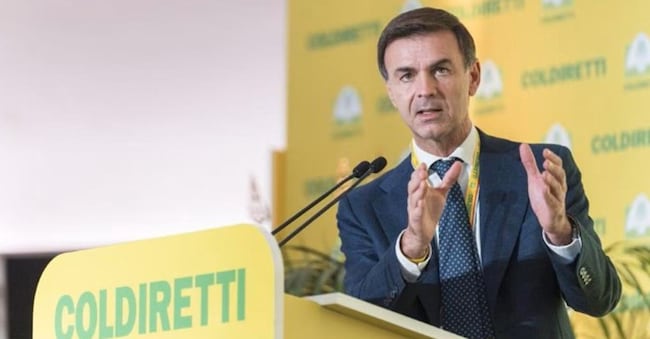
From climate change to epidemics, in 2024 Italian agriculture will pay a price of 9 billion euro: a disruptive impact on the incomes of businesses, already struggling with the problems caused by unfair competition from foreign imports and high production costs. This is the balance sheet of the last year in the fields as outlined this morning by Coldiretti, meeting in Rome for the national assembly.
Drought and bad weather have devastated agricultural production from North to South, with double-digit declines for some crops such as wheat (-20%) and olive oil (-32%). The drought also weighed on wine production, down 13% compared to the average production of recent years. Rice and hazelnut production also decreased. Added to the scourges of the climate are the effects of the epidemics that have hit Italian livestock farms, from African swine fever to bluetongue and bird flu, with hundreds of thousands of animals slaughtered. For the first time, the number of farms in Italy has fallen below the 700 thousand mark. This is why Coldiretti today calls for urgent action to support the sector, starting with European policy choices.
The association also asks the Brussels institutions to defend Europe's food sovereignty and its agricultural exceptionalism. A concept, the latter, which also gives the title to today's assembly: 'It is necessary to ensure,' explains Coldiretti, 'that the resources of the Common Agricultural Policy only go to real farmers. An essential measure to reduce Europe's vulnerability and defend what scholars call 'agricultural exceptionalism': the attention given to agriculture and food over other sectors, motivated by the fact that the security of food supplies is an essential part of national security and sovereignty'.
Food sovereignty, the association argues, also depends on defending the principle of reciprocity in trade. That is why today's assembly reiterated its no to the free trade agreement signed a few days ago between the EU and Mercosur. "Even 74% of Italians are opposed to agreements, as in the case of Mercosur, that provide for concessions with countries that have less stringent health, safety and social rules than those of the EU countries," the association argues on the basis of a Coldiretti/Censis survey.
Adding to the perplexity over deforestation and respect for workers' rights is the fact that in South American fields, substances that have been banned in the EU for years are now widely used, from fungicides to insecticides to herbicides. "Thirty per cent of the products used in Brazil are today not allowed in the Old Continent," writes Coldiretti, "not to mention the use of some antibiotics (bacitracin, flavomycin, lasolacide, monensin, virginiamycin) as growth promoters, a practice that has instead been prohibited in the EU since 2006. The agreement between the EU and Mercosur will instead allow hundreds of millions of kilos of beef, pork and chicken, as well as rice, honey and sugar, to enter Europe at zero duty. In the case of chicken, the association estimates that this will account for about 10% of European consumption of this type of meat.


