
Coldiretti Turin: no grass for cows in the mountains
"The abnormally hot weather at the beginning of summer," comments Coldiretti Turin president Bruno Mecca Cici, "has taken food reserves away from the mountain pastures, which are now in difficulty.
2' min read
2' min read
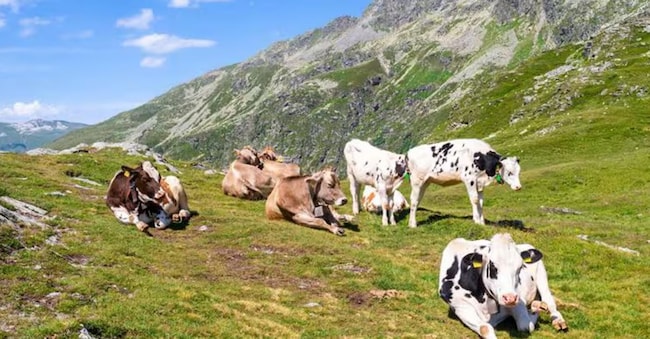
"Grass is scarce in the mountains and for the cows the situation is starting to become critical. The great heat at the end of June and the beginning of July together with the windy days are now making their effects felt on the pastures in the Turin valleys. The mountain grasses blossomed and ripened well in advance as the herdsmen climbed the mountain pastures. And while they grazed their herds at early season altitudes, up high the grass was already yellowing'. This was reported by Coldiretti of Turin.
"The abnormally hot weather at the beginning of the summer,' comments Coldiretti Torino president Bruno Mecca Cici, 'has taken food reserves away from the mountain pastures, which are now in difficulty. A problem that re-proposes the importance of reopening the dense alpine irrigation network, now completely abandoned, made up of small canalisations with intakes in the streams, which once irrigated the pastures in a capillary way". 'We cannot imagine,' Coldiretti Torino stresses, 'the consequences of the European Pac premiums being cancelled by the European Commission, which is looking for money for rearmament.
The supply chain
."In the valleys," it is explained, "more than 35 thousand cattle graze, distributed in 420 mountain pastures from 789 lowland farms. In addition, there are over 44 thousand sheep, distributed in 200 mountain pastures. In the Piedmont valleys, there are more than 96 thousand cattle while sheep and goats exceed 105 thousand. There are about 3,000 alpine pasture workers in the province of Turin. The production of fine cheeses and butter is worth around 7 million. Of the 35,000 cows that spend the classic hundred days in the summer in the mountain pastures, about half are beef cattle, mainly of the Piedmontese breed. The other half is made up of dairy cattle that, in one season in the mountain pastures, produce over 11 million litres of milk that, in the 200 or so authorised mountain pasture dairies, are transformed into over 80 thousand wheels of mature cheese, where the fragrant Toma (the most celebrated is that of Lanzo) stands out, followed by Plaisentif, the violet cheese, Cevrin, and Blue Blue marbled (to name the most sought-after). To this must be added the more than 200,000 half-kilogram loaves of butter'.

