
"Collective welfare is pursued if part of individual utility falls away".
. .

6' min read
6' min read
"Many years ago we lost our culture war. In the 1980s, in the US, neoclassical economists took a hegemonic position, the Chicago school grew a lot and the Washington Consensus became the primary political and cultural structure. And we have, almost, surrendered to the transformation of liberal thought into liberalist ideology and its predominance in Europe and Italy. But, today, much has changed. And it is worthwhile to return to measure ourselves, with intellectual conviction and without inferiority complexes, on the relationship between the human being, the economy
and society. Knowing that the entrepreneur is at the centre of things. And that, what drives him, is not the selfishness of mainstream economic models. But, what drives him,
is passion and desire'.
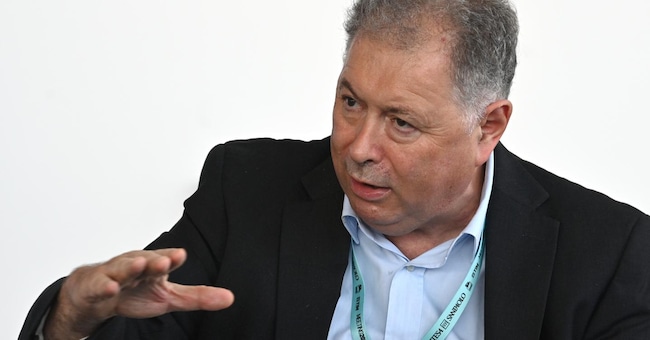
Giorgio Vittadini - born in 1956 - is the president of the Foundation for Subsidiarity and belongs to the community of economists who - between academia and publishing, politics and large public enterprises - trained at the Catholic University of Milan. He then continued his university career as a statistician at the Università Statale and the Bicocca University in Milan. At Cattolica, he joined the Communion and Liberation movement, becoming one of its leading figures.
We are at the Antica Osteria Cavallini in Via Mauro Macchi, near the Central Station. Not far away is the Via Gluck sung by Adriano Celentano: 'I used to live on the other Via Gluck in Milan. My dad Guido was a paediatrician. My mother Marisa, a housewife, worked in a hospital as a nurse before her marriage. Our house was in the Baggio district. All around grew meadows and fields. We were in the middle of the countryside. The only trace of industrial modernity was Durbans, the toothpaste company. We felt grown-up, as children, when we rode our bikes past the factory and when, on TV, Carosello was showing Virna Lisi's advertisement with the slogan 'with that mouth she can say what she wants'".
A fresh artichoke salad with Parmesan cheese arrives on the table. I, on the other hand, have a tartare of Piedmontese fassona with anchovies, capers, mustard and Russian salad. My tartare is very good. His salad must be too, because he immediately asks for another portion. Vittadini is a pure intellectual who lends himself to a meticulous and close comparison of positions. He knows how much - unlike what is usually believed - ideas change the state of things and activate deep and radical processes that are hardly visible at first. There is nothing violent about it, but it is robust. Its robustness is tempered by roundness of body and soul. Vittadini says: 'In Milan, Luigi Pasinetti, a pupil of Piero Sraffa, the banker economist Siro Lombardini, Ezio Tarantelli, who would be killed in 1985 by the last splinters of the Red Brigades for his studies on the political economy of labour, the sociologist and leading thinker of the CISL Guido Baglioni, taught. In Bologna, which was the other great Catholic school, you could find Beniamino Andreatta and his pupil Romano Prodi, who had graduated from Milan's Catholic University. It was a world politically Christian Democrat and culturally inclined to the mixed economy. Eni, Enel, Telecom, Montedison and the Iri galaxy were its industrial and technological underpinnings. We studied Ricardo, Schumpeter, Marshall, Keynes. Without, however, expressing acts of faith towards any author or for any method. Culturally speaking, we did not understand the danger of two phenomena, one from the early 19th century and one from the late 20th century. The first was the acceptance of Auguste Comte's thinking that theorised the human sciences as neutral as physics and chemistry. The second was the blind self-conviction of the mainstream economy in general, and of liberalism in particular,
to think of itself and to set itself up as a science that is not
just exact, but given and natural, precisely like physics and like chemistry.
For the main course, he chooses a fillet of sea bass au gratin with lemon purée, which he wipes out in one bite. With the same dedication, I eat tagliatelle with Bolognese sauce which - the waiter specifies - has been cooked for seven hours. No wine. It is midday. Only mineral water. Vittadini continues: 'There is a strange selective memory. Kenneth Arrow's impossibility theorem is always remembered for its first part. In the first chapter of his 1951 book, the Nobel laureate in economics explains that it is mathematically impossible to reconcile individual and collective well-being. In the second chapter of his book, which no one ever mentions, Arrow argues that by dropping a part of individual utility by an act of renunciation by individuals, everything changes and collective welfare becomes achievable. The act of renunciation by individuals is precisely an anthropological and human issue. The individual's choice changes the conditions of reality and makes possible what, with the pure algebra of egoism, is not'.


