Interview

Lollobrigida: ‘Coltiva Italia: over a billion for agriculture to strengthen supply chains’

Agriculture Minister Lollobrigida outlines the measure approved today by the Senate: funding to strengthen strategic supply chains, from beef to olive oil and cereals

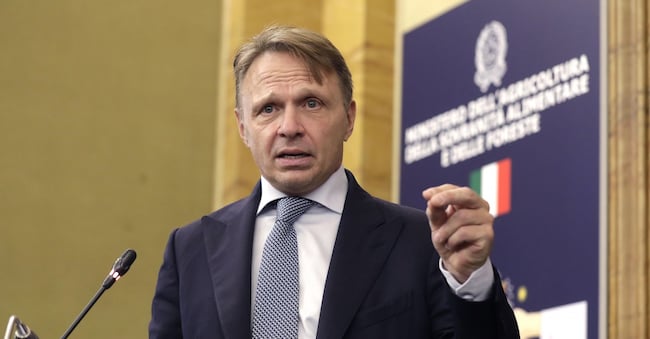
 IMAGOECONOMICA

5' min read

Translated by AI
Versione italiana

5' min read

Translated by AI
Versione italiana

The ‘Coltiva Italia’ bill – the Meloni Government’s flagship measure on agriculture – was approved this morning in the Senate with 76 votes in favour, none against and 64 abstentions. This law allocates over 1,100 million euros to the agricultural sector to strengthen certain strategic supply chains within the ‘Made in Italy’ food industry – from beef to olive oil and cereals – to encourage generational renewal, to promote the multifunctionality of agricultural businesses and to support research in the sector. This law brings full circle the process that began with the renaming of the Ministry of Agriculture, which, at the start of the parliamentary term, became the Ministry of ‘Agriculture and Food Sovereignty’. ‘The Coltiva Italia programme,’ explains the Minister for Agriculture, Francesco Lollobrigida, ‘is the most significant strategic initiative in agriculture since the 1970s, when the Quadrifoglio Act was introduced by the then Minister Giovanni Marcora.’ “I do not know if it brings things full circle, but it certainly builds on what our Government has done throughout this parliamentary term. It is a measure consistent with the aim of putting agriculture and fisheries back at the centre of the Executive’s debate and action. Over recent years, we have invested nearly 17 billion euros in the sector through budget measures and the National Recovery and Resilience Plan (PNRR), as well as various secondary measures. This is more than any previous government has invested, and more than other countries in Europe are currently investing. These efforts have already yielded significant results. From 2024, we will be the European leader in terms of agricultural value added. In recent years, we have seen farmers’ incomes rise and, despite geopolitical tensions, we have seen growth in agri-food exports and in employment within the food and wine industry.”

Over the past few years, you have also spent a great deal on dealing with emergencies – just think of fuel, for example.

Loading...

Of course, we have had to deal with emergencies such as the rise in production costs and animal diseases like swine fever and avian influenza. But we have also invested heavily in infrastructure. In the initial draft of the NRRP, agriculture was treated almost like Cinderella, with a budget of 3.6 billion. We have increased the allocation to 8.9 billion by investing in supply chain contracts and agrivoltaics. Around 3 billion has been invested in renewable energy production, involving over 30,000 businesses which have tripled their energy production targets.

In this context, what is Coltiva Italia’s role?

Coltiva Italia represents the future. What do we want from the agriculture of the future? What foundations do we want to lay so that the sector can continue to develop?

What is the point of food sovereignty? Surely Italia isn’t aiming for autarky?

Of course not. We are well aware that we could never become completely independent of imports for our agri-food production. But we would at least like to become a little less dependent. These years of international tensions have shown us that even a minor disruption to supplies is enough to cause difficulties. During the roadblocks, it took even less for food to disappear from the shelves. It is a matter of food security for the country. There are other nations that even use food as a weapon. We would at least like to be able to defend ourselves.

Which supply chains should we start with?

We have identified beef production and olive oil production as the first two sectors to be strengthened. A budget of 300 million euros has been allocated to each. And then there is an ‘open’ fund – flexible, one might say – of a further 370 million, which will be channelled into other sectors critical to our agri-food production. One of these is certainly cereal production, specifically durum wheat for pasta. However, we reserve the right to identify other production sectors that may become significant in the future. I am thinking of chestnuts, truffles or hazelnuts – crops where our supply falls short of market demand. The details will be set out in implementing decrees which are already being drafted and are the subject of discussions between the Ministry, agricultural organisations and the regions.

Priority, however, is given to livestock farming and olive oil

Loading...

Yes, but with a few specific conditions. As regards livestock farming, 80 per cent of the resources will be allocated to the regions of Southern Italy. We want to encourage a form of extensive livestock farming that involves the hilly and mountainous areas of southern Italia. We believe this will also help to repopulate those rural areas, with benefits for the prevention of hydrogeological instability as well.

And what about olive oil, another product synonymous with ‘Made in Italy’?

Here too, the details will be set out in the implementing decrees. However, over recent years, Under-Secretary La Pietra, together with the regions and farmers, has drawn up a National Olive-Growing Plan which will guide the measures to be taken. We will certainly encourage replanting with resistant varieties in the areas affected by Xylella. We will certainly encourage high-quality production and the many varieties of Italian extra virgin olive oil. Olive oil must follow in the footsteps of wine. Today, consumers are familiar with regional wines and their characteristics. There is ample scope to promote the hundreds of Italian cultivars.

Another key financial fact sheet is devoted to generational change in agriculture.

Not only that, but the 150 million allocation will go to young people and women entrepreneurs. Of these funds, 35 per cent will be non-repayable grants, whilst 65 per cent will be used to subsidise low-interest loans. This initiative goes hand in hand with the ISMEA scheme, which makes over 8,417 hectares of land available to young people, who will be able to farm it for 10 years and, at the end of that period, buy it at 50 per cent of its initial value.

There are also supply chain contracts, the Xylella Commissioner, inspections and streamlining measures.

Yes, there are funds available to encourage supply chain contracts in the durum wheat sector, with a view to stabilising farmers’ incomes and protecting them from excessive price fluctuations. There is a budget of 3 million for the National Commissioner for Xylella, who will remain in post until 31 December 2028 and will lead prevention measures. We are also strengthening checks on the origin of agri-food products (starting with olive oil and tinned tomatoes) and streamlining bureaucracy by strengthening the role of the CAAs, the Agricultural Assistance Centres (CAA), which, compared to the past, will have greater powers to intervene in the event of irregularities or discrepancies in declarations.

Copyright reserved ©
Loading...

Brand connect

Loading...

Newsletter

Notizie e approfondimenti sugli avvenimenti politici, economici e finanziari.

Iscriviti