Personal well-being

Combating stress with a simple daily gesture: the benefits of tapping

It focuses on the pressure and stress of certain meridian points: eyes, collarbones, chin, head. Through the simple movement of the fingers, for a few minutes a day, it activates concentration and balance.

by Jemima Kelly

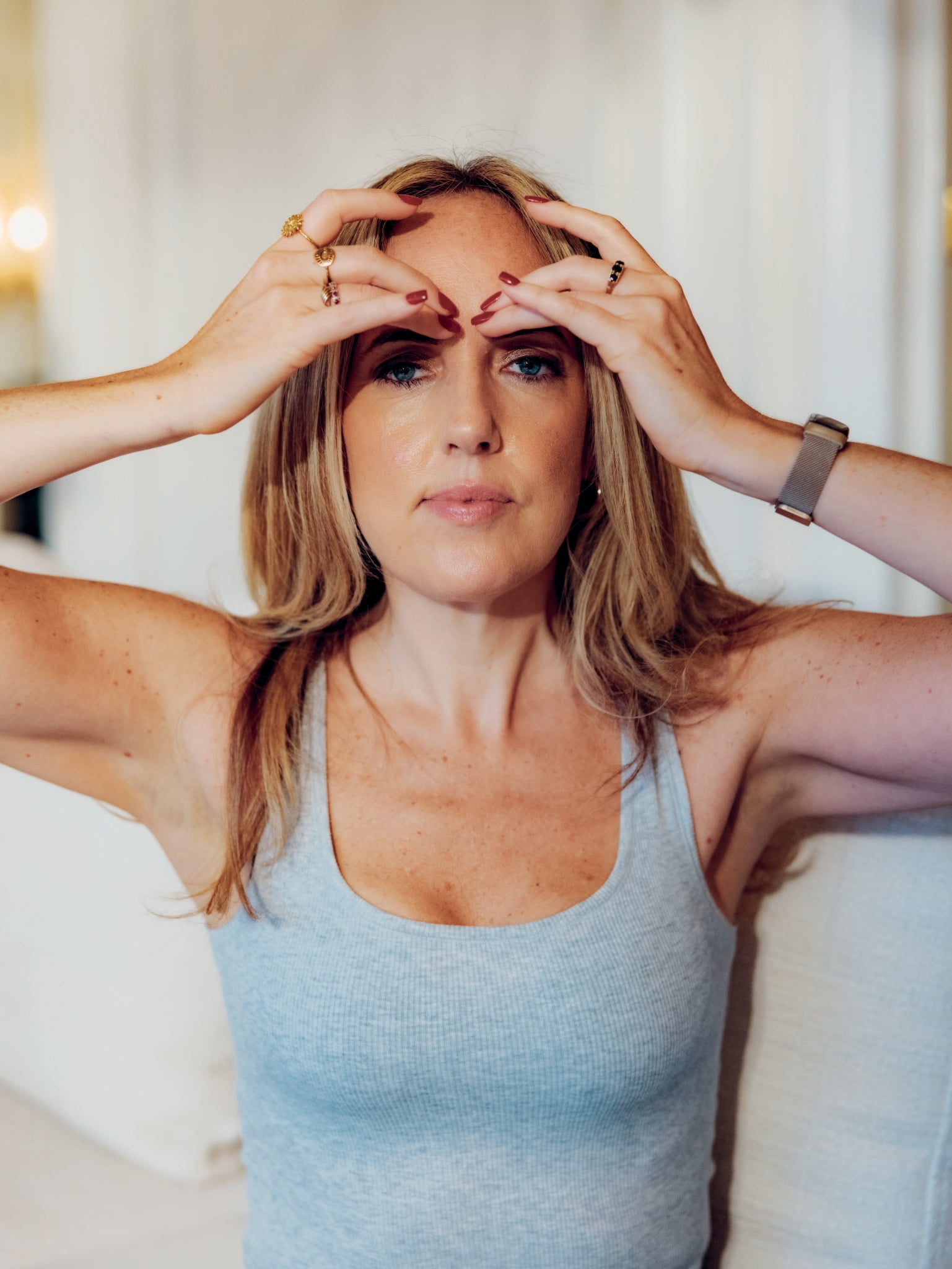
L’autrice di questo articolo durante la pratica del tapping. Foto ©Lewis Khan

6' min read

6' min read

As a journalist, I am used to observing the world around me in a sceptical, often irreverent way. I tend to question everything - not just for the sake of it, but for professional reasons: I get suspicious when too many people agree and take a truth for granted. I am often called a voice out of the chorus: some time ago, I did a podcast series called A Sceptic's Guide to Crypto. In my bio on X I introduce myself as an ironic cynic.

Therefore, you may be surprised to read what my guilty pleasures are and to find out how I occupy my free time. Well, I'll be honest: I make use of the term synchronicity and place a lot of value on coincidences. I swear by my decidedly psychic kinesiologist. I am obsessed with Co-Star, an app that claims to use data from NASA to offer super-accurate horoscopes generated by artificial intelligence (in my partial defence, it was suggested to me by a more senior colleague than me. I will not name names). I write my Morning Pages, as suggested by Julia Cameron, author of the best seller and creativity bible The Artist's Way. How can someone so distrustful of mainstream opinion, so convinced of the importance of truth and objectivity, be attracted to practices that many might consider quackery? The answer I think is simple: I have a curious mind. Although I believe in the value of empirical reason, I think it is indeed rational to explore alternative approaches to science, medicine, life.
Loading...

©Lewis Khan

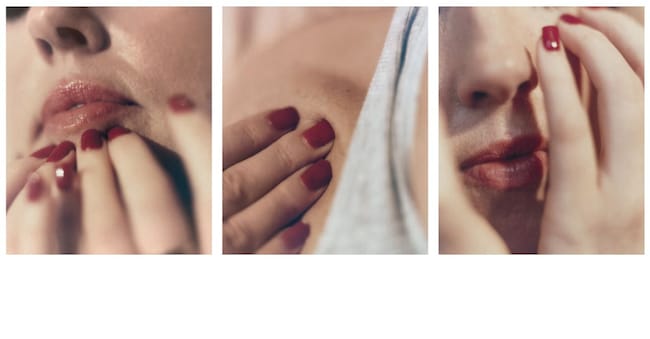
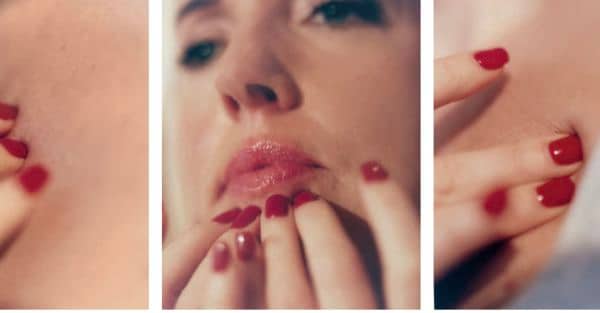
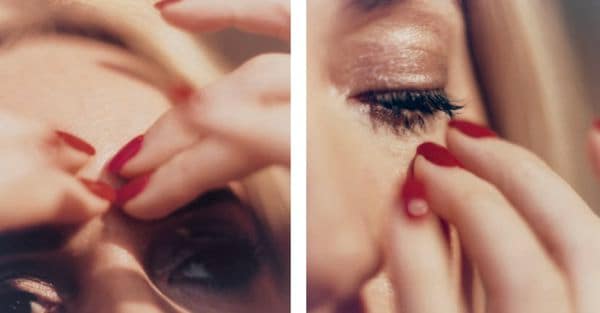
That's why I find myself in an Edwardian-style suite at London's Savoy hotel, gently pressing my fingers on specific points of my eyebrows, as silent tears roll down my cheeks. "I feel like a hamster on an endless wheel of appointments," I repeat to my instructor as I tap, having updated her on my emotional state. "I'm sick of it," I say as I move my fingertips down to the side of my eyes. "Argh" - under my eyes. "Phew" - under the nose. "Too many dates" - under my lower lip. "Too many dates!" - clavicle. "But I'm ready to be open to love" - top of head. "And I trust my intuition more and more, day by day" - back on the eyebrow points.

My instructor is Poppy Delbridge, a former Warner Brothers executive who left show business in 2018 to devote herself full-time to tapping, a mostly self-administered form of therapy that combines modern psychology and ancient Chinese medicine. I met her a few months ago when I decided it was time to find love. I went to a trial session full of doubts, spent most of our hour together in a deeply cathartic state of weeping (she had this effect on me in all of our in-person sessions) and left feeling like I was floating on air.

Now I do tapping every day, it has become an addiction. Following the guidance of Delbridge's app, Rapid Tapping, and his book Tapping In, I practised this form of self-massage on park benches, in saunas, on a Greek island, in the bathtub. I completed his Pivot Into Power personal empowerment programme (followed, for example, by Caroline Rush, CEO of the British Fashion Council). I attended one of her short retreats (our group of five included one of the Delevingne sisters and a superfan from the Caribbean). And now I am devoting myself to her 30-Day Love Cleanse, which, like all Delbridge's programmes, includes not only tapping but also intense personal development and introspection.
©Lewis Khan

BETWEEN ACUPUNCTURE AND MEDITATION

Tapping is a so-called somatic therapy, i.e. it focuses on the connection between body and mind. It has its origins in ancient Chinese medicine, but was invented by an American psychologist in the 1980s and then simplified by one of his students in the 1990s to become Emotional Freedom Technique (Eft). With Eft, nine main meridian zones - pressure points also used in acupuncture - are tapped to release energy trapped within the body as a result of traumatic experiences. Although many scholars have underestimated it as pseudoscience - Gary Bakker, a clinical psychologist and lecturer at the University of Tasmania, considers tapping to be a therapy that gives itself credit where credit is not due and claims that 'there is no evidence that tapping on imaginary meridians in any way affects a clinical psychological problem' - there is research showing that tapping can be a way to treat depression, anxiety, post-traumatic stress disorder, hunger attacks and even physical pain and symptoms of autoimmune diseases.

Personally, the more I practice this self-massage technique, the more the problems it helps me solve increase, particularly stress, lack of motivation and insecurity.

Delbridge's version, Rapid Tapping, focuses on seven points of the meridians used by Eft and usually also includes an initial massage of the pain points - which are located a couple of centimetres below the collarbones and are very sensitive to touch - and a head hug (a video on how to practice this can be found in the app). The expert wants to use tapping to focus less on removing painful events of the past, as is done with traditional Eft, and more on the good things of the future, 'recalibrating our neural connections'. To put it another way, to 'make evident' what one desires in life.

Should this explanation sound too maudlin, I assure you that it has nothing to do with indoctrinating positivity at all costs. The fact that each session begins by saying out loud how you really feel at that moment and, especially if you feel something negative, repeating it until it starts to seem less severe, is partly what makes the practice so useful. Not only will you seem to ease the tension by saying the negative feelings loudly, but after a while, by dint of saying them, some will even seem ridiculous.

Usually, tapping sessions start with a request to score your feelings - either in general or on a specific topic - and end with an invitation to rate them again. Some days my emotions simply emerge, other days, within a few minutes, my mood is completely transformed. Whatever it is, it just seems to work. When I practice tapping I sigh a lot, others yawn. "I joke that I am the only speaker that when the audience yawns they are not offended," explains Nick Ortner, who has over 100,000 subscribers to his The Tapping Solution App.

"At least you're resetting your nervous system into a parasympathetic state - from the fight-or-flight pattern to the stop-and-relax pattern," says Tara Swart, a neuroscientist and Delbridge client who now engages in tapping almost every day. "People who are not used to being in a relaxed state of alertness often feel sleepy."


As for me, even though I have not yet met love, at least I feel I have broken through a number of barriers - or emotional blocks - since my first session with Delbridge. I seem to spend less time self-sabotaging and I can manage my emotions better. I have now incorporated tapping into my morning routine and sometimes at other times during the day, I find it similar to meditation in the sense that it stabilises me, and more so allows me to find comfort, motivation and focus.

I can assure you that I felt crazy the first time I tried it, but by now tapping my face and chest with my fingers has become strangely natural. I suggest you try it, it certainly can't hurt.

ROUTINE RAPID TAPPING, rapidtapping.com. THE TAPPING SOLUTION APP, thetappingsolution.com. READ 'Tapping In' by Poppy Delbridge, 25 euro, lafeltrinelli.it.

QUICK GUIDE

Two-minute exercises per day.

Expert Poppy Delbridge shows how to get the maximum benefits.

BY STARTING

Make yourself comfortable, sitting or standing. First, set your intention: decide how you would like to feel right now, e.g. calm, energetic or focused. Check your frequency level: place both hands on your chest and pay attention to how you feel. Give yourself a score from +10 (very happy) to -10 (low energy or stressed). Take a breath. Move your hands: slide them a couple of centimetres below your collarbones and massage the 'sore spots' firmly to feel balanced and solid. At this point, set your intention (a three-step process): 1) "I feel..." (identify the current emotion). 2) "Why..." (be aware of why you feel that way). 3) "But it is possible that I...".

The SEQUENCE

Using two fingers of each hand, tap on these points, repeating the previous three responses: between the eyebrows, at the side of the eyes, under the eyes, under the nose, on the chin, on the collarbones and in the heart area, at the top of the head. Finish with a head hug and a final shake: rub your hands together, put one on your forehead, the other behind your head, and hold them in this position for 10 seconds. Stay like this and smile. Then shake your hands and body to recalibrate and refresh yourself.

The 7-Day Rapid Reset programme is available in video format in the free Rapid Tapping app, which can be found on Google Play and the App Store.

Copyright reserved ©
Loading...
Loading...

Newsletter

Notizie e approfondimenti sugli avvenimenti politici, economici e finanziari.

Iscriviti