
Commerz, Berlin government cool on anti UniCredit plans
The Merz government does not seem intent on using the golden power card or buying shares in the bank

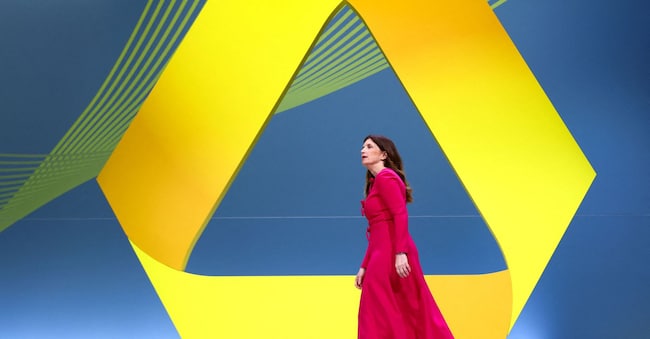
The second largest shareholder of Commerzbank, the Federal Republic of Germany, owns a stake of around 12.70 per cent, the largest after that of Unicredit. But the red-black coalition government (Cdu/Spd) will not be the white knight that the management of Germany's second-largest bank needs to fend off a takeover attempt by the Italian giant more forcefully. According to well-informed sources, the government led by Chancellor Friedrich Merz is not willing to use the disruptive card of 'golden power', evoked by the far-right AfD party to raise a shield of protection by defining Commerz as a strategic infrastructure. And although rumours have circulated about the possibility of an increase in the share held by the German state, even this option does not seem to be on the table.
The government's aversion remains
Although the match between Unicredit and Commerz is full of twists and turns, and therefore cannot be ruled out a priori, it is unlikely that it will be the German state that will turn the tables. A direct intervention of the public hand from Berlin, albeit to 'save' a bank of systemic importance, would be interpreted by Brussels as a very anti-European move, when Europe needs European banking champions capable of competing with American giants. And Germany knows this well because it continues to protect its highly fragmented domestic banking system in order to channel local and small SME bank credit into a thousand rivulets, sacrificing the size of its large private banks for this purpose. In fact, most bank deposits in Germany are not concentrated in the balance sheets of Deutsche bank and Commerzbank, which have perhaps only a third of them.
But there is more. If the German government were to come out concretely and blatantly to block Unicredit, it would also be taking a stand against the Italia system: it would have to push the button on the amount of Italian government bonds on Unicredit's balance sheet, it would have to reopen the competition between triple-A states against triple-B states at a time when Europe must show itself to the world more united than ever. Like it or not, Merz's government has so far limited itself to complaining more about the form than the substance of Unicredit CEO Andrea Orcel's takeover attempt. And even though high-ranking members of the federal government, including the chancellor himself, have declared that they are in favour of Commerz's independence (perhaps addressing AfD voters in order to wrest votes from the far-right reservoir), words have so far not been followed by deeds.
The Words of Orlopp
In an interview with OVB Heimatzeitungen in the past few days, the ad of Commerzbank Bettina Orlopp, in response to a question about the ECB's "rather explicit criticism of the German government's resistance to the creation of UniCredit", clarified instead: "The German government has never said that it did not want the transaction. Therefore, I believe that these criticisms are unfounded. It has always maintained that the way things are being handled is unacceptable. As for the ECB, we were rather surprised. The ECB, after all, is committed to stability and security. It therefore seems rather strange that some of its representatives openly support an approach that aims to destabilise the bank'. Orlopp added: 'The German government has clearly outlined the issues that make this situation difficult. And, as a shareholder, it has every right to do so. It is surprising that UniCredit seems indifferent... we are the bank of reference for German SMEs and we also support our customers internationally. It is understandable that we should be concerned about the possible repercussions on our operations'.
Orcel, however, started the Commerzbank ascent with a very different political situation in Germany: in September 2024, he acquired a 4.49% stake directly from the Ministry of Finance led at the time by Christian Lindner of the Liberal Party, who did not see a possible merger between Unicredit and Commerz as bad. At that time Orcel also met or talked with Commerzbank CEO Manfred Knof: a meeting that cost Knof a large bonus reduction decided at Commerz's annual general meeting on 20 May.


