
Commerz, Berlin’s response: we will not sell our 12.7% stake to UniCredit
In this way, it would aim to block Italy’s plans for a hypothetical delisting. Orlopp’s conditions: an appropriate premium and adherence to the current business model
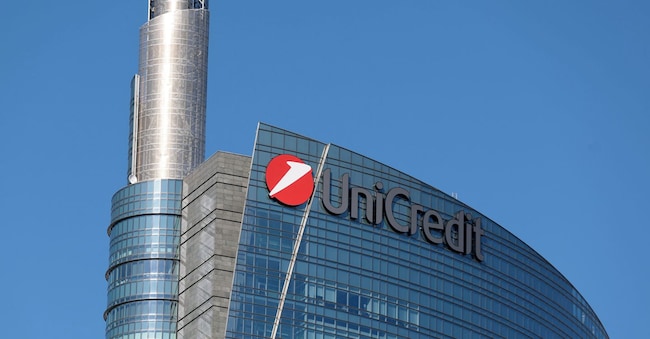
The German government has stepped up its opposition to the plans of UniCredit regarding Commerzbank, telling the Handelsblatt newspaper that it has no intention of selling its stake of around 12.7 per cent, which makes it the second-largest shareholder after Gae Aulenti. With this decision, Berlin aims to block the Italian bank’s “plans” for Germany’s second-largest bank, which could hypothetically – though this has never been stated – include a delisting, as happened at the time of the friendly takeover of 100 per cent of HVB’s shares. The so-called “plans for Commerz” are deemed by the government to be “unsustainable”, particularly in the interests of German small and medium-sized enterprises. But according to Berlin, they are not even “in the interests of UniCredit’s stakeholders”. The German Ministry of Finance, contacted by *Il Sole 24 Ore*, did not respond to the questions.
The German government also made it clear to *Handelsblatt* that it intends to “firmly reject aggressive approaches”, including that of UniCredit: using the term “aggressive” already employed by the Finanzagentur last Friday when it rejected, via the Stabilisation Fund, the Voluntary Public Exchange Offer on the grounds that the premium was “inappropriate”. Berlin has reiterated that it “will continue to act in the interests of Commerzbank’s employees, German Mittelstand businesses and Frankfurt as a financial centre”. The defence of shareholders’ interests clearly rests solely with the bank’s board of directors, which, through its CEO Bettina Orlopp, continues to raise two conditions for returning to the negotiating table: a premium commensurate with the bank’s value and adherence to the current business model, which focuses on providing financial services to Mittelstand corporate clients in Germany and, above all, worldwide.
The transformation of HVB following its acquisition by Unicredit (which took place in 2005, with Andrea Orcel acting as Merrill Lynch’s adviser on the deal) – particularly since 2020 under Orcel’s leadership – is the model being proposed for Commerz. However, this is not in terms of delisting, but rather in terms of greater efficiency, better use of capital and risk reduction. The cost-to-income ratio (a weak point for German banks), for example, fell at HVB over five years from 60.5 per cent in 2000 to 30.2 per cent in 2025.Net operating profit has tripled from 1.1 to 3.1 billion. It is true that HVB’s full-time staff fell in just over five years from just over 12,000 to around 8,400, but staff reductions are a widespread trend across the European banking sector, driven by digitalisation, online banking and branch closures, as well as M&A activity. It is precisely Commerz’s workforce – just over 40,100 and still declining even under the current management – that is at the heart of the federal government’s concerns; the government, which has very low approval ratings, fears the petty populism of the far-right AfD party. Another concern is the Mittelstand: it remains to be seen, however, whether UniCredit’s business model – which in Germany is described as focused on large corporations and retail banking, and thus at odds with Commerz’s model centred on SMEs – will be replicated in Germany’s second-largest bank, or whether the Commerz-HVB merger will give rise to a German banking giant that will focus on the typically German corporate banking model – a strength of both Commerz and HVB – but one that is better managed.
The Handesblatt article considers all of UniCredit’s “plans” that would fail because of the government, given its unyielding stance with its stake of close to 13 per cent. Following the expiry of the acceptance period for the voluntary exchange offer made to Commerzbank shareholders, UniCredit has secured over 39 per cent of the shares: 12.51 per cent from the exchange offer and 26.77 per cent already held. Furthermore, it can easily increase its stake to 42.5% through total return swaps equivalent to a 3.225% voting stake in Commerzbank shares.
Apart from delisting, which is impossible whilst Berlin holds a 13 per cent stake, a ‘squeeze-out’ would also be difficult to achieve, as under German law the new owner of a company must hold 90 per cent of the shares in order to force out minority shareholders with mandatory compensation. However, none of this is likely to feature in UniCredit’s actual plans, as, from the very outset of the merger proposal, CEO Orcel has maintained that he favours a friendly deal – certainly with regard to the German government, but also with regard to management and staff. The outcome remains wide open, and further twists and turns cannot be ruled out. Orcel is due to speak at a conference today.


