Finance

Commerzbank: UniCredit plan vague and with considerable risks

German bank's board advises against UniCredit takeover bid

by Isabella Bufacchi

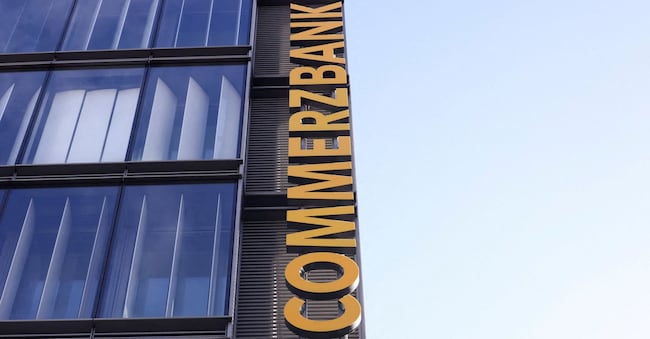
Il logo della Commerzbank in una filiale, mentre l'italiana UniCredit lancia un'offerta pubblica di acquisto non richiesta per aumentare la propria quota oltre il 30% nella Commerzbank, superando la soglia obbligatoria del 30% prevista dalla legge tedesca in materia di acquisizioni, a Colonia, Germania, il 16 marzo 2026. REUTERS/Thilo Schmuelgen/Foto d'archivio REUTERS

2' min read

Translated by AI
Versione italiana

2' min read

Translated by AI
Versione italiana

Commerzbank formally rejected UniCredit's offer to take over the German credit institution, confirming its position of resistance, already in place for months, to the attempted cross-border takeover.

An all-out 'No' to the share exchange offer launched by Unicredit on Commerz.

Loading...

In a formal joint statement, Commerzbank's board of directors and supervisory board today recommended the shareholders of Germany's second-largest bank 'not to accept Unicredit's exchange offer'. Calling it 'an opportunistic attempt to gain control'.

There are four reasons for the rejection of the offer, argued in a lengthy document: the premium 'is inadequate and does not reflect the value' of Commerz; Unicredit's plan is 'vague and entails significant risks'; Unicredit 'significantly underestimates revenue losses, overestimates synergies and envisages unrealistic implementation times'; the 'Momentum 2030' strategy of Commerzbank's current management 'creates more value for shareholders, with low implementation risk'. The board is also convinced that Unicredit 'has not presented a comprehensible and reliable strategic plan for a merger'.

At the presentation of the results for the first quarter of 2026 on 8 May, Commerz CEO Bettina Orlopp had already sharply criticised the offer, advising shareholders to reject it and announcing the 'reasoned' declaration required by the German Takeover Act.

Regarding the 'inadequate' premium and the offer that 'does not adequately reflect the actual value and potential' of Commerz, the board of directors and supervisory board claim to have thoroughly examined the offer, taking into account the bank's historical share prices, analysts' price targets, standard takeover premiums, valuation multiples of European banks, the statutory minimum price, and the potential value based on the Momentum 2030 business plan. They concluded that 'the calculated offer value shows a considerable discount'.

Unicredit's offer reflects a value of approximately 37 billion Commerz.

As for Unicredit's plan, which forecasts better results than Momentum 2030, the statement on the rejection of the offer criticises 'UniCredit's planned staff reductions, the overall integration of IT' and predicts 'loss of earnings due to overlaps in corporate banking'. Furthermore, according to Commerzbank's calculations, the synergies envisaged by UniCredit 'are neither reliable nor convincing and are described by UniCredit itself as speculative'.

The board also pushes back on the planned reduction of Commerzbank's international network, stating that it would 'severely weaken its ability to support SMEs with a strong export component worldwide'.

Unicredit's plan, however, was made without due diligence and without access to Commerzbank's internal information: it is therefore foreseeable that it may be modified when Unicredit comes into possession of more information. As for the premium, Unicredit CEO Andrea Orcel stated from the outset that he was willing to modify it: the exchange offer was also launched in order to open a better dialogue with Commerz's top management, an objective that does not seem to have been achieved at the moment.

Unicredit's potential exposure to Commerzbank increased to 38.87%. This is stated in a stock exchange filing. The document shows the shareholding remains at 26.77% of the capital and to this is added another 3.22% package linked to total return swaps. The total is 29.9%. Another 8.88% is related to derivatives settled exclusively in cash. All this brings the potential exposure to 38.87%

Copyright reserved ©
  • Isabella Bufacchi

    Isabella Bufacchivicecaporedattore corrispondente dalla Germania

    Luogo: Francoforte, Germania

    Lingue parlate: inglese, francese, tedesco, spagnolo

    Argomenti: mercato dei capitali, ECB watcher, fixed income e debito, strumenti derivati, Germania

    Premi: Premio Ischia Internazionale di Giornalismo per l’analisi economica, Premio Q8 per giovani giornalisti economici

Loading...

Brand connect

Loading...

Newsletter

Notizie e approfondimenti sugli avvenimenti politici, economici e finanziari.

Iscriviti