Interventions

Energy Communities: from promise to realisation, a concrete commitment is needed

by Mitia Cugusi
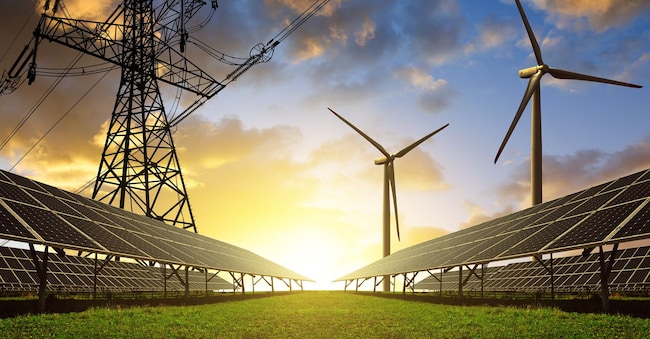
(Adobe Stock)

3' min read

3' min read

With the latest extension of the ERC Decree, the landscape of energy communities in Italy has taken a decisive leap forward. Thanks to this change, the number of Italian municipalities that can access the NRDP funds has increased by 40.46 per cent. Centres with up to 50,000 inhabitants are now also eligible for non-repayable grants of up to 40 per cent for installations within CERs. This means that more than 98 per cent of Italian municipalities - 7,763 out of 7,896 - are included in the measure.

A radical change that opens up new perspectives not only for citizens but also for businesses. According to analyses by Greenvolt Next, more than 5 million companies operate in municipalities with less than 50,000 inhabitants. If only 5 per cent of these were to join an ERC initially, this would amount to 250,000 companies. A potentially huge impact, destined to revolutionise the way our country produces, shares and consumes energy.

Loading...

The potential is also very high for the local public sector: we estimate that between 46,000 and 77,000 buildings - schools, town halls, libraries, gyms, RSAs - can be integrated into CER configurations, with tangible economic and environmental benefits.

But the real news of these weeks concerns another fundamental front: the simplification of the governance of CERs. The GSE has recently clarified that it is now possible to set up a national legal entity to which several local configurations can adhere, thus overcoming the need to set up a new entity for each energy community. This makes it much easier to create a national network of CERs, with common rules, centralised governance, and the possibility of scaling up proven virtuous models.

A historic step forward for Renewable Energy Communities (RECs). Now small and medium-sized Italian municipalities, which represent the most capillary and strategic infrastructure to accelerate this change, have more accessible regulatory tools and incentives at their disposal, so the moment is favourable to act.

However, to release the full potential of the CERs, a further systemic effort is needed: even more streamlined procedures, more widespread technical training in the territories, and solid financial and technical instruments to accompany communities along this path.

Looking at the European context, 2025 looms as a key year for the future of energy sustainability. The European Union has charted a clear path towards climate neutrality by 2050, setting binding targets that require an unprecedented acceleration in the energy transition.

For Italy, this means drastically increasing the production and use of energy from renewable sources, raising the share of renewables in final consumption to at least 42.5 per cent by 2030, as set out in the new REPowerEU plan. This goal requires not only infrastructure investments, but also a profound rethinking of the national energy model, making it more distributed, resilient and participatory.

In this scenario, CERs, if properly integrated into a long-term vision, shared between institutions, businesses and citizens, can make a substantial contribution to decarbonisation, facilitating local production of clean energy, reducing dependence on fossil fuels and promoting the energy autonomy of territories.

This is not only a technical or environmental issue, but also a social and economic one: CERs can generate widespread value, actively involve local communities, create skilled employment and stimulate innovation in energy governance models.

For this potential to be fully expressed, 2025 must mark the beginning of a new phase, in which RECs are fully recognised, supported and integrated into public policies, through a stable regulatory framework, dedicated financial instruments and a massive investment in technical training and operational accompaniment. Only in this way can Energy Communities become a concrete engine of the country's ecological transition. The potential is there, the tools are now there. It is up to us - institutions, businesses, citizens - to seize this opportunity. And to act with speed, competence and vision.

Mitia Cugusi, President of Greenvolt Next Italia

Copyright reserved ©
Loading...

Brand connect

Loading...

Newsletter

Notizie e approfondimenti sugli avvenimenti politici, economici e finanziari.

Iscriviti