
Community theatres have been added to the UNESCO List. Here’s why they represent a unique cultural heritage
The award was presented during the Committee’s 48th session in Korea. Meloni: Italia’s top ranking spurs us on to do even better

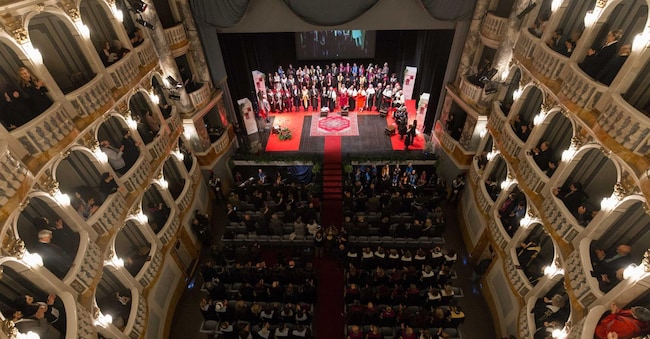
The historic theatres of central Italia have been officially inscribed on the UNESCO World Heritage List. This prestigious recognition, awarded in South Korea during the 48th session of the UNESCO World Heritage Committee, marks the culmination of an institutional process launched in recent years by a number of organisations, led by the Marche region. Built between the 18th and 19th centuries, they represent a cultural and social phenomenon typical of central Italy and mark the moment when theatre and opera, once events reserved exclusively for the nobility, the aristocracy and the elite, became the heritage of the community. They represent a unique phenomenon in the history of architecture and theatre, understood as a social and cultural institution, as this was the first experiment in which institutions and private groups jointly managed a heritage site for the benefit of the community.
Giuli: a unique model of participation
“Historical, architectural and cultural treasures which, for centuries, have enriched the identity of the towns and villages of central Italy and made it unique. This recognition cements Italy’s top position in the ranking of UNESCO sites. A record that fills us with pride and spurs us on to do even more and do it even better,” commented Prime Minister Giorgia Meloni. ‘Italia is a cultural superpower and we will continue to do our bit every day to preserve, protect and promote a heritage that is the envy of the whole world.’ The nomination was put forward by the Marche region, with coordination and technical-scientific support from the Ministry of Culture. The regions of Umbria and Emilia-Romagna also took part in the nomination process, alongside numerous local authorities – starting with the municipalities – and local organisations in central Italia, where this theatre system is most widespread. The nomination also benefited from the support of the Ministry of Foreign Affairs, which managed relations with UNESCO.
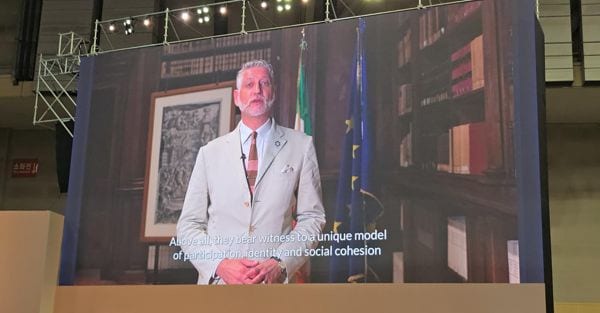
The award ‘celebrates the exceptional universal value of these architectural gems, which, for over two centuries, have been vital centres of cultural enjoyment, identity and social cohesion for the communities that cherish them. Community theatres are a prime example of Italian cultural infrastructure which, in an innovative way, has enabled generations of citizens in the villages and small towns of central Italia to enjoy opera, classical music and other forms of live performance,” said the Minister for Culture, Alessandro Giuli. ‘Their inclusion on the World Heritage List recognises the initiative promoted by the President of the Marche Region, Francesco Acquaroli, in collaboration with the Ministry of Culture, which will support the entire national network of community theatres in the process of promotion launched with the UNESCO nomination.’
Where are they located
A widespread heritage, comprising small yet particularly elegant buildings, bearing witness to a civic tradition that has made the theatre a defining feature of these communities. The project proposal for the UNESCO World Heritage nomination demonstrated how the theatre developed as a self-representative expression of a community, marking, between the 18th and 19th centuries in Central Italia, a remarkable period of theatre construction, following the ‘condominium’ model with an Italian-style auditorium. This now marks the recognition of a unique testament to the exceptional value of an extraordinary cultural heritage, bringing together the most representative ‘condominiale’ theatres, whose high density and quality are characteristic of Central Italia. Here is the list of the ten theatres listed in the Marche, Emilia-Romagna and Umbria regions: 1. Teatro Angelo Mariani, Sant’Agata Feltria. 2. Teatro Pergolesi, Jesi. 3. Teatro Ventidio Basso, Ascoli Piceno. 4. Teatro Serpente Aureo, Offida. 5. Teatro dell’Aquila, Fermo. 6. Teatro Lauro Rossi, Macerata. 7. Teatro Feronia, San Severino Marche. 8. Teatro Gentile da Fabriano, Fabriano. 9. Teatro Bramante, Urbania. 10. Teatro Nuovo Gian Carlo Menotti, Spoleto. The serial site proposal comprised eighteen theatres spread across three regions (14 in the Marche, 2 in Emilia-Romagna and 2 in Umbria).
Italian leadership consolidated
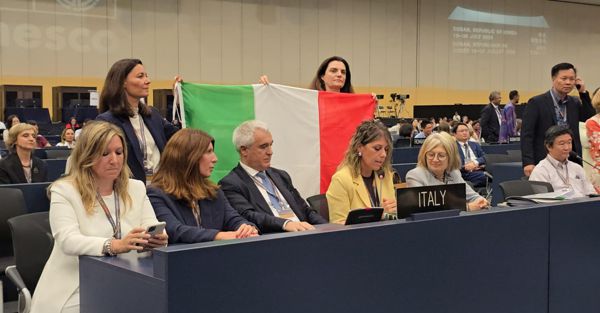
With the inscription of the System of Condominium Theatres in Central Italia on the UNESCO World Heritage List, as decided today by the World Heritage Committee meeting in Busan, South Korea, Italia has consolidated its position as the world leader with 62 sites inscribed on the World Heritage List. “This decision confirms the universal value of our extraordinary cultural heritage. Italia is a true cultural superpower: culture represents one of the most precious resources of our identity, one of the most effective tools of our diplomacy and a fundamental pillar of the country’s international profile,” said Foreign Minister Antonio Tajani.


