
Buying a house in the metropolis, Madrid the most affordable (followed by Rome)
A study by Casavo compares four cities (in addition to those mentioned, also Paris and Milan), for those aspiring to purchase with a 2,000 euro salary and a 30-year mortgage at 80 per cent

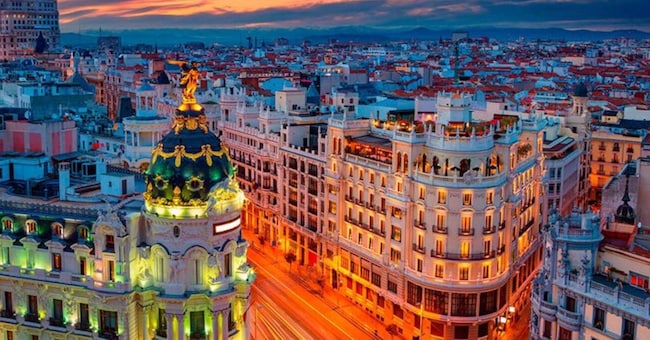
5' min read
5' min read
Paris is unreachable. Milan is on the same path. More affordable, on the other hand, are Madrid but also Rome (in the suburbs). Casavo has conducted an analysis comparing Milan, Rome, Madrid and Paris to see what kind of house one can afford to buy earning 2,000 euros a month and taking out a 30-year mortgage at 80 per cent.
New Buildings
.Of the four European cities, Madrid is the one that offers the most opportunities in the centre: in districts such as Arganzuela or Salamanca, it is possible to buy a new flat of an average of 33 square metres, while with the same parameters in Milan in districts such as Sant'Ambrogio and Parco Sempione the square metres are around 20, in Rome if one chooses areas such as Celio and Monti one reaches 30 square metres.
Still considering new buildings, but looking at the more peripheral areas, it is Rome that offers the most square metres (an average of 55 in neighbourhoods such as EUR and Colli Portuensi), followed by Madrid (around 47 square metres in neighbourhoods such as Hortaleza or Ciudad Lineal), and finally Milan (25 square metres for a new studio apartment in areas such as Forlanini and Lorenteggio).
Paris seems to play a league of its own, the square metres available are always negligible and the difference between the centre and the suburbs is practically non-existent: they range from 12 square metres for a new studio apartment in the 4th arrondissement, through 15 square metres in the 15th, to a maximum of 17 square metres in the 19th arrondissement.
Property for renovation
.If the house is in need of renovation to new, the square metres increase in all cities, and it is always Madrid that makes the biggest difference. In the city centre, one can buy a 42 square metre flat to renovate (thus gaining 9 square metres compared to a new flat), while for the same type of property one can afford 25 square metres in Milan (+5 square metres) and 33 square metres in Rome (+3 square metres).
Looking at the suburbs, anyone earning 2,000 euro a month can afford to buy up to a two/three-room apartment to renovate. A three-room apartment of 74 sqm, for example, can be bought in the suburbs of Rome in areas such as San Paolo and Cinecittà, or in districts outside the M-30 in Madrid (the ring road considered to be the watershed between the centre and the suburbs in the city), such as Moratalaz or San Blas. In Milan, one can afford a two-room flat of 50 m2 in areas such as Lorenteggio and Gorla, while in Paris one only touches 20 m2 for flats to be renovated in the 19th and 20th arrondissements.
'The cities we analysed,' observed Victor Ranieri, chief operating officer of Casavo, 'have completely different peculiarities and characteristics. Paris is a metropolis that is already proving to be unaffordable - values per square metre exceed 13,000 euro in the most central arrondissements - and we also expect that the Olympics coming up in July will further increase the attractiveness (and therefore the prices) of some areas. Madrid and Rome are interesting markets for considering a purchase, especially for those who are willing to choose properties to renovate in areas that are not strictly central. Milan is in constant turmoil: despite constantly rising prices (we are talking about +3.7% in January 2024 compared to the same month a year ago), the city offers interesting investments, especially in areas where strong redevelopment is expected in the next 5-10 years. After a complex 2023 in terms of buying and selling volumes, Ranieri added, 'we expect the residential property market to gradually recover thanks to the stabilisation of interest rates and inflation. In this phase of uncertainty, we are even more convinced that we can add value to our clients, supporting them at all stages of the process of selling and buying their home, starting from the decision-making moment'.
Madrid, dynamism and projects
Overall, the residential property market in Madrid has experienced steady growth, driven by factors such as population growth, urbanisation and low interest rates. In January 2024, an average price of EUR 4,100 per square metre was demanded for residential property for sale, an increase of 7.8 per cent compared to January 2023 (EUR 3,800 per square metre). Madrid saw significant activity in new construction projects to meet the demand for quality housing and office space. Real estate development is particularly focusing on innovative and sustainable projects, such as the futuristic Madrid Nuevo Norte, an urban regeneration project in the north of the capital that aims to position the city as a transformation model worldwide.
Brand connect


Newsletter RealEstate+
La newsletter premium dedicata al mondo del mercato immobiliare con inchieste esclusive, notizie, analisi ed approfondimenti
Abbonati