
EU towards 90 billion loan to Kiev. This is what it will be used for
Bill presented: 60 billion for defence, the first tranche could be sent in April. Brussels stresses that the loan will be conditional on respect for the rule of law and the fight against corruption
from our correspondent Beda Romano
 Aggiungi Il Sole 24 Ore
ai preferiti su Google
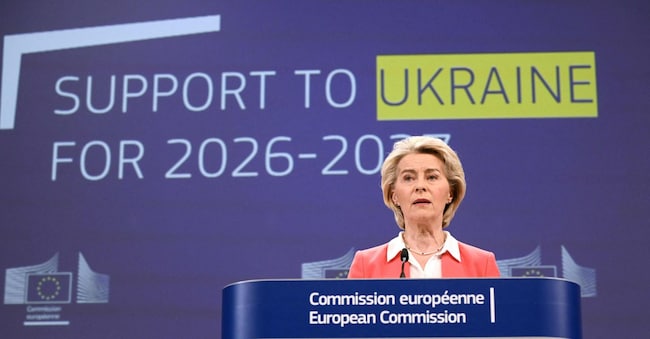
BRUSSELS - Almost a month after the decision of the heads of state and government in mid-December, the European Commission presented yesterday the long-awaited draft law that should allow the Union to raise up to 90 billion euros on the markets, to be lent to Ukraine, which has been at war with Russia for four years now. In fact, the operation, subject to Kiev's respect for the rule of law, will be an enhanced cooperation between the participating countries. According to the proposal, EUR 60 billion will go to defence.
The choice of the loan 'reaffirms Europe's unconditional commitment to Ukraine's security, defence and future prosperity', European Commission President Ursula von der Leyen explained at a press conference in Brussels. Economic Affairs Commissioner Valdis Dombrovskis added yesterday: 'Today's proposals will safeguard Ukraine's financial stability and strengthen its ability to defend itself'.
The proposed regulation, which must be approved unanimously by the member states, envisages using the European budget as a guarantee. The costs will be borne by 24 out of 27 countries. Hungary, the Czech Republic and Slovakia have given their approval to use the EU budget to help Kiev financially, but have decided not to take on the burden. The operation will also require a passage through the European Parliament.
The loan is to be used to help Ukraine in the period 2026-2027. The first tranche of money is expected to reach Kiev in April. Since the beginning of the Russian invasion of the country, the EU and its member states have provided Kiev with EUR 193.3 billion in aid. In its legislative proposal yesterday, Brussels proposes to use EUR 60 billion for military purposes, while the other 30 will be for economic support.
Brussels emphasised that the loan will be conditional on respect for the rule of law and the fight against corruption ('These are non-negotiable conditions in the light of economic support,' said Ms von der Leyen). According to the proposal, the money is to be used as a priority for purchases in the European market. However, the text allows Kiev to deviate from this guideline because 'Ukraine is a country at war whose ability to defend its territory may depend on the availability of a certain product in the very short term'.


