
Confcommercio's alarm: 20 per cent of shops at risk by 2035
Sangalli: 'The Cities project aims precisely to counter the phenomenon of commercial desertification by promoting projects to regenerate areas in decline'
by Enrico Netti
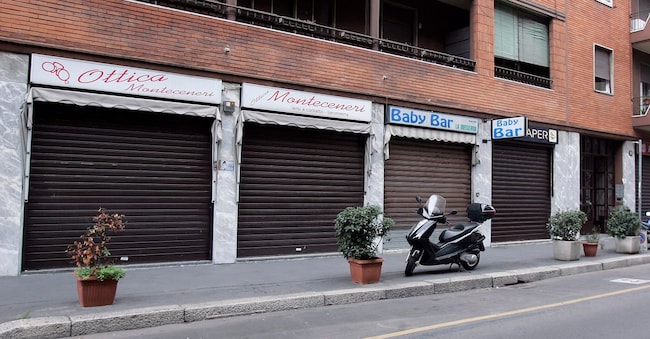
Fighting together against commercial desertification and bringing new life to urban areas. Without any action and reaction by 2035 there is a risk that 20 per cent of shops will disappear. As far as the past is concerned, according to the calculations of Confcommercio, which is sounding the alarm, over the past twelve years more than 140,000 retail businesses, including both permanent and street vendors, have lowered their shutters, with particularly sharp falls in historic centres and small towns. A trend that, without new and effective urban regeneration policies and without action to reuse the more than 105 thousand vacant shops, is destined to worsen further with the risk of losing another 114 thousand retail businesses between now and 2035. A situation that requires urgent action and Confcommercio on 20 and 21 November will bring "inCittà - Spaces that change, urban economies that grow" to Bologna's Palazzo Re Enzo to address the problem and launch proposals for the rebirth of urban centres.
The wake-up call
For the time being, traders are signalling the alarm bells that come from the analysis of commercial density, the ratio between the number of shops and inhabitants, which sees many medium-large cities in central-northern Italy particularly exposed, while in some municipalities in southern Italy the downturn seems to be more contained, mainly due to the lesser use of online shopping. In this scenario, Confcommercio, also through the Cities project, proposes a National Urban Agenda to be defined together with the Government, Regions and Municipalities, to regenerate urban centres by enhancing proximity economies and tertiary market enterprises. The objective is to create a stable and integrated framework of urban policies, harmonising urban districts of economic development and promoting shared tools against commercial desertification and for sustainable urban logistics.
"The desertification of shops is an economic, social and cohesion problem: every lowered shutter means less security, fewer services, less attractiveness and less sociality in our cities. And without effective and timely urban regeneration interventions, by 2035 we risk having real ghost towns," explains Carlo Sangalli, president of Confcommercio. "To avert this prospect, we need national policies and strategies shared between institutions, businesses and territories capable of combining competitiveness, sustainability and quality of life. But above all, it is necessary to support proximity trade with fairer tax policies, easier and cheaper access to credit, and specific measures to tackle economic transition'.
The most affected activities are petrol stations (-42.2%), cultural and recreational goods shops (-34.5%), non-specialised trade ( 34.2%), furniture and hardware (-26.7%), clothing and footwear ( 25%). Accommodation and food services grew with +5.8%. The boost comes precisely from catering (+17%), which benefits from the pull of tourism and delivery with the transformation of traditional bars into bars with administration reclassified as restaurants. According to Confcommercio's projections, if no action is taken, cities such as Ancona, Trieste and Ravenna risk losing one third or more of their neighbourhood activities, with serious effects on the vitality of neighbourhoods and the quality of services for residents.
Confcommercio's proposals
Traders propose collaboration at national, regional and local levels to create a stable, coherent and enabling framework for the valorisation of neighbourhood economies and tertiary market enterprises. Among the measures considered to be most effective are local pacts for the reactivation of vacant premises, with capped rents and incentives coordinated between the public and private sectors; urban animation and business start-up support measures, promoted by municipalities and trade associations; actions for sustainable urban logistics and integrated digital systems; territorial welfare platforms enabling businesses to provide credits that can be spent in shops and neighbourhood services; partnerships between tertiary market businesses and real estate operators, to integrate spaces for neighbourhood services and community life into new urban regeneration projects. "The concrete response is Confcommercio's Cities project, which aims precisely to counter the phenomenon of commercial desertification by promoting projects to regenerate areas in decline, encourage a balanced use of urban space and enhance the role of neighbourhood economies," Sangalli points out. "Only in this way will it be possible to guarantee greater quality for residents and a better offer for tourists.

