
Confcommercio: 'GDP to grow by 0.9 % in 2026, the economy is holding up but investments need to be strengthened'
President Sangalli: 'The Italian economy, despite international tensions, shows resilience beyond expectations'
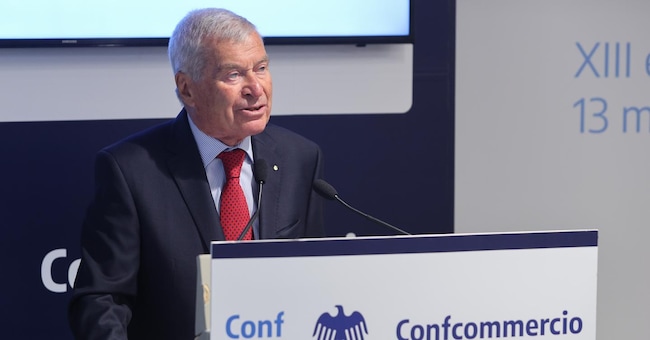
Despite the unstable international context, the Italian economy is holding up. This is supported by an analysis by the Confcommercio Studies Office on the country's economic outlook released ahead of the Confederation's General Assembly scheduled for Wednesday 10 June in Rome, which will also be attended by Prime Minister Giorgia Meloni.
According to the survey, despite the blockade of the Strait of Hormuz and difficulties in the supply of essential raw materials such as gas, the scenario remains 'favourable to growth' and far from the spectre of recession. Indeed, uncertainty does not seem to have translated into a 'widespread deterioration in consumer confidence'.
The Macroeconomic Framework
Confcommercio's estimates on the growth of the Italian economy and consumption are more optimistic than those of the main national and international institutions. The GDP, according to the Confederation, is set to increase by 0.9 per cent in 2026, consumption by 1.2 per cent, compared to increases of 0.5 per cent and 1 per cent respectively in 2025.
Investments, on the other hand, which showed a growth of 3.5 per cent last year, are expected to increase by 1.8 per cent in 2026, and exports by 1 per cent. Less favourable are the figures for 2027: according to the study's forecasts, exports will see an increase of 1.8 per cent, but GDP by 0.7 per cent, consumption by 0.8 per cent and investments by 0.7 per cent.
The engines of growth
The analysis reveals that there are several factors contributing to the resilience shown by the Italian economy. First of all, core inflation that remains below the 2% threshold, demonstrating how "the production and distribution system has not fully transferred the effects of external shocks onto prices". Then there is "a labour market at an all-time high".

