
Confesercenti: extreme heat is like a tax, with costs running to 12 billion
Confesercenti highlights how high temperatures affect business costs, worker productivity and consumer spending

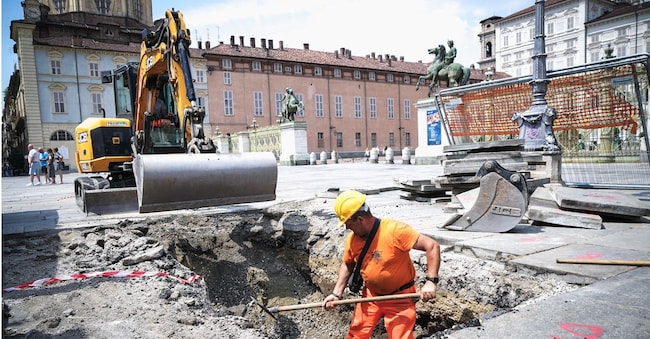
The heatwave is “a red alert for the economy too”, weighing “on businesses and daily life”, warns Confesercenti, which estimates: ‘Having to cope with thirty to sixty days of intense heat every year can cost the Italian economy between 6 and 12 billion euros, equivalent to around 0.2–0.4 per cent of GDP, due to higher energy costs, lower productivity, necessary investments and lost turnover in the most exposed sectors. Extreme heat has become a veritable ‘climate tax’,” comments the president Nico Gronchi –, “a structural economic variable. It affects investment, productivity, spending and consumer habits, including those of tourists.”
Cost estimates
“This is a challenge that cannot be overcome by leaving the problem to the initiative of individual households and businesses,” comments Gronchi. “Structural measures are needed.” The impact of high temperatures on the country’s economy is assessed in an in-depth report by the economic department of Confesercenti. “The biggest cost comes from investments that are now essential — more efficient air-conditioning systems, solar panels, shading and energy-efficiency upgrades to buildings — estimated at between 2 and 4 billion. This is followed by higher energy costs, between 2 and 3 billion, linked to the need for longer cooling periods, and the drop in labour productivity on days of intense heat, estimated at between 1.5 and 3 billion. Finally, there is a further 1–2 billion in lost turnover in the sectors most affected, ranging from construction and agriculture to logistics and street trading.”
Air-conditioning costs
On air conditioning in the summer, a family spends ‘on average around 150 euros, a figure that could rise to 400 within a few years. Other factors to be taken into account include the purchase and replacement of air-conditioning units, increased water consumption and healthcare costs linked to heat stress. The heat therefore risks becoming a sort of new climate tax, which places a particular burden on those on low to middle incomes and the elderly population’. And – as Confesercenti further warns – “a similar trend also affects businesses: a bar or a shop that currently spends 3,000 euros a year on cooling could find itself spending 5,,000–6,000 in the near future, on top of the now essential investments in more efficient systems and the energy retrofitting of buildings – a real financial hurdle for micro-enterprises’.
Lower worker productivity
The heat also takes its toll on productivity: ‘When temperatures remain consistently above 35 degrees, work output falls: errors and absences due to illness increase, and the capacity for physical exertion decreases. The sectors most affected are construction, agriculture, logistics, street trading and maintenance, along with small businesses and outdoor tourism, from markets to pubs and restaurants with outdoor seating. If the number of days with high heat stress continues to rise, the country risks losing thousands of working hours every year.”
The impact on trade
And it’s having an impact on trade: ‘During the middle of the day, high temperatures clear the streets. The big air-conditioned shopping centres and online platforms are the ones to benefit; the losers are markets, shops in historic town centres and local businesses, which face yet another source of pressure on top of that caused by e-commerce and the relocation of sales. Consumption patterns are also changing: fashion retailers are seeing a decline in purchases of heavier winter garments, which are being penalised by increasingly shorter cold seasons, whilst in the catering sector, outdoor seating areas are losing their appeal, and on sweltering days, customers prefer air-conditioned dining rooms’.

