Economic situation

Confindustria: oil and gas are holding back the economy; companies are taking out loans to pay their bills

Analysis by the Research Centre in Via dell’Astronomia: inflation, although temporary, will weigh on growth and have a recessionary impact on confidence

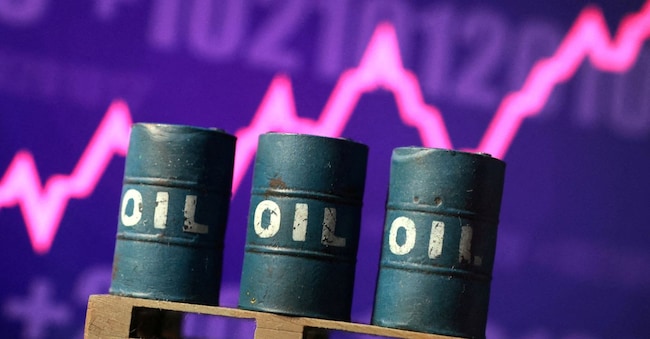
In questa illustrazione, scattata il 23 marzo 2026, si vedono barili di petrolio stampati in 3D e un grafico che mostra l'andamento al rialzo delle quotazioni azionarie. REUTERS/Dado Ruvic/Illustrazione/Foto d'archivio REUTERS

4' min read

Translated by AI
Versione italiana

4' min read

Translated by AI
Versione italiana

Prices are rising oil and gas are rising, putting the brakes on the Italian economy: the third quarter is off to a bad start, facing an uphill struggle. These are the opening words of the Congiuntura Flash analysis by the Confindustria Research Centre: the war in Iran flared up again in July, and uncertainty over future developments is at its peak. This immediately affected the price of oil. Having already held back second-quarter GDP, the war’s impact is now spilling over into the third quarter as well. Inflation will remain high for a while and credit conditions are tightening.

The Research Centre has devoted an in-depth analysis specifically to inflation: although temporary, it is weighing on growth and having a recessionary impact on confidence. Industry is losing momentum after months of shocks, and investment is slowing. The services sector is stabilising, thanks to the rapid recovery in foreign tourism, but is not growing.

Loading...

The fall in shipping traffic through the Strait of Hormuz, -32% by mid-July, caused Brent crude to rise to $91 per barrel (on 21 July), well above February’s average of $69. Gas prices have also started to rise. The dollar strengthened, trading at $1.14 to the euro in the first half of July. This favours exports from eurozone countries.

Investment growth slowing

Investment is slowing: despite a moderate rise in interest rates – to 3.67 in May – lending to businesses is picking up: +3.5 per cent year-on-year. However, this is driven by demand for liquidity to pay energy bills rather than by demand for investment. As for consumption, a slowdown is on the horizon: in the second quarter, income was held back by prices and a slight fall in employment (in May).

Industrial production fell in May

Industry is slowing down: in May, industrial production fell by 0.3 per cent, driven by a decline in intermediate goods (down 0.8 per cent) and consumer goods (down 0.5 per cent), whilst growth in the energy sector (up 4.6 per cent) cushioned the decline. The year-on-year change for the second quarter remains positive. In June, the manufacturing PMI fell, whilst remaining in expansionary territory (52.2 from 52.9).

Energia: cresce domanda di gas, infrastrutture strategiche per la sicurezza del Paese

Spending by foreign tourists picks up again

The services sector has stabilised: in June, spending by foreign tourists in Italia rebounded immediately, up 6.2 per cent year-on-year compared with May, and businesses in the sector are feeling confident.

Exports on the decline

Exports are down again: in May they fell by 0.4 per cent at constant prices; over the first five months, however, they continued to grow, albeit at a slower pace than the long-term average. Sectoral and geographical trends varied considerably: there was a sharp acceleration in exports to Mercosur, up 21.2 per cent year-on-year, in the first month of the free trade agreement with the EU coming into force, driven by machinery and pharmaceuticals.

The situation in the eurozone

As regards the eurozone, industrial production rose in Spain (+1.2 per cent) and in Germany (+0.8 per cent). The services sector is rebounding following the downturn caused by the war. The United States is experiencing a slowdown, whilst China is being driven by exports, up 27 per cent year-on-year, fuelled by the semiconductor boom linked to artificial intelligence.

Inflation puts the brakes on the economy

Analysing inflation, the peak in May, +3.2%, was driven by the oil price shock. Inflation in 2026 is, however, much lower than the monthly peak reached in 2022 (+11.8% in Italia).

The ECB’s June estimates suggest that inflation will peak this year, averaging +3 per cent, but much will depend on the price of oil and the situation in the Strait of Hormuz. The 3 per cent fall in June should not be misleading, warns the CSC: in 2023, it took 12 months for Italian inflation to fall from +12 per cent to +1 per cent. Furthermore, even with transitory inflation, the step in the price level remains and has a negative impact on GDP. As for core inflation – excluding energy and food – the experience of 2022 shows that it tends to rise around six months after an exogenous shock to energy prices and then slows down with a similar lag compared to headline inflation.

According to the ECB, it is expected to peak at 2.7 per cent in the first quarter of 2027. However, in worst-case scenarios for oil, core inflation could rise further and for a longer period in 2027.

The ECB’s moves

Market expectations regarding inflation show a moderate rise. As regards the ECB’s stance on interest rates, the Central Bank appears cautious; the markets are forecasting a +0.25 by the end of the year. In any case, these rises – although limited to one or two in 2026 – will help to curb consumption and investment, and this comes on top of the restrictive effect already caused by higher prices.

There is a recessionary impact on confidence: the rise in prices has been sufficient to erode household confidence, which fell to a low in April and has since remained very low. There is a very strong negative correlation between the price component and overall confidence. Lower household confidence will in turn affect the trend in private consumption in Italia. There are therefore three factors that will hold back the economy, even if, barring further shocks, inflation were to fall back to normal levels soon.

Copyright reserved ©
Loading...

Brand connect

Loading...

Newsletter

Notizie e approfondimenti sugli avvenimenti politici, economici e finanziari.

Iscriviti