
Camilli (Confindustria): 'Constructive dialogue with the Meloni government to find solutions'

3' min read
3' min read
Retroactivity: 'unacceptable. It creates a climate of mistrust between the State, businesses, and citizens and undermines the fundamental principle of doing business, which is legal certainty, also undermining confidence in relation to future measures and, in general, with respect to investments". The sting on banks: 'the decision not to allow the offsetting of tax credits with social security and insurance contributions could immediately block purchases by credit institutions; the reduction in offsets has, in fact, an impact on their accounts and, consequently, on their ability to grant credit to the production system. With devastating consequences not only for companies, but for the country: without investment there is no growth'.
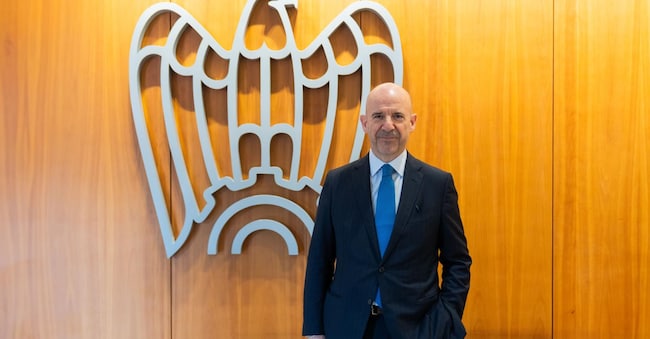
For Angelo Camilli, president of Unindustria and next vice-president for Credit, Finance and Taxation in the team of the future number one of Confindustria, Emanuele Orsini (he will be elected at the private assembly on 23 May), one cannot go on with decrees and amendments, in a delicate matter such as the 110% Superbonus: 'a round table is needed between the government and the various parties involved, companies and banks. But immediately, because it has waited far too long. We are absolutely willing. Since the Superbonus came into force, there have been more than 30 regulatory changes, which have generated uncertainty, mistrust and application problems for the rule'.
The banking system is heavily penalised. Abi is still doing the calculations, but in any case the ban on using credits to offset social security and insurance contributions, moreover with retroactive effect, could have a considerable impact. A fear of yours too?
Banks and businesses are two cooperating entities. A penalisation of the banking system inevitably impacts on the activity of the industrial system. For example, the effects on companies in the entire construction industry would be devastating: if companies were to sell loans to banks today, they might no longer find availability from the banking system due to these regulations. A very strong penalisation that risks generating strong liquidity tensions. In this specific case, the Bank of Italy itself had recommended that each bank should calculate the purchase of tax credits according to its tax capacity, avoiding an inappropriate purchase. The ban on offsetting social security and insurance contributions therefore risks undermining the banks' assets and consequently their ability to grant credit to the market.
There is therefore an urgent need for a round table?

