
"Consensus is crucial. Men take their share of responsibility'
The speech by Marco Chiesara, president of WeWorld, on the occasion of the 10th anniversary of Alley Oop in Montecitorio

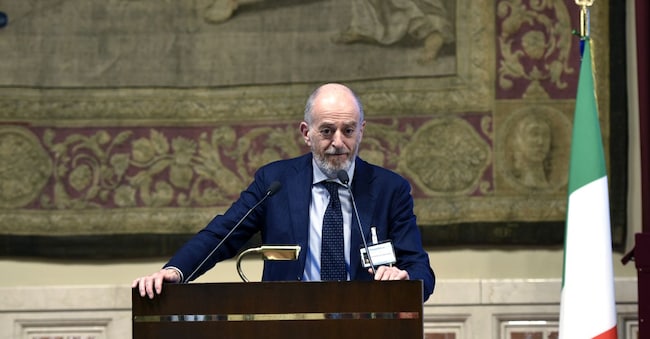
When we talk about consensus, we must be very clear: we are not talking about an abstract word. We are talking about responsibility.
At WeWorld we have been working for over ten years to combat violence against women. We do it in the territories, every day, but we also do it through prevention and research. Because without a profound cultural change, violence does not stop. And in this work, consensus has become a central point.
It was not always so. If today this word has entered the public debate, it is also thanks to those who have built awareness over time. For us, Alley Oop has been and is a key ally in this journey. But today we are in a delicate moment. Because while consensus is becoming more and more central, there is also the risk of it being emptied of meaning. And so clarity is needed.
Consensus is not the absence of a no. It is not something that can be assumed. It is not silence. Consent is a free, explicit, conscious yes. And this has a very concrete consequence: it directly implicates us men. I am a man. And I believe that this is the point. For too long we have told ourselves two wrong stories: that of the 'prince charming' who saves and that of the woman 'to be protected'. These are narratives that seem positive, but actually keep us out of responsibility.
Consensus, on the other hand, puts us back in. It tells us that it is not enough to 'do no harm'. It is not enough to wait. It is not enough to interpret. It asks us to be active. To listen. To verify. To question. Because consent is not a formality. It is a relationship. And if we take it seriously, the male role changes: no longer a spectator, no longer a judge, but a responsible part of the encounter.

