
From construction to services: the sectors affected in the employment slowdown
In recent years, the employment rate in Italia has increased (partly because the inactive have increased), but a slowdown is expected in the coming months

Key points
That the protracted war in the Middle East is bringing an increasingly heavier bill to the Italian economy is now a fact. Among the various institutions, Istat has also said so, providing results that are already consolidated and others that, instead, come from possible scenarios. In the last few hours, the Institute has made a new update and this time, in addition to GDP, it has spoken of employment forecasts. Which are gloomier than in the past.
The current picture
Let us start by saying that the note refers to the two-year period 2026-2027 and that Italia, in recent months, has seen a significant increase in the employment rate (which still remains among the lowest in the EU) and at the same time a decrease in the unemployment rate. It must be said that this double trend has also been conditioned by the increase in inactives, i.e. people leaving the world of work (not even looking for work) and thus increasing the ratio of the employed to the labour force and decreasing that of the unemployed to the labour force.
In the first quarter of 2026, while employment increased on a trend basis by 67,000 and unemployment fell by 110,000, inactivity increased by 44,000, with the rate rising to 33.7 per cent. The April 2026 figure offered temporary relief: employment rose again by 0.5 per cent compared to the previous month, with 123 thousand more employed, bringing the rate to 63.1 per cent. Unemployment fell to 5.1 per cent.
Construction sector also penalised by the end of building bonuses
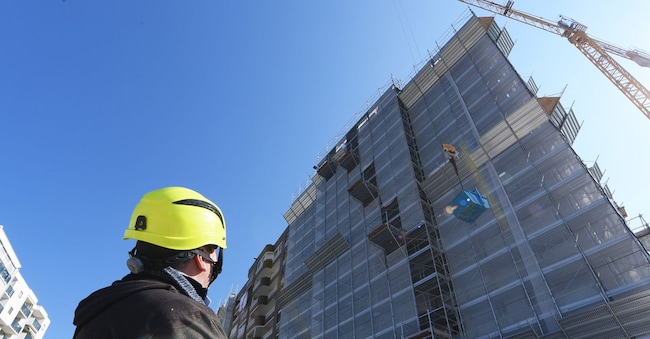
Of the sectors under observation, construction is the most vulnerable. In the first quarter of 2026, the sector's added value contracted by 0.3% on a cyclical basis. The reasons for this are multiple and add up: the gradual exhaustion of incentives linked to building bonuses, the slowdown of Pnrr construction sites in the second half of the year, and rising energy and financial costs. Companies in the sector express the most marked deterioration in employment expectations, and the climate of confidence continues to deteriorate.
The ISTAT note predicts a 'sharp contraction' in investment in the second half of 2026, due to the reduction of public incentives and rising costs. Construction, which has historically been sensitive to fiscal policy stimuli, will pay the highest price for the withdrawal of these supports. In 2027, the annual investment figure will still suffer from the negative carry-over effect of the 2026 tail.

