
Consumption outside the home, record receipts at the bar in 2025
Stoppani: 'Central premises in the daily lives of Italians Andrea Illy: 'Revitalise with innovation and quality improvement'
by Enrico Netti
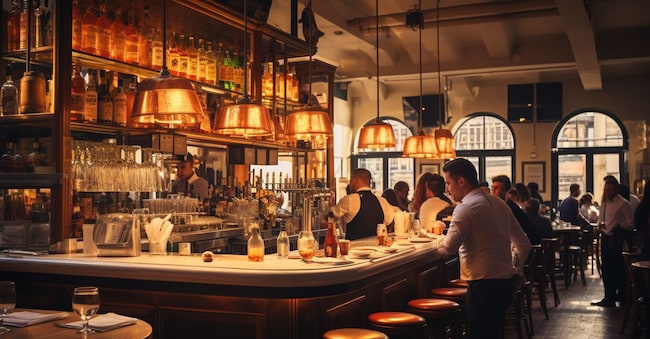
A market worth almost 24 billion, 23.8 billion to be precise. This is the total turnover of the 152,000 bars in Italy that had almost 6 billion customer, consumer visits in 2025. Roughly speaking, these premises are open 14 hours a day and very often seven days a week. They represent a mainstay for out-of-home consumption and a staple in the habits of Italians and tourists for espresso and cappuccino in the morning. This habit leads the ranking of moments of consumption presented by Fipe-Confcommercio at Sigep 2026 during the round table "The future of the Italian bar (and prospects for 2026)" attended by Lino Enrico Stoppani, President of Fipe, Andrea Illy, President of Illycaffè and Fipe councillor for the Observatory on the bar supply chain, Alessandro Angelon, CEO of Sammontana Italia and Paolo Staccoli, owner of the café of the same name.
According to FIPE data, on a typical day, 44 % of receipts are related to breakfast, 29 % to breaks, 14 % to aperitifs, 6 % to lunch, 3 % to dinner and 4 % to after-dinner drinks, confirming how the bar is first and foremost a place for daily encounters. The point is that for the shopkeepers, the average receipt is 4.2 euro against an intense, onerous daily commitment, sometimes at the mercy of petty crime. "These sectors are central to the daily lives of Italians, but at the same time they clearly show how the key to maintaining this position is to look ahead," said Lino Enrico Stoppani, president of Fipe-Confcommercio. "2026 must be the year in which the out-of-home system will be able to find a new balance between economic sustainability, quality of the offer, and the ability to intercept rapidly changing consumption habits. Bars, ice-cream parlours and pastry shops are not just economic activities, but garrisons of sociability, identity and tourist attraction: enhancing them means investing in a heritage that makes our country unique, as UNESCO recognition for Italian cuisine has shown, and that can continue to generate value for companies, workers and territories".
"Through its primary functions of refreshment and conviviality, the Italian bar plays an indispensable social role," adds Andrea Illy, president of Illycaffè. "In recent years, changes in demographics, work habits and lifestyles, the regulatory framework, and competition from alternative distribution formulas have made the market more difficult, while at the same time increasing the need for refreshment and the desire for conviviality, also on the part of growing tourist flows. There are therefore concrete opportunities to revitalise the national bar network through innovation and quality improvement. To this end, the levers that FIPE intends to activate are professional training, the beautiful, good and well-made as Italy's strong point, and new business models that mobilise investment'.
The bar in its meaning is above all a source of employment. There are almost 368 thousand people employed in the sector of which over 284 thousand are employees with a strong prevalence of female staff (58.9%), under 30s (41.3%) and a 20.8% presence of foreign workers. 57.5% of the personnel have a permanent contract. The vast majority of businesses are indefinite while only 3,820 belong to chains. Running a bar for decades has been based on the family structure, the presence in the neighbourhood, in a village, a bulwark against desertification and the defence of urban space. Despite this, the balance between openings and closures, in the first nine months of 2025, is negative with the cessation of almost 2,900 establishments, while the survival rate, five years after opening, is 53%. As if to say: only one in two makes it.

