Europe

Contraception in Europe: disparities in access to the pill. Italy between delays and criticalities

Europe shows differences in access to contraception. Italy shows criticalities in the supply of contraceptive services.

by Silvia Martelli (Il Sole 24 Ore), Kim Son Hoang (Austria, Der Standard), Sarah Rost (Voxeurop, France) and Andrea Muñoz (El Confidencial, Spain)

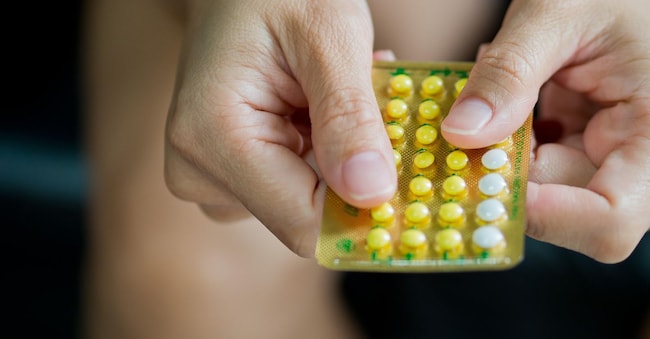
(Alamy Stock Photo)

5' min read

5' min read

In England, by the end of 2025, the morning-after pill will be distributed free of charge in all pharmacies, a breakthrough that enshrines the recognition of the right to emergency contraception as an integral part of women's public health. The decision highlights how uneven the European landscape is, both in terms of accessibility to contraceptives and the economic support provided by the state. While on the one hand countries such as France have initiated full free-of-charge for younger people, and others - such as Spain - are beginning to close regional gaps, on the other hand there are realities such as Romania where contraception remains a cost entirely borne by women.

In this two-speed context, Italy seems to have stopped halfway. Birth control pills, as well as emergency contraception, are formally accessible but rarely free. The national health system does not guarantee homogeneous distribution nor does it fully support access to contraceptive methods, leaving the regions wide margins of discretion.

Loading...

According to data from the Italian Society of Gynaecology and Obstetrics (SIGO), the contraceptive pill is used by only 16-18% of Italian women of childbearing age - a much lower percentage than the European average. The reasons? Lack of widespread information campaigns, still strong cultural barriers, and, above all, limited economic access: the pill is not reimbursed except in specific cases, and free emergency contraception (available without a prescription for women of legal age) is not guaranteed in all pharmacies.

Moreover, sex education in Italian schools is absent or extremely limited, leaving young people often uninformed or victims of prejudice. In a Europe that is increasingly openly discussing reproductive health as a fundamental right, our country risks remaining on the sidelines of the debate.

Spain: access remains unequal

Spain is seeing a steady improvement in the uptake of contraception, thanks in part to ongoing monitoring work by the Sociedad Española de Contracepción (SEC). According to the latest survey conducted between June and July 2024 among a sample of 1,736 women between the ages of 15 and 49, only 19.7% of respondents say they do not use any contraceptive method - the lowest figure since 2014.

The contraceptive pill is the second most used method, particularly in the 20-29 age group. In addition, 39.7% of women stated that they had used emergency contraception at least once. Among adolescent girls, more than 63% regularly request medication for menstrual pain, a figure that demonstrates the need for a more structured approach to female reproductive health.

Access to the morning-after pill is formally guaranteed in pharmacies, without a prescription, for both formulations: levonorgestrel (to be taken within 72 hours) and ulipristal acetate, marketed under the name ellaOne (effective up to 120 hours). However, only some autonomous communities (including Catalonia, the Basque Country and Madrid) guarantee its free distribution in public health centres, while in other regions it remains a cost for women.

The recent report by the Federación de Planificación Familiar SEDRA denounces precisely this inhomogeneity, mapping regional differences in access to contraceptive methods. In particular, it points out that many rural or peripheral areas lack information centres and services for timely contraceptive counselling.

Finally, another major obstacle is misinformation. Many women, for example, do not know that there are two different types of morning-after pill or mistakenly think that it is only effective within 24 hours. The SEC therefore insists on the need to strengthen educational campaigns in schools and through digital channels to ensure not only material but also informed access to contraception.

La carta Terzo settore per includere gli ultimi

Austria: no national reimbursement, but a pilot project tries to change the rules

In Austria, contraception is still regarded as an individual, predominantly female responsibility and the costs are almost entirely borne by the users. According to the report published by the Ministry of Health in June 2024, every second woman pays for her own contraceptive method out of her own pocket; only one in four shares the costs with her partner.

Prices vary between EUR 30 and EUR 230 per year depending on the method chosen. Austria ranks in the lower rungs of the European Contraception Policy Atlas, both in terms of public coverage and access to effective contraceptive counselling.

Despite this critical picture, there are signs of change: in October 2024, a pilot project was launched in the state of Vorarlberg (western region of the country), which will run until the end of 2026. Some 3,500 women will receive free counselling and contraceptives on demand, with the aim of measuring the impact on choices and well-being.

A study linked to the project has already found that 37% of women would use different methods if they were free - a sign that cost is still a major obstacle to sexual self-determination.

Romania: contraception completely paid for by women

Romania represents one of the most problematic scenarios in Europe in terms of access to contraceptive methods. To date, no type of contraception is covered by the national health system. Neither the contraceptive pill, nor the morning-after pill, nor IUDs or other devices are reimbursed or distributed free of charge by the state.

Romanian women therefore have to bear all the costs alone, and often face cultural and informational barriers as well. Sex education in schools is almost absent, and family planning centres - a legacy of a more progressive past in the 1990s - have been progressively dismantled or underfunded.

Feminist organisations and NGOs active in the field of reproductive health have been denouncing this situation for years, which contributes to high rates of unwanted pregnancies and abortions among teenage girls. In the absence of clear political will, however, no structural reforms seem to be on the horizon.

Romania thus remains an emblematic case of European backwardness, where the right to contraception is in fact an economic privilege.

United Kingdom: morning-after pill will soon be free

In the United Kingdom, contraception has historically been accessible thanks to the National Health Service (NHS), which provides all major contraceptive methods free of charge through advice centres and GPs.

But the real news came in March 2025, with the announcement that the morning-after pill will be free in all pharmacies in the country. Currently, emergency contraception is only available in some counselling centres or for a fee in pharmacies (between £10 and £30).

This measure - seen as a 'revolution for equitable access to reproductive health' - aims to remove one of the last economic and logistical barriers for British women. According to NHS data, one in three women between the ages of 16 and 30 has used the morning-after pill at least once, but many avoid doing so for economic reasons or stigmatisation.

Sex education in the UK is also compulsory and well structured, with up-to-date programmes including contraception, consent and prevention of sexually transmitted infections. However, territorial and cultural inequalities remain - for example in Northern Ireland, where some prescriptions remain more restrictive.

The 2025 reform therefore aims not only to improve access, but also to normalise emergency contraception as an essential element of public health.

* This article is part of the European collaborative journalism project "Pulse".

Copyright reserved ©
Loading...

Brand connect

Loading...

Newsletter

Notizie e approfondimenti sugli avvenimenti politici, economici e finanziari.

Iscriviti