
Controversy over 8x1000. The Italian Bishops' Conference: 'We are disappointed, damaged Church'.
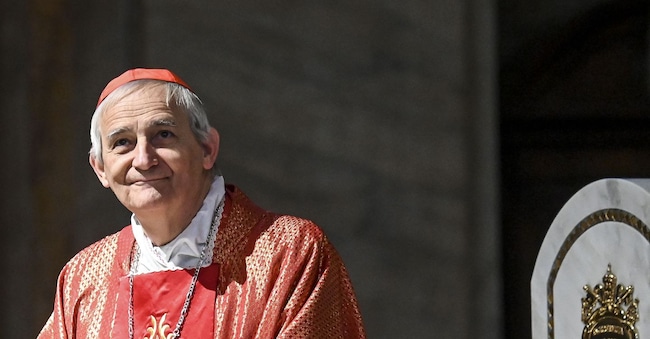
Cardinal Matteo Zuppi, archbishop of Bologna and president of the Italian Bishops' Conference, expressed his 'disappointment at the government's decision to unilaterally change the purpose and method of allocating the 8 x mille pertaining to the State'.

5' min read
Key points
5' min read
The controversy over the 8 per thousand is heating up, with Cardinal Matteo Zuppi, archbishop of Bologna and president of the Italian Episcopal Conference, expressing his 'disappointment at the government's decision to unilaterally change the purpose and method of allocating the 8 per thousand pertaining to the State' from the capital of Bologna on Tuesday, 3 June. It is a choice, Zuppi added, 'that goes against the pactual reality of the agreement itself, objectively distorting its logic and functioning, creating an inequality that harms both the Catholic Church and the other religious denominations that have signed agreements with the State'.
The Government's Reply
.But in the evening came a reply from government sources in which it was clarified that in fact only a sixth purpose had been set. "The amendment to Article 47 of Law 222/85 was introduced by the parliamentary majority," it was clarified by sources close to Palazzo Chigi, which supported the Conte 2 government, with Law No. 157, which converted dl 124 of 26/10/2019. It introduced the possibility for the taxpayer to be able to choose directly, when choosing the 8x1000 to the State, which of the five types of intervention to allocate their contribution to. In 2023, the Meloni government simply inserted a sixth purpose in order to be able to support communities for recovery from drug addiction and other pathological addictions'.
Zuppi: 'Disappointed by the government's choice'
From Bologna, however, Zuppi, as reported by Sir, was keen to recall 'that this source of resources allows us to be close to people's needs and to those we feel are closest to our concerns: the fight against poverty, education, the many emergencies in Italy and around the world'. These,' he stressed, 'are an important part of our effort, for everyone. However, we remain confident - it is not just because it is the Jubilee of Hope, but we are convinced - in the settlement of the dispute, respecting the very purposes for which the 8x1000 mechanism was set up and which cannot be changed, except by mutual agreement," Zuppi further observed, who in any case was keen to reiterate "the disappointment of the government's choice".
Iv leader Matteo Renzi was harsh, for whom 'the government's choice to go against the Italian Episcopal Conference and the Catholic Church on the 8 per thousand is the umpteenth demonstration of an arrogant way of conceiving institutions that is deaf to confrontation. To take away from the Catholic Church what it is entitled to by virtue of the Concordat and to do so because perhaps one does not share the position of the Italian Bishops' Conference on migrants is yet another headbutt by the Meloni-Mantovano duo'. Condemnation also from Senator Enrico Borghi, also from Italia Viva, who speaks of the government's 'dirigiste and statist decision to change the 8 per thousand for the Catholic Church and other denominations', and at this point 'it only betrays once again the intolerant face of every expression of organisational freedom, subsidiarity and the autonomy of intermediate bodies'.
Tajani, on 8x1000 to the Church the debate is open
On the change to the rules for the 8x1000 "nothing strange has happened: a part is destined to the recovery communities for drug addicts, which are mostly run by Church representatives, so in substance there is no harm for the Church. It is an open debate, we are discussing this issue with the Church,' explained Antonio Tajani, Deputy Prime Minister and Minister of Foreign Affairs, on the Ping Pong programme on Rai Radio1. Tajani thus responded to the words of the president of the Italian Episcopal Conference. On the stance taken by Renzi, who had said that the government had chosen to go against the Italian Bishops' Conference and against the Catholic Church, Tajani replied: "Let's leave the words of the opposition alone. The Church does not need defenders, the Catholic Church and the Bishops' Conference speak for themselves'.

