
Europe-Gulf cooperation and the storm of war

The new Gulf War breaks out in the year that could sanction a turning point, also a multilateral one, in the cooperation between Europe and the six monarchies in the area. In fact, the first Europe-Gulf Forum, which will bring together institutions and businesses, is scheduled to take place in Greece in May; above all, Saudi Arabia will host the second European Union-Gulf Cooperation Council (GCC) institutional summit in the autumn.
For the Europeans, the road to the Gulf was downhill. Not least because the economy was at the heart of cooperation. Compounded by international instability, the European countries and monarchies in the region became, from crisis to crisis, more and more assiduous partners: first the European search for gas and oil after the Russian invasion of Ukraine (2022), then the Gulf's role as mediator in the Middle East wars (Gaza from 2023; Israel-Iran in 2025), finally Trump's tariffs to push European companies, too, into the region's markets (2025).
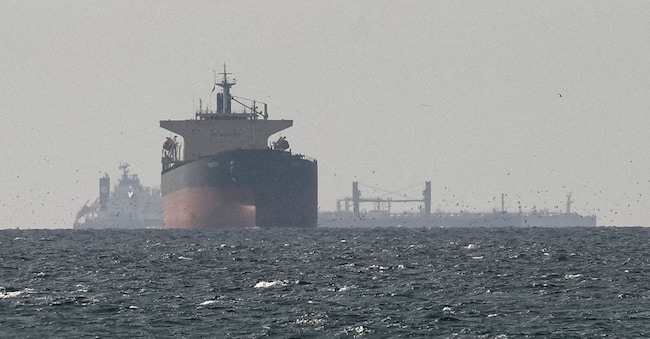
However, Israel and the United States' war on Iran, and Tehran's reaction against the monarchies in the area, have changed the framework and expectations for the Gulf. Making the choices for European institutions and countries more difficult. In fact, the economy will no longer be the absolute protagonist of the partnership: Saudi Arabia, the United Arab Emirates, Qatar, Kuwait, Bahrain and Oman will want to widen the perimeter of cooperation to security and defence, with two objectives: to strengthen national anti-missile and anti-drone systems, and to find partners to contribute -after the ceasefire- to the safety of commercial shipping in the Strait of Hormuz.
For Brussels and European capitals, it would have been much easier to discuss only free trade agreements and investments in advanced technologies with kings, emirs and sultans. But this war, which affects the traditional economy (energy) and the new economy of connectivity (airports, ports, data centres, tourism), has already changed the way the Gulf Arab governments look at the world. And to their future.
With the Europeans having to figure out, on a bilateral and multilateral level, how to balance interests and realities: because the stability of the Gulf is now a strategic European interest but, at the same time, our capacity for political influence in the quadrant is very limited. And what is more, European rearmament - or rather the rearmament of individual European states - has only just begun.

